Introduction: The $8,400 Propped Door
In March 2025, a childcare director in Chermside filed a mandatory incident report with Queensland’s Department of Education. No child was harmed. No intruder gained full access. However, an unauthorized adult reached the inner corridor of her centre because a front door had been propped open during afternoon pickup.
What happened next cost far more than any intercom system ever would.
The administrative response alone consumed three months: internal investigation, regulatory correspondence, risk management plan revision, staff retraining, parent communication, and compliance consultant fees. Total direct cost: $8,400. Indirect cost — the parental trust eroded, the enrolment enquiries that never converted, the NQS assessment rating that dropped one level — immeasurable.
Her video intercom installation, completed immediately afterwards, cost $3,200 installed.
Think about that ratio. The absence of a $3,200 system triggered $8,400 in documented costs — and that was from a near-miss, not an actual incident. Had the unauthorized adult reached a child, the financial and human consequences multiply beyond calculation.
This scenario is not unique to Chermside. It plays out across Brisbane’s 314 registered childcare services regularly. Operators prioritize ratio compliance, nutritional standards, and programming quality — all critical — while entry security remains reactive rather than systematically managed.
That approach worked when regulatory expectations were lower. It doesn’t work in 2026.
Queensland’s Child Safe Standards commenced for approved childcare providers on 1 January 2026, backed by the Child Safe Organizations Act 2024. The National Quality Standard refinements that also took effect this year explicitly embed child safety into Quality Areas 2 and 7. And the federal government’s $189 million childcare safety reform package — including a national CCTV trial across 300 centres — signals unambiguously where the sector is heading.
Entry management is no longer a procedural afterthought. It is a documented, auditable, compliance-critical function. This guide explains exactly what Brisbane childcare operators need, what it costs, and how video intercoms provide the most practical compliance pathway available.
Why 2026 Is the Critical Year for Brisbane Childcare Entry Security
To understand why entry systems have become urgent rather than optional, you need to understand what changed in Queensland’s regulatory environment at the start of this year.
The Child Safe Standards: Now Law, Not Guidance
Queensland’s Child Safe Standards are not aspirational guidelines. They are legislated requirements under the Child Safe Organizations Act 2024, and early childhood education and care services entered compliance from 1 January 2026.
The standards require organizations to demonstrate child safety across governance, culture, physical environments, staff training, complaint handling, and — critically for entry management — safe physical environments that prevent unauthorized access.
The Queensland Family and Child Commission (QFCC) is the oversight body. Non-compliance doesn’t generate a polite letter. It can trigger investigations, penalties, and reputational damage that fundamentally affects enrolment viability.
For Brisbane operators, this isn’t theoretical risk. The QFCC has already exercised powers to withhold government funding from 37 childcare centres nationally that failed to meet safety standards. That power now extends to Child Safe Standards compliance.
NQS Quality Area 2 Refinements: Child Safety Is Now Explicit
From 1 January 2026, the National Quality Standard refinements explicitly named child safety within Quality Areas 2 and 7 for the first time.
Element 2.2.3 was renamed Child Safety and Protection, requiring management, educators, and staff to demonstrate active awareness of their roles in identifying and responding to children at risk. Critically, assessors now evaluate whether physical systems — not just policies — support child safety in practice.
A written entry management policy without a functioning verification system doesn’t satisfy this requirement. Assessors look for evidence that the policy is operationally supported. Video intercoms provide that operational support with automatic digital audit trails.
Quality Area 7 (Governance and Leadership) now explicitly references child-safe services in governance systems. This means directors and approved providers are personally accountable for ensuring entry management infrastructure meets contemporary standards — not just that a policy document exists.
The National CCTV Trial Context
In August 2025, Australian federal, state, and territory education ministers signed off on a national CCTV trial across up to 300 childcare centres, as part of a $189 million government-funded safety reform initiative. The trial commenced in late 2025.
This initiative — the largest childcare safety investment in Australian history — signals the federal government’s direction clearly. Entry monitoring, verification, and recording are becoming expected standards, not optional upgrades.
Brisbane centres that proactively establish documented entry management systems — including video intercom with audit logging — are aligned with where regulation is heading. Centres without these systems are falling behind a rapidly advancing compliance standard.
The Three-Way Entry Problem Unique to Childcare Environments
A childcare centre is not an office building. It is not an apartment complex. The entry management challenge is structurally different — and significantly more complex — than any other Brisbane property type.
Think of childcare entry management like air traffic control at a busy regional airport. Multiple aircraft (visitor types) approach simultaneously, each requiring individual clearance, with controllers (staff) managing the process while simultaneously managing everything else on the ground. The difference: air traffic controllers do only that job. Childcare staff do everything else simultaneously.
Visitor Category 1: Authorized Parents and Carers
Authorized parents and carers form the largest entry volume — and the most operationally complex category to manage.
They arrive unpredictably throughout the day, not just at drop-off and pickup windows. They have varying levels of authorization — some parents are on separated family arrangements with specific access conditions. Non-custodial parents under Queensland Family Court orders represent a growing challenge: Queensland Family Court matters involving childcare access disputes increased 23% between 2022 and 2025.
Staff cannot hold an authorized pickup list in memory across 40, 60, or 80 enrolled children. They cannot verify faces at the door while simultaneously maintaining supervision ratios inside. And they absolutely cannot abandon active supervision of children to physically check who is at the door.
Video intercoms solve this directly. The door remains locked. Staff verify the visitor on an indoor monitor or smartphone — face visible, audio active — before releasing the door electronically. Supervision is maintained. Ratios are maintained. Entry is documented.
Visitor Category 2: Deliveries, Tradespeople, and Service Visitors
Every childcare centre receives deliveries, maintenance visits, health service providers, and casual business visitors regularly. Each requires individual verification against no standing authorization.
Without a video intercom, this verification means a staff member physically walking to the door — interrupting whatever supervision responsibility they were managing.
During morning programming or outdoor play sessions, this is not a minor inconvenience. Every staff departure from an active supervision zone creates a supervision gap. With video intercom, verification happens remotely in under 30 seconds without any supervision disruption.
Visitor Category 3: Unauthorized Individuals
The least frequent but most consequential entry category. Unauthorized individuals at childcare centres include non-custodial parents violating court orders, estranged family members, individuals known to pose risk to specific children, and occasionally unknown individuals with unclear intent.
Without a controlled entry point, staff have no mechanism to identify and intercept these individuals before they reach the children’s area. With video intercom, every visitor is verified before the entry door opens — creating the intervention opportunity that an unlocked or propped door eliminates entirely.
How Brisbane’s Climate Compounds the Entry Security Challenge
Brisbane childcare operators face an entry management challenge that centres in Melbourne or Canberra simply don’t encounter at the same intensity. As we covered in detail in our replace or repair guide, Queensland’s subtropical climate accelerates electronic system deterioration significantly — and childcare entry systems are uniquely exposed.
The Afternoon Pickup UV Problem
Brisbane receives 2,600-3,100 hours of bright sunshine annually. The afternoon pickup window — 3:30pm to 6:00pm — aligns directly with peak UV intensity for west and northwest-facing entries.
During this same window, the intercom panel receives its highest daily usage: multiple activations per minute, door held repeatedly, direct human contact with every surface. Peak UV exposure combined with peak mechanical use creates compounding deterioration that residential installations never experience.
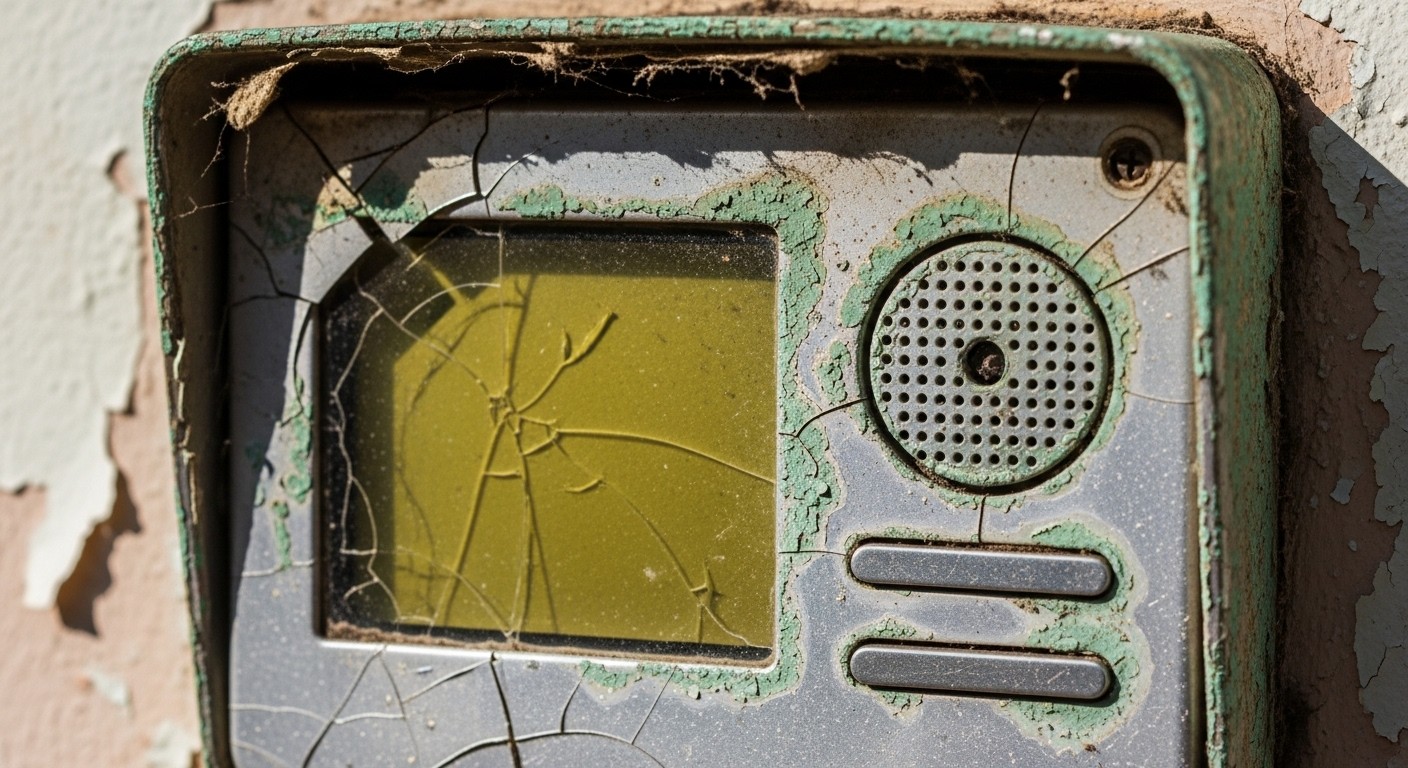
Standard plastic housings become brittle within 5-7 years under these conditions. Camera sensors degrade. Display screens fade. For childcare installations, this means systems are failing operationally well before their rated lifecycle — typically at 6-8 years rather than the 10-12 years marketed.
The solution is specification-specific installation. IP66-rated panels minimum (exceeding standard IP65), UV-resistant housing materials, and wide-angle HD cameras rated for continuous outdoor exposure. These specifications add $200-$400 to system cost and extend operational life by 4-6 years. This is not optional for Brisbane childcare installations — it is the baseline.
Storm Season Electrical Vulnerability
Queensland’s storm season generates electrical surges that damage unprotected electronics reliably. A surge-damaged intercom control panel costs $1,400-$2,800 to replace — more than the surge protection that prevents the damage costs.
Surge protection for childcare installations adds $180-$280 to total cost. Every Brisbane installation should include it as standard. Installers who don’t specify it aren’t cutting costs — they’re scheduling your first repair call.
Coastal and Riverside Properties
Brisbane childcare centres within 10km of Moreton Bay, the Brisbane River, or major creek systems face accelerated salt air deterioration. As detailed in our Brisbane climate analysis, coastal properties experience 40-60% faster component deterioration than inland locations.
Childcare centres in Hamilton, Bulimba, New Farm, West End, and similar riverside suburbs should specify marine-grade components as standard — not as a premium upgrade. The cost difference is minor. The lifespan difference is 4-6 years of reliable service.
The Full Financial Picture: What Inadequate Entry Management Actually Costs
Brisbane childcare operators consistently underestimate the financial consequences of entry security gaps. The intercom installation cost is visible and concrete. The cost of inadequate entry management is diffuse, delayed, and therefore systematically underweighted.
This is the same cognitive trap as the one Marcus fell into with his aging residential intercom — documented in our cost analysis — where he spent $8,040 avoiding a $4,200 replacement. Childcare operators run the same calculation, and reach the same expensive conclusion.
Category 1: Regulatory Investigation Costs
A single entry security incident triggering a Queensland Department of Education investigation generates documented administrative costs of $4,200-$9,800, depending on severity and investigation duration. This includes:
Internal investigation and documentation: 15-25 hours of director and staff time at $65-$95/hour. Risk management plan revision with compliance consultant: $1,200-$2,400. Regulatory correspondence and follow-up reporting: 8-15 hours. Parent communication and meeting facilitation: 4-8 hours. Staff retraining and updated procedure documentation: $600-$1,400.
Without an automated entry log, every step of this process is harder, slower, and more legally exposed. With a video intercom audit trail, documented evidence of entry management procedures is immediately available — reducing investigation duration and demonstrating proactive compliance.
Category 2: NQS Rating Consequences
Brisbane childcare centres rated “Working Towards NQS” on Quality Area 2 face increased regulatory monitoring frequency. More importantly, they face competitive market disadvantage.
Queensland’s childcare market is tighter than most operators realise. Brisbane has approximately 314 registered services across the greater metro area, with near-capacity occupancy in inner-city suburbs including Fortitude Valley, Newstead, South Brisbane, and Milton. In this environment, an NQS rating difference has direct enrolment consequences.
Research from ACECQA indicates that 67% of Brisbane parents cite security systems as a significant factor in childcare selection decisions. A centre with a visible, functioning video intercom communicates security investment to every prospective family who visits.
For a 60-place centre charging $148 daily at 85% average occupancy — generating approximately $2,760,000 annually — losing three enrolments from a rating or security perception issue represents $266,400 in annual revenue. A $3,200-$5,600 intercom installation is, by comparison, financially negligible.
Category 3: Insurance Premium Escalation
Insurance providers assess childcare risk profiles annually. Documented entry security incidents increase premiums. Absence of electronic entry management systems is increasingly flagged in risk assessments as a liability factor.
Documented entry failures trigger insurance premium increases of 18-34% annually. For centres paying $8,400 in current premiums, this represents $1,512-$2,856 in additional ongoing annual costs — every year following an incident.
A single incident cycle costs more in insurance premium increases over three years than a complete video intercom system installed to Brisbane’s full specification. The financial logic is unambiguous.
Category 4: Staff Management Time
Every uncontrolled entry event consumes staff time. Without video intercom, every visitor — authorized or otherwise — requires a staff member to physically verify identity at the door.
For centres experiencing 25-40 visitor events daily during peak periods, this totals 45-90 minutes of daily staff time on entry management alone. At $28-$35 per hour for qualified childcare educators, this represents $2,940-$6,300 in annual staff cost attributable purely to manual entry management.
Video intercom reduces this to under 5 minutes daily — remote verification in 20-30 seconds per event. The annual staff time saving alone represents 40-80% of the total intercom installation cost.

Video Intercom Functionality: What Brisbane Childcare Centres Actually Need
Not all intercom systems serve childcare environments equally. Understanding which features are operationally essential versus optional helps operators make informed investment decisions rather than being upsold on unnecessary capability.
Non-Negotiable Features for Brisbane Childcare
HD Video with Wide-Angle Lens Minimum 1080p resolution. Minimum 160-degree field of view. The wide angle is critical — it captures the full entry zone including accompanying children and any additional individuals who may be present alongside the primary visitor. Standard narrow-angle cameras miss this contextual information entirely.
Two-Way Audio Clear, full-duplex audio enables staff to communicate with visitors before door release. This sounds basic, but audio quality varies significantly between systems. Test this specifically during installation — Brisbane’s ambient noise during afternoon pickup periods (traffic, playground sounds) requires higher-quality speakers and microphones than standard office installations.
Mobile App Integration Staff should be able to verify and admit visitors from any location within the centre — playground supervision zones, nap rooms, programming areas. This is not a convenience feature. It is a supervision ratio protection feature. A staff member who cannot leave their supervision position can still manage entry verification via smartphone.
Electronic Door Release All door release mechanisms must be electronically controlled, allowing remote unlocking without physical presence at the door. This requires integration with your existing door hardware or installation of a new electronic strike — factored into installation costs below.
Automatic Digital Entry Logging Every entry event — visitor identity (video capture), time, date, door release confirmation, staff identifier — logged automatically in cloud storage. This is the compliance audit trail that Queensland’s Child Safe Standards and NQS Quality Area 2 require. Manual paper sign-in logs do not provide equivalent documentation quality under regulatory scrutiny.
Local Storage Redundancy Cloud logging is essential. Local storage backup is equally essential. Brisbane’s NBN connectivity varies by suburb. Systems that rely exclusively on cloud connectivity lose their entire audit trail during internet outages. Specify local storage with automatic cloud sync.
Valuable but Not Universally Required
Facial Recognition Useful for high-volume centres with stable enrolled family populations. Enables automatic identification of known authorized carers without staff intervention. However, it requires privacy consent from all enrolled families — which adds an administrative step to onboarding. Appropriate for larger centres (60+ places) with operational budget to support the premium. For further detail on facial recognition technology, our access technologies comparison guide covers Brisbane-specific applications comprehensively.
RFID Card Integration Valuable for staff access management — educators can enter using key fobs without intercom verification, reserving the video verification workflow for visitors and unknown carers. Adds $280-$480 to system cost. Strongly recommended for centres with more than 10 staff members.
CCTV Integration Video intercom cameras can feed directly into existing CCTV recording infrastructure, creating unified footage rather than separate video streams. This simplifies incident review and reduces storage costs. Particularly relevant given the national CCTV trial context — centres already running CCTV can integrate intercom video at minimal additional cost.
Installation Costs: Real Brisbane Pricing for 2026
Cost transparency is essential for budget planning. The following reflects actual Brisbane installation pricing for childcare-appropriate systems in 2026, not manufacturer list prices or interstate benchmarks.
Small Centre — Single Entry Point (Under 40 Places)
| Component | Cost Range |
|---|---|
| Video intercom panel (IP66, vandal-resistant, HD) | $840 – $1,280 |
| Indoor monitor or mobile app integration | $320 – $680 |
| Electronic door strike or magnetic lock | $280 – $520 |
| Surge protection unit | $180 – $280 |
| Licensed electrician installation | $480 – $720 |
| Cloud management platform (first year) | $144 – $216 |
| Total installed | $2,244 – $3,696 |
Medium Centre — Dual Entry Point (40-80 Places)
Most Brisbane childcare centres in this size range operate a main parent entry plus a secondary service or outdoor access point. Both require controlled access.
- Main entry (full video intercom): $2,244 – $3,696
- Secondary entry (simplified access control with camera): $1,200 – $1,800
- Shared indoor monitor or multi-location app integration: included
- Total installed: $3,444 – $5,496
Large Centre or School Campus — Multiple Entry Points (80+ Places)
Multiple controlled entries, staff-only access zones, visitor management directory, and CCTV integration.
Full system design required for accurate pricing. Indicative range: $6,800 – $14,200 depending on entry count, access zone complexity, and feature requirements.
What Drives Cost Variation
Several factors move Brisbane childcare installation costs within and beyond these ranges:
Building construction type — Concrete tilt-panel construction requires core drilling for cable routing, adding $280-$480 versus timber frame construction. Heritage-listed buildings require modified approaches adding 20-35% to installation cost.
Existing door hardware — Centres with existing electronic locks can integrate for $80-$180. Mechanical-only doors require new electronic strike installation, adding $280-$520.
Network infrastructure — Centres with existing ethernet infrastructure to entry points reduce installation labour. Centres requiring new cable runs add $180-$420 depending on run length and construction type.
After-hours installation — Scheduling installation outside operating hours (evenings, weekends) avoids any operational disruption but adds 15-25% to labour cost. For most Brisbane childcare centres, this premium is worthwhile.
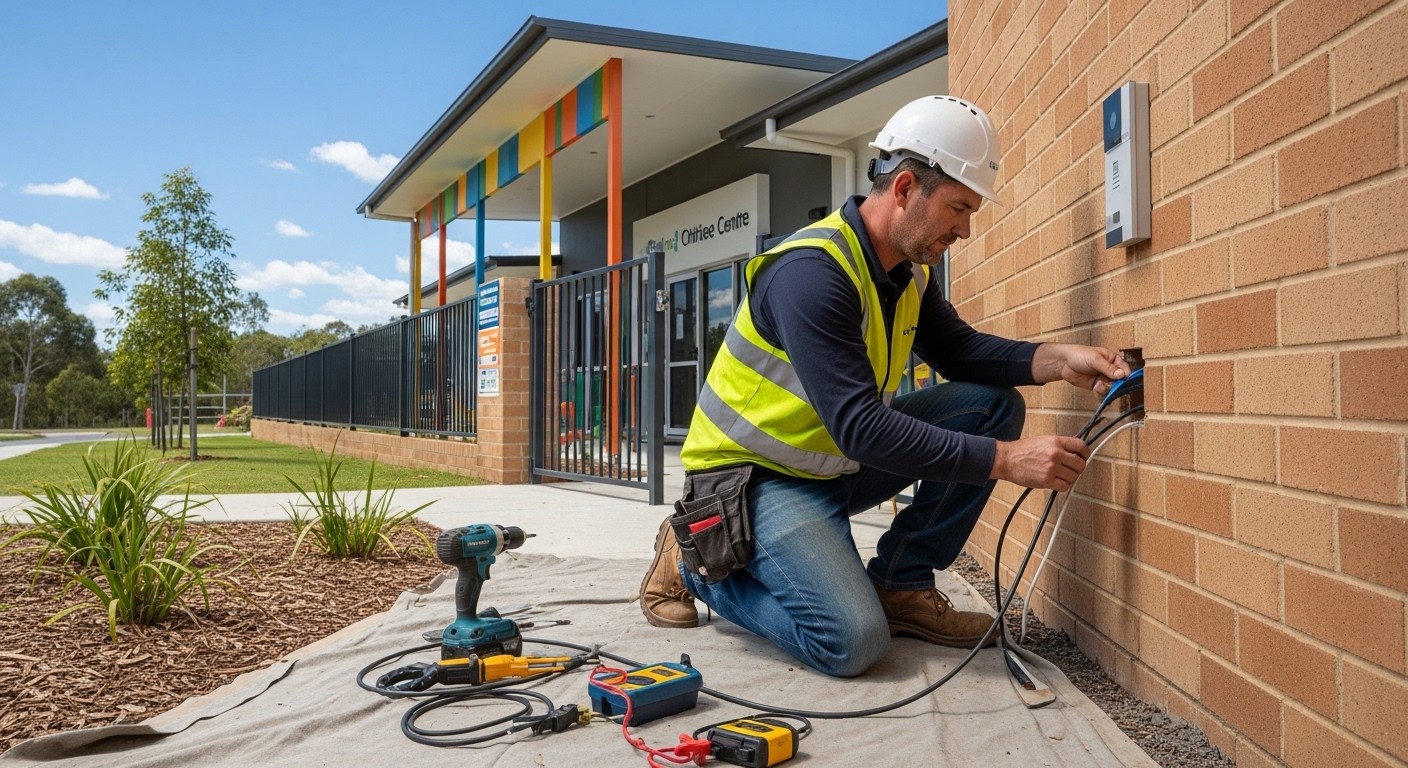
All installations require a licensed electrician under Queensland’s Electrical Safety Act 2002. This is not a cost-saving opportunity — it is a legal requirement. DIY installation voids all warranties, creates insurance liability, and violates Queensland electrical safety legislation. The installation cost represents a $280-$480 per hour professional who ensures Queensland-compliant, weatherproofed, surge-protected installation that will perform reliably in Brisbane’s climate for the system’s full operational life.
Retrofit Versus Full Replacement: The Decision Framework for Brisbane Operators
Many Brisbane childcare centres operate in premises with existing — often aging — intercom infrastructure. Understanding when retrofit works and when full replacement is necessary prevents both overspending and under-investing.
When Retrofit Is the Right Answer
Retrofit solutions make financial sense under specific conditions:
System age under 8 years with functional wiring infrastructure. If your existing cabling is sound and your wiring runs are correctly positioned, upgrading only the panel hardware and adding cloud management capability extends system life at 40-60% of full replacement cost.
Lease-restricted premises. Many Brisbane childcare centres operate in leased properties where permanent wiring modifications require landlord approval — sometimes difficult to obtain quickly. Wireless overlay systems mount over existing entry infrastructure with minimal structural impact while delivering full video intercom functionality. Cost: $2,400-$3,800 installed. Lifespan: 5-8 years.
Heritage building constraints. Brisbane City Council heritage guidelines restrict certain external modifications on character-listed buildings — relevant to childcare centres operating in Paddington, Ashgrove, New Farm, Woolloongabba, and similar inner-city suburbs with significant pre-war building stock. Surface-mounted wireless systems achieve compliance within heritage constraints.
Short-term lease (under 3 years). A wireless portable system can be fully relocated to your next premises. This converts a capital expenditure into a transferable asset rather than a leasehold improvement that benefits the landlord at lease end.
When Full Replacement Is the Only Answer
Several conditions make retrofit inadequate regardless of cost savings:
System over 10 years old. As our replace-or-repair analysis demonstrates, systems over a decade old face 78% major failure probability within 18 months. Investing retrofit costs into a system at this failure threshold is financially irrational.
Wiring showing corrosion or insulation brittleness. Deteriorated wiring infrastructure cannot support new panel hardware reliably. Intermittent failures and safety risks make full re-wiring necessary regardless of panel condition.
Manufacturer discontinued support. Discontinued systems cannot receive security patches, cloud integration updates, or replacement components. Systems installed before 2015 in Brisbane are almost universally unsupported. Retrofit is technically impossible.
Compliance feature requirements. If your current system lacks digital audit logging, mobile app integration, or electronic door release capability, and these are required for Child Safe Standards compliance, retrofit may not achieve the functional outcome — even if the hardware is serviceable.
Brisbane Suburb-Specific Considerations
Brisbane’s diversity of building stock, geography, and demographics creates installation considerations that vary meaningfully by location. This builds on the suburb-by-suburb analysis in our complete installation guide.
Inner-City Suburbs: Heritage and High Density
Childcare centres in Paddington, Ashgrove, New Farm, Fortitude Valley, and West End frequently operate in pre-war or early post-war building stock with heritage overlays. As noted above, modified installation approaches are required — adding cost but not preventing compliance.
These suburbs also experience higher visitor volume from diverse family backgrounds, including more interstate migrants and international families. Mobile app-based systems perform better in these demographics than traditional key fob or keypad approaches — families familiar with smartphone-based access manage the technology intuitively.
Outer Suburban Growth Corridors
Childcare centres in Chermside, Aspley, Carindale, Springfield, and similar growth corridor suburbs typically operate in purpose-built or commercial-conversion premises with modern construction. Standard wired installation is straightforward and cost-efficient.
These suburbs also experience higher private vehicle traffic during drop-off and pickup, meaning entry management systems need to handle higher per-minute activation volumes. Specify robust mechanical components rated for 100,000+ activation cycles rather than residential-grade hardware.
Coastal and Riverside Locations
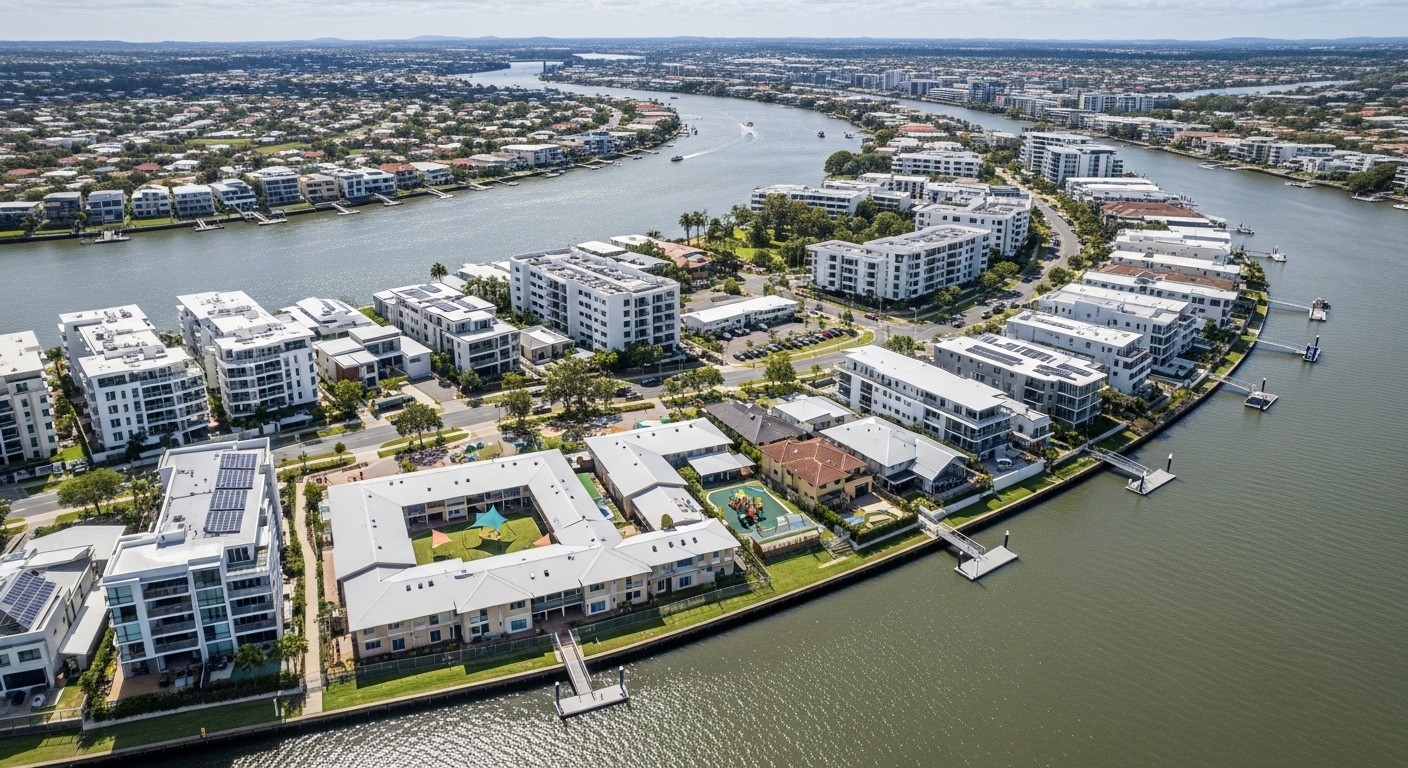
Centres in Hamilton, Bulimba, Hawthorne, New Farm, and similar riverside locations require marine-grade specification as the baseline — not a premium. Salt air corrosion within 10km of waterways reduces standard system life by 40-60%. The cost difference between standard and marine-grade components is $200-$400. The lifespan difference is 4-7 years.
Integration With Your Broader Security Ecosystem
A video intercom installed in isolation delivers significant value. A video intercom integrated with your broader security infrastructure delivers compounding value at marginal additional cost.
CCTV Integration
Brisbane childcare centres increasingly operate CCTV systems — a trend accelerating since the national CCTV trial announcement. Video intercom cameras can feed directly into existing CCTV recording infrastructure through standard ONVIF protocols, creating unified footage rather than separate video streams requiring separate management.
Practically: when an entry incident occurs, a single review of unified footage shows the approach, the intercom interaction, the door release event, and the subsequent movement within the facility. This narrative completeness is what investigators, insurers, and regulators need — and what fragmented separate-system footage cannot provide efficiently.
Integration adds $180-$480 to installation cost where existing CCTV infrastructure is already in place. The value in incident documentation quality is disproportionate to this marginal investment.
Access Control Zones
Larger Brisbane childcare centres benefit from differentiated access control — not just a single controlled front door, but tiered access for different zones within the facility.
Staff-only areas (administration, medication storage, server rooms) can be controlled via RFID credentials separate from the main entry intercom. This creates a documented record not just of who enters the building, but of who accesses specific sensitive areas.
Our access technologies comparison covers RFID, PIN, Bluetooth, and facial recognition applications in detail — including specific recommendations for childcare environments based on Brisbane operational experience.
Smart Building Management for Multi-Site Operators
Childcare groups operating multiple Brisbane centres — including franchise operators and not-for-profit networks — benefit from centralized cloud management platforms. A single dashboard monitors entry activity, system health, and access logs across all locations simultaneously.
Remote system administration means adding or revoking access credentials happens from headquarters, not requiring on-site visits to each centre. For groups managing 5-20 locations across Brisbane, this operational efficiency alone justifies cloud-integrated systems over locally managed alternatives.
Our smart building integration guide covers multi-site management in detail for property and facility managers.
Frequently Asked Questions
Does Queensland law specifically require video intercoms in childcare centres from 2026?
Queensland legislation does not prescribe video intercoms as a mandatory technology. However, the Child Safe Standards (effective 1 January 2026) require childcare centres to demonstrate safe physical environments and documented entry management procedures. The NQS Quality Area 2 refinements require assessors to evaluate whether physical systems support the written entry management policy. In practice, centres without electronic verification systems face increasing difficulty demonstrating compliance under scrutiny. Video intercoms are the most practical, cost-efficient means of achieving documented compliance — not legally mandated, but functionally essential for centres seeking to maintain or improve their NQS rating under the 2026 framework.
How long does installation take, and can it happen without disrupting operations?
Single entry point installations complete in 4-6 hours with a licensed electrician. Dual entry systems require 6-10 hours. Full campus systems need 2-3 days. All Brisbane installations can be scheduled outside operating hours — evenings and weekends — eliminating operational disruption entirely. Most Brisbane childcare operators choose Saturday morning installation for small systems, completing before Monday opening. Installation teams experienced in childcare environments understand the scheduling constraints and accommodate them routinely.
Can the video intercom notify parents when their child’s authorized carer arrives?
Yes, with cloud-connected systems. When an authorized carer’s access credential (app, RFID fob, or facial recognition) triggers the door release, the enrolled parent receives an automatic mobile notification confirming pickup. This feature is particularly valued by separated families, working parents unable to perform pickup personally, and parents of children with complex care arrangements. It operates independently of the core entry management function and requires only cloud connectivity to function.
What happens to entry logs if our internet connection goes down?
Quality systems maintain local entry logging continuously regardless of internet connectivity. Records include time-stamped video capture of each visitor, door release events, and staff identifier. These records sync automatically to cloud storage when connectivity restores. This local storage redundancy is essential in Brisbane — NBN connectivity varies by suburb, and compliance audit trails cannot have gaps created by ISP outages. When comparing systems, confirm local storage capacity and sync behaviour explicitly. This differentiates reliable systems from those that will create compliance documentation gaps.
Our centre is in a leased heritage building. Can we still install a compliant video intercom?
Yes. Surface-mounted wireless overlay systems provide full video intercom functionality with minimal structural impact — no core drilling, no external wiring runs. These systems achieve NQS compliance-level entry management while respecting heritage overlay restrictions and lease terms. Installation cost is 20-35% higher than standard wired installations due to the modified approach, but compliance is fully achievable. Brisbane City Council heritage guidelines do not prohibit entry security improvements — they regulate how modifications are made, not whether they can be made. Experienced Brisbane installers have completed heritage-compliant intercom installations in New Farm, Paddington, Ashgrove, and West End properties extensively.
How do we handle the privacy obligations around video capture of children at entry points?
Video intercom cameras positioned at entry points capture adults — visitors, carers, and delivery personnel — approaching the door. Under normal installation positioning (eye-level, exterior-facing), children’s footage is incidental rather than the primary capture subject. Queensland’s Privacy Act 1988 obligations require: clear privacy notice at the entry point (provided by your installer as standard signage), documented privacy policy covering footage retention and access, and restricted access to footage records. Your installer provides compliant signage and can advise on documentation. Footage retention of 31 days is the emerging standard aligned with NQF CCTV trial requirements — shorter retention reduces privacy exposure while maintaining incident documentation capability.
What warranty and ongoing support should we expect after installation?
Standard product warranties cover hardware for 2-3 years. Installation workmanship warranties should be a minimum of 12 months. For childcare environments, the critical addition is a service response guarantee — ideally next-business-day response for system failures, given the compliance implications of a non-functional entry system. Confirm after-hours emergency response availability for complete system failures occurring outside business hours. Service contracts providing annual inspection, software updates, and priority response typically cost $380-$680 annually for single-entry systems. Given the compliance and operational stakes, this represents excellent value insurance against the $4,200-$9,800 cost of a regulatory incident triggered by a non-functional entry system.
We operate multiple childcare centres across Brisbane. Is centralized management possible?
Yes, and it is strongly recommended for multi-site operators. Cloud-integrated systems enable a single management dashboard monitoring entry activity, system health, access credentials, and audit logs across all locations simultaneously. Credential management — adding new staff, revoking access for departing employees, updating authorized carer lists — happens centrally rather than requiring physical visits to each site. For operators managing 3 or more Brisbane locations, the operational efficiency of centralized management typically justifies the system investment within 6-9 months in saved administration time alone.
![The $12 Billion Problem: How Brisbane Families Are Finally Stopping Package Thieves – [Cloned #540]](https://intercomsolutions.com.au/wp-content/uploads/2026/03/CAPA-JPEG-150x150.jpg)