Introduction: The Empty Desk at 11pm
James manages a 42-desk coworking space in Fortitude Valley. In October 2024, he received a call at 11:47pm from a member who had left a laptop inside and needed urgent access to retrieve files for an early morning presentation.
James drove 28 minutes from Coorparoo, let the member in, waited 12 minutes, and drove home. Total time cost: 68 minutes. Total direct cost to his business: nothing obvious. Total hidden cost: the decision he made the following week to price his membership 8% below competitors because he knew his access experience was inferior.
His competitor two streets away — a 38-desk space in Bowen Hills — had installed a cloud-connected video intercom system eight months earlier. That same night, their member sent a mobile app request at 11:51pm. The operator approved it remotely within 90 seconds. The member accessed the space, retrieved their files, and left. Zero operator involvement beyond a phone tap.
James cancelled three of his planned membership upgrades the following quarter. He could not justify premium pricing without a premium access experience. His competitor raised rates 12% that same quarter — and maintained 94% occupancy.
This gap between operators who invest in professional intercom systems and those who don’t is widening rapidly. Australia’s coworking market is now worth AUD $537 million and growing at 15.13% annually. Brisbane’s CBD and fringe markets — Fortitude Valley, Bowen Hills, South Brisbane, Milton, Newstead — are experiencing accelerating demand as firms embrace hybrid work permanently.
However, approximately 25% of independent Australian coworking spaces close annually. The reasons are rarely location or price. They are operational — member churn driven by poor access experience, security incidents that erode trust, and staff overhead that makes the economics unworkable.
This guide explains exactly how intercom Brisbane coworking operators use smart entry systems to solve these problems — with real costs, ROI calculations, and Brisbane-specific installation guidance.
Why Coworking Spaces Have Uniquely Complex Entry Challenges
A coworking space is not a standard office building. The entry management challenge it presents is more complex than any single-tenant commercial property — and most operators underestimate this until a security incident or membership cancellation forces the issue.
Think of a coworking space entry system like the front desk of a hotel that never closes, serves hundreds of different guests with different room types, and operates with minimal staff after 6pm. A hotel front desk handles this with round-the-clock staffing. Coworking operators cannot afford that model. Technology is the only viable solution.
The Multi-Tier Member Problem
A typical Brisbane coworking space serves members across fundamentally different access requirements simultaneously. Hot desk members need building access during standard hours. Dedicated desk members expect 7am-8pm access at minimum. Private office tenants require 24/7 access as a non-negotiable contract term. Day pass visitors need single-day temporary access. Meeting room guests need access only to specific zones.
Managing this complexity manually — through key fobs, pin codes, and staff supervision — creates three compounding problems. First, it consumes disproportionate staff time. Second, it creates security gaps when credentials are shared or not returned. Third, it makes any after-hours access entirely dependent on operator availability.
Video intercom systems with tiered credential management solve all three simultaneously. Access rules are configured once and enforced automatically — no staff intervention required for routine entry events at any hour.
The 24/7 Access Revenue Problem
After-hours access is not just a convenience feature for Brisbane coworking spaces. It is a revenue category. Private office memberships commanding $800-$1,800 per month require 24/7 access as a standard inclusion. Operators without reliable after-hours access systems are structurally excluded from the premium membership segment.
According to research published by Optix, coworking spaces offering verified 24/7 access command average monthly membership premiums of 22-31% over business-hours-only spaces. For a 40-desk Brisbane space with 60% private office configuration, this represents $4,800-$8,400 in additional monthly revenue — entirely contingent on having a system that delivers after-hours access without operator intervention.
The Guest and Visitor Management Gap
Members of Brisbane coworking spaces regularly bring clients, collaborators, and guests onto the premises. Without a managed entry system, every guest arrival creates a security vulnerability — an unverified individual who is neither a member nor logged in the system.
Security research from Avigilon shows that 48% of coworking space members cite lack of adequate security as a top concern. More practically, security incidents involving non-member individuals — theft, property damage, data breaches — are disproportionately attributed to unmanaged guest access. For operators, a single well-publicised incident costs more in member churn than a complete intercom system installation.
The Brisbane Coworking Market Context: Why Security Investment Is Now Urgent
Brisbane’s flexible workspace market has specific characteristics that make intercom investment more urgent than in other Australian cities — and more financially rewarding.
Brisbane’s Hybrid Work Acceleration
Brisbane’s CBD and fringe office markets have seen growing interest as major firms establish satellite presences closer to employee populations in inner suburbs. The Cross River Rail project, scheduled for completion in 2025, fundamentally changes the accessibility profile of Bowen Hills, Woolloongabba, and South Brisbane — creating new commercial demand clusters that coworking operators are already positioning for.
The Work Project’s 2024 partnership with Dexus established premium flexible workspace across Brisbane, Sydney, Melbourne, and Perth simultaneously — signalling major institutional capital treating Brisbane as a priority coworking market for the first time.
This influx of institutional and corporate coworking demand raises the baseline experience standard that Brisbane operators must meet. Corporate members accustomed to enterprise-grade building access at their company’s headquarters will not accept key fobs and manual sign-in at a coworking space they are paying $1,200 per month to use.
The Olympics 2032 Structural Shift
As documented in our Brisbane Airbnb and Olympics guide, the 2032 Games are accelerating Brisbane’s commercial property transformation across Woolloongabba, South Brisbane, and Hamilton. Coworking spaces in these corridors are already seeing demand from international media, corporate delegations, and Games-affiliated organisations seeking flexible professional workspace.
These users bring international expectations — and international standards. Contactless, app-managed building access is not a differentiator in Singapore, London, or New York coworking markets. It is baseline. Brisbane operators who haven’t reached this baseline before 2028 will struggle to compete for Games-adjacent membership revenue.
The 25% Annual Closure Rate Context
Australia’s coworking market closes approximately 25% of independent spaces every year. Surviving operators are those with strong community engagement, consistent quality, and — critically — operational systems that make the business scalable without proportional staff cost increases.
Intercom systems are one of the primary operational levers separating viable spaces from those that close. The mathematics are direct: a space requiring two staff members to manage building access during extended hours has fundamentally different unit economics than one managing the same function via automated cloud system.
What a Professional Intercom System Does for Brisbane Coworking Operators
The benefits of video intercom installation in Brisbane coworking spaces operate across four distinct dimensions. Understanding each clarifies why the investment consistently generates positive ROI within 6-9 months.
Dimension 1: Revenue Enablement
Professional intercom systems directly enable membership tiers that generate higher monthly revenue. Specifically, 24/7 private office access — typically commanding $800-$1,800 per month in Brisbane’s inner suburbs — requires a reliable after-hours entry system as its operational foundation.
Without this, operators are limited to business-hours membership structures. With it, they can offer the full membership spectrum, including corporate satellite team arrangements — typically structured at $2,400-$4,800 per month for private suites — that are the highest-margin segment in the Brisbane market.
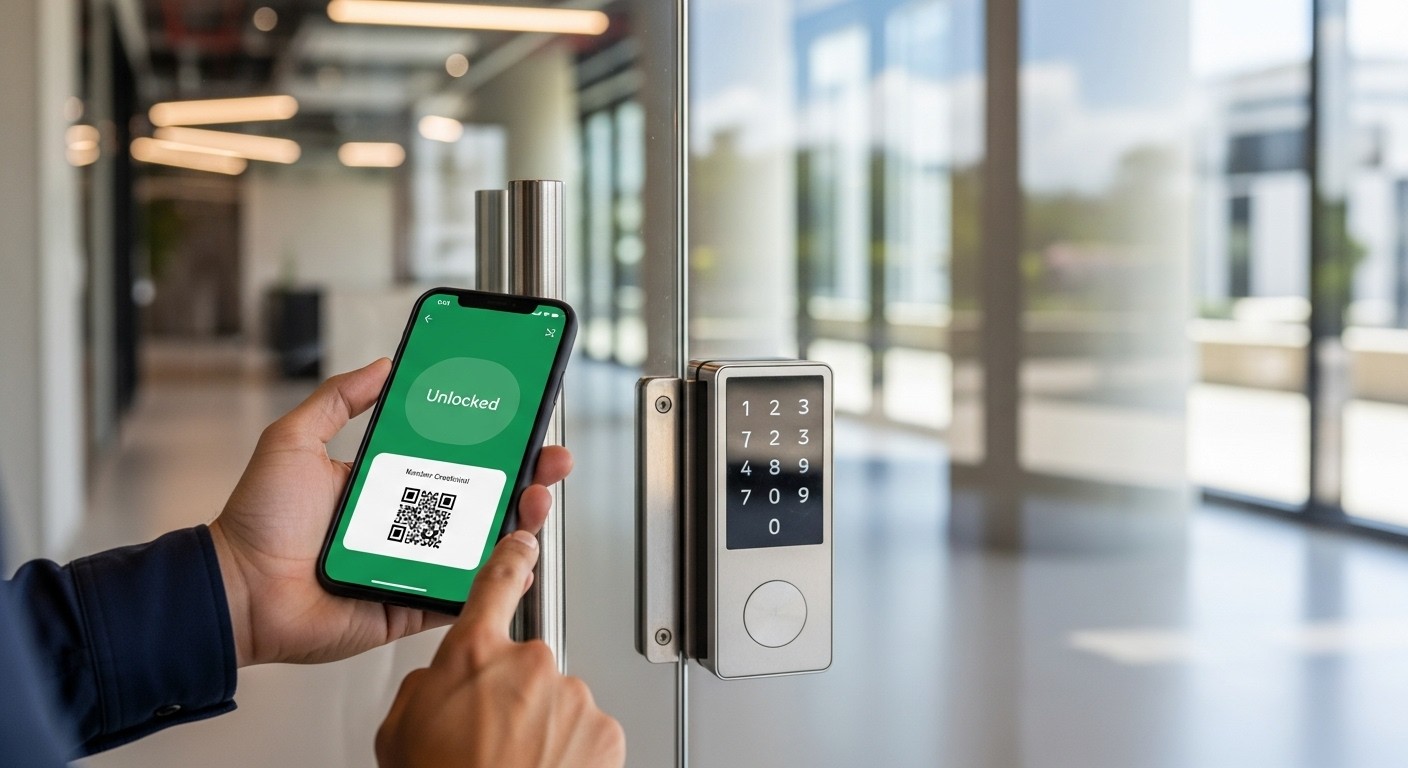
Additionally, meeting room revenue expands when booking is integrated with access control. Members can book a conference room via app and the system automatically grants temporary access to invited guests during the booked window. This self-service model eliminates staff involvement from the booking-to-access workflow entirely.
Dimension 2: Staff Cost Reduction
Manual access management — issuing and retrieving fobs, responding to lockout calls, managing after-hours entry requests — consumes an average of 2-3 hours of staff time daily in spaces without automated systems. For a Brisbane operator paying $32-$45 per hour for experienced front-desk staff, this represents $20,800-$34,900 in annual staff cost attributable purely to access management.
Cloud-connected intercom systems reduce this to under 20 minutes daily — remote approval of non-standard requests via mobile app. The annual staff time saving alone — $19,000-$33,000 — typically covers the entire intercom system cost within the first year.
Dimension 3: Member Experience and Retention
Member churn is the primary financial threat to Brisbane coworking operators. Acquiring a new member costs 5-8 times more than retaining an existing one — a well-established business metric that applies directly to the coworking model.
Access experience is a leading driver of coworking member satisfaction. Research from Optix shows that members who experience friction in entry — waiting for staff, managing multiple credentials, dealing with lockouts — are 3.4 times more likely to cancel their membership within 90 days than members with seamless app-based access.
For a Brisbane space generating $28,000 monthly in membership revenue, reducing monthly churn by 2 percentage points — entirely achievable through improved access experience — represents $6,720 in additional annual recurring revenue. This is not theoretical — it is the documented outcome from spaces that have made this upgrade.
Dimension 4: Security and Liability Protection
Coworking spaces house valuable equipment — member laptops, monitors, servers, peripheral devices — across a shared environment. Unmanaged access creates both direct theft risk and liability exposure.
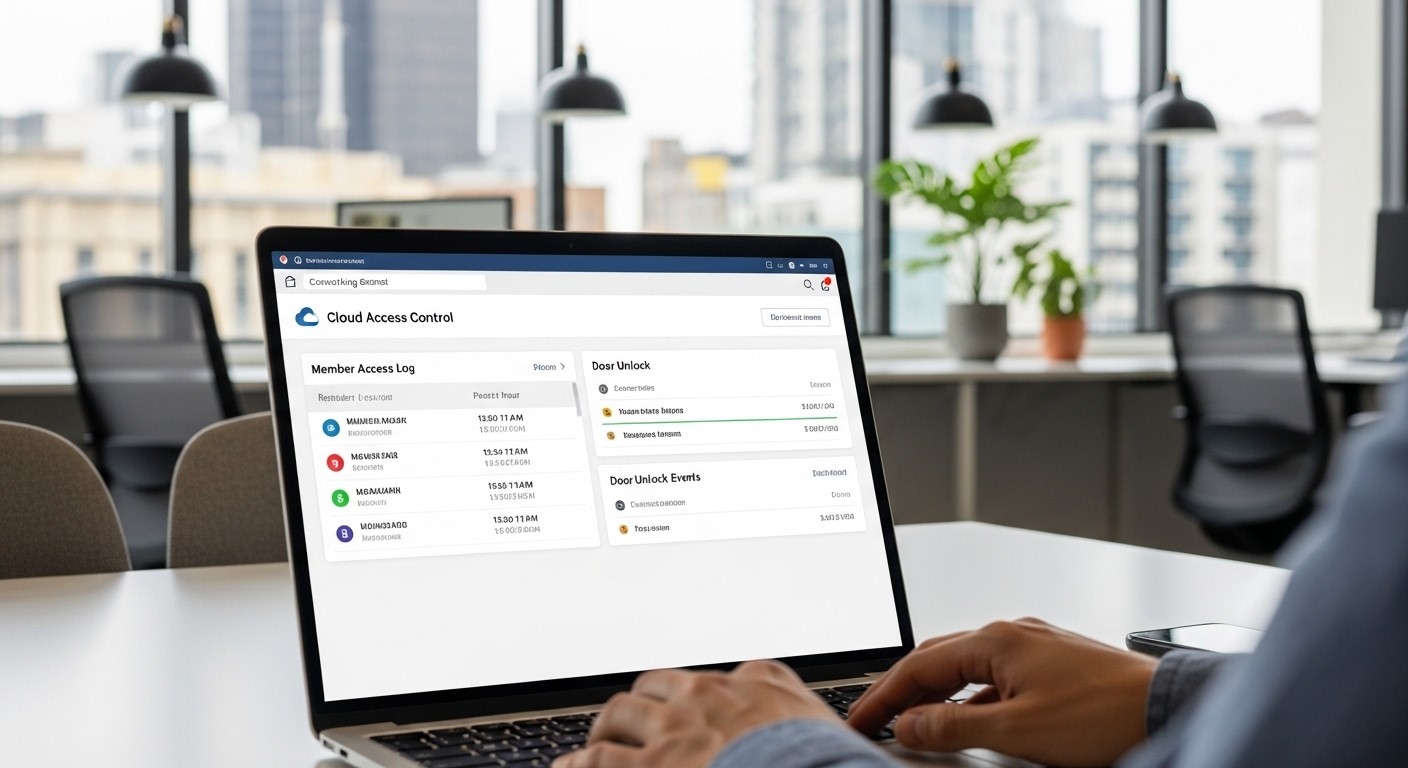
Digital entry logs document every access event with timestamp, credential identifier, and video capture. When a theft or damage incident occurs, this log is the first resource investigators and insurance assessors request. Spaces with complete digital audit trails resolve incidents faster, with less insurance liability exposure, and with less member trust damage than spaces with manual sign-in books.
Furthermore, access credentials in digital systems are instantly revocable. When a membership ends — particularly in contentious circumstances — the former member’s access is terminated immediately via dashboard. This is the digital equivalent of instantly changing every lock in the building. With physical keys or fobs, this certainty is impossible without physically recovering or replacing every credential.
Intercom System Architecture for Brisbane Coworking Spaces
Not every intercom system serves coworking environments equally. The specific operational requirements of a shared office space demand architecture decisions that differ from residential or standard commercial installations.
The Video Intercom as Front-of-House
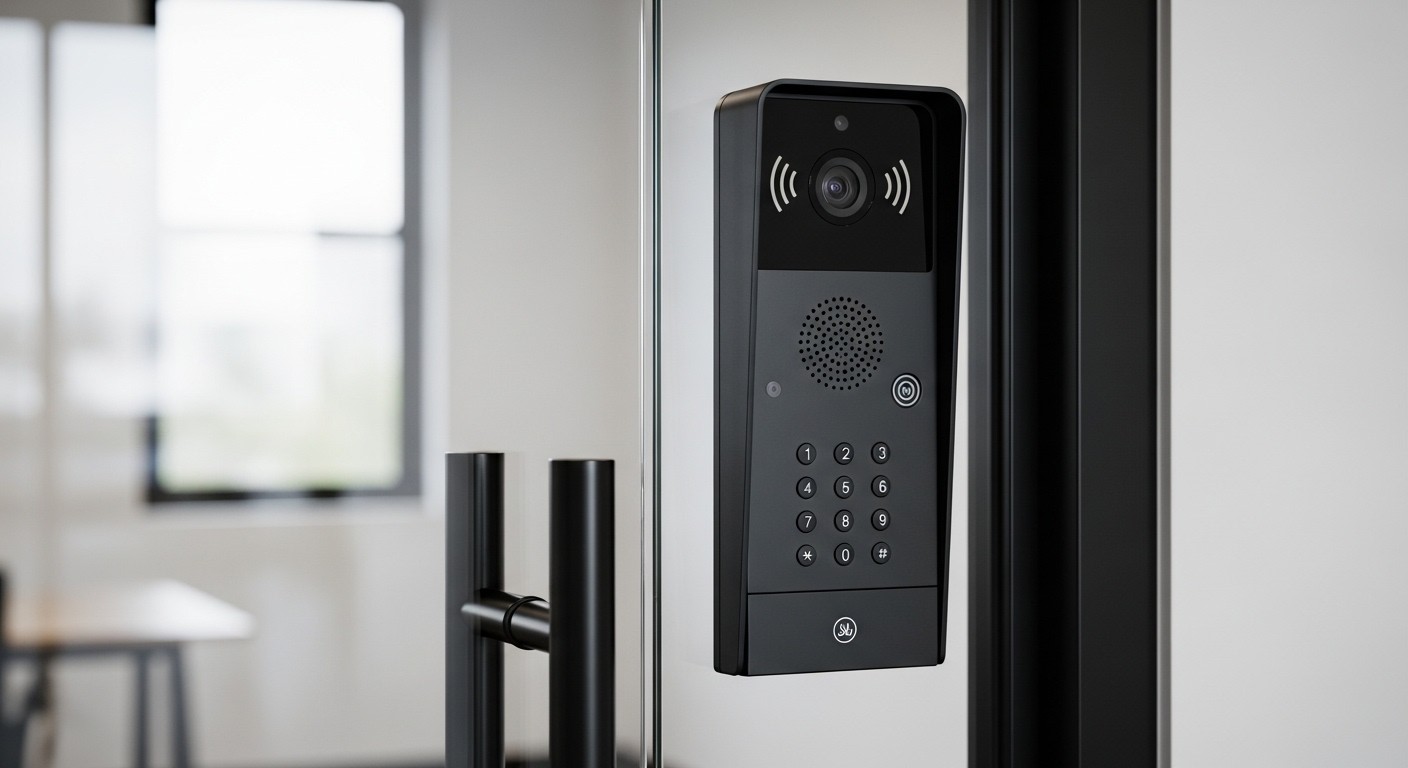
The main building entry is the first interaction point for every member, guest, and visitor. In a coworking space, this panel needs to serve multiple functions simultaneously — member credential acceptance (app, fob, PIN), visitor intercom to reach members remotely, guest access approval via member mobile, and delivery management.
The panel must be HD video-capable with wide-angle lens — minimum 160-degree field of view — to capture the full entry zone including accompanying individuals. This wide-angle capability is not optional in coworking environments where tailgating (following an authorised member through a controlled door) is the primary unauthorised access risk.
Two-way audio quality matters more in commercial environments than residential. Brisbane coworking spaces in CBD buildings experience significant ambient noise — HVAC systems, street traffic, construction — that degrades audio quality on standard panels. Specify panels with noise-cancelling microphones and amplified speakers rated for commercial noise environments.
Tiered Zone Access Architecture
A Brisbane coworking space with professional access architecture typically operates across four access zones, each with distinct credential requirements:
Zone 1 — Building lobby to coworking entry: All members and approved guests. Video intercom at main door. All credential types accepted.
Zone 2 — Hot desk and common areas: All active members during their permitted hours. App or fob entry. Automatically restricted to business hours for hot desk memberships.
Zone 3 — Dedicated desks and collaborative areas: Dedicated desk and private office members. Extended hours access. 24/7 for premium tiers.
Zone 4 — Private offices and server/equipment rooms: Private office tenants and authorised staff only. 24/7 access. Biometric or high-security credential options appropriate here.
This architecture is not complex to implement — it requires configuration during system setup, not physical infrastructure beyond standard access readers at zone boundaries. However, it must be designed before installation. Retrofitting zone architecture into a space that was installed without this planning adds $2,800-$4,200 to rectification costs.
Integration With Coworking Management Software
Brisbane coworking operators managing memberships through platforms like Nexudus, Optix, or Cobot can integrate these directly with cloud-connected intercom and access systems. The integration automates the credential lifecycle — new members gain access the moment their membership is activated; departing members lose access the instant their membership ends.
This automation eliminates the most common security vulnerability in coworking spaces: former members retaining access credentials after cancellation. In manual systems, this happens regularly — staff forget to retrieve fobs, members don’t return them, or the revocation process is delayed. In integrated systems, it is structurally impossible.
Our access technologies comparison guide covers the specific technologies — RFID, Bluetooth, facial recognition, PIN — and which combination best serves different coworking configurations.
Brisbane-Specific Installation Considerations
Brisbane’s subtropical environment creates installation requirements that differ from standard commercial specifications. As detailed in our Brisbane climate analysis, the local conditions accelerate equipment deterioration in ways that national specification templates don’t account for.
External Panel Specifications for Brisbane Buildings
Most Brisbane coworking spaces occupy commercial buildings where the main entry panel is exposed to Queensland’s weather — direct sun on north and west faces, high humidity year-round, and electrical surges from summer storm activity.
For external panels, specify IP66-rated housing minimum — not IP65, which is the standard commercial default. IP66 provides the additional protection against high-pressure water entry that Brisbane’s storm season generates. The cost premium over IP65 panels is $80-$160 per panel. The cost of replacing a failed IP65 panel mid-lease — including the access disruption and member communication required — is $1,400-$2,800.
Surge protection on all entry point electrical connections is non-negotiable in Queensland’s storm environment. A single surge event can destroy an unprotected control panel. Surge protection adds $80-$140 per point. The replacement cost of surge-damaged equipment is 10-20 times this figure.
Leased Commercial Space Considerations
Most Brisbane coworking operators lease their space rather than own it. This creates installation considerations that residential and owner-occupier commercial installations don’t face.
Permanent modifications — core drilling, new conduit runs — require landlord approval. However, intercom system upgrades in leased commercial space typically qualify as lessee improvements and receive routine approval, particularly when they enhance building security for all tenants.
Surface-mounted and wireless overlay systems provide an alternative for leases where landlord approval is delayed or restricted. These systems deliver full access control functionality with minimal structural modification — mounting hardware attaches to existing door frames and walls without core drilling. For operators on short-term leases (under 3 years), the full portability of wireless systems means the investment relocates with the business.
Multi-Floor and Multi-Building Coworking Operations
Several Brisbane coworking operators have expanded across multiple floors of a single building — or across multiple buildings in the same precinct. Hub Australia’s Brisbane operations span multiple floors of premium CBD space. This creates a unique intercom architecture requirement: a single management system spanning multiple physical entry points across potentially different tenancies.
Cloud-managed IP systems handle this natively. A single operator dashboard controls all entry points regardless of floor or building location. Member credentials work consistently across all locations within the operator’s network. Access logs from all points consolidate in a single view.
This capability is what makes multi-site coworking scalable. As Brisbane coworking operators grow, the system grows with them — adding a new location requires configuration, not new hardware procurement or parallel system management.
Real Cost Analysis: What Brisbane Coworking Intercom Systems Actually Cost in 2026
Cost transparency prevents the false economy of under-specification. The following reflects actual Brisbane pricing for coworking-appropriate systems in 2026.
Small Coworking Space (Under 20 Desks, Single Entry)
Typical configuration: boutique operator in a converted terrace or small commercial tenancy in Paddington, West End, or Newstead.
| Component | Cost Range |
|---|---|
| IP video intercom panel (HD, commercial-grade) | $920 – $1,480 |
| Mobile app integration platform (annual) | $240 – $480 |
| Electronic door strike or magnetic lock | $280 – $520 |
| RFID access readers (x2 zones) | $480 – $720 |
| Surge protection | $160 – $240 |
| Licensed electrician installation | $580 – $840 |
| Total installed | $2,660 – $4,280 |
Medium Coworking Space (20-60 Desks, Multiple Zones)
Typical configuration: established operator in Fortitude Valley, South Brisbane, or Milton with hot desk, dedicated desk, and private office tiers.
- Main entry video intercom system: $2,660 – $4,280
- Zone 3-4 internal access readers (x4-6 additional points): $1,920 – $3,240
- Cloud management platform with coworking software integration: $480 – $960/year
- Total installed: $5,060 – $8,480
Large or Multi-Location Coworking Operation (60+ Desks or Multiple Sites)
Full enterprise configuration with visitor management, multi-site dashboard, facial recognition option, and meeting room integration.
Total installed: $9,200 – $18,400 depending on entry point count, zone complexity, and feature requirements.
ROI Calculation: The 9-Month Payback Model
For a medium Brisbane coworking space investing $6,800 in a complete system:
Staff time saving: 2.5 hours daily at $38/hour = $95/day = $34,675/year. Premium membership enablement: 4 additional 24/7 private office memberships at $1,200/month = $4,800/month additional = $57,600/year. Reduced member churn (2% improvement): $28,000 monthly revenue × 2% = $560/month = $6,720/year.
Total annual benefit: $99,000+ System cost: $6,800 Payback period: approximately 25 days.
This calculation is deliberately conservative — it excludes insurance premium reductions, reduced liability exposure, and the compounding value of member retention on lifetime value. The financial case for professional intercom investment in Brisbane coworking spaces is not marginal. It is overwhelming.
Choosing the Right System: What Brisbane Coworking Operators Must Evaluate
The coworking intercom market contains products designed for residential apartment buildings, standard commercial offices, and enterprise security environments. None of these is designed specifically for coworking. Operators need to evaluate systems against coworking-specific criteria.
Non-Negotiable Features for Brisbane Coworking
Cloud management with remote administration. Operators must be able to add members, revoke access, approve visitor requests, and review access logs from anywhere via smartphone. Systems requiring on-site configuration for routine credential changes are not suitable for coworking operations.
Tiered access scheduling. The system must support different access hours for different membership tiers — hot desk members 7am-7pm, dedicated desk members 6am-10pm, private office tenants 24/7. This scheduling must be automatic, not requiring manual intervention for each access event.
Instant credential revocation. When a membership ends — for any reason — the former member’s access must be terminable immediately from the management dashboard without physical key retrieval. This is the single most important security feature for coworking environments with high member turnover.
Visitor call-through to member mobile. Guests arriving at the building entry must be able to call their host member directly via the intercom panel. The member receives a video call notification on their smartphone and can admit the guest remotely from anywhere. This eliminates the reception desk requirement for routine visitor management.
Digital access logging with video capture. Every entry event must generate a timestamped record with the credential used and — for the main entry panel — a video capture of the person entering. This audit trail is the foundation of incident management and insurance documentation.
Coworking Software Integration Priority
Brisbane coworking operators using Nexudus, Cobot, Optix, or similar management platforms should prioritise intercom systems with documented API integrations with their specific software. The integration automates the credential lifecycle and eliminates the double-handling of member data between systems.
Before purchasing any intercom system, confirm in writing that the integration with your coworking management software is active, supported, and included in the product’s standard feature set — not a custom development project.
Scalability for Growth
Brisbane’s coworking market is growing. Operators who install systems that cannot scale — proprietary hardware with fixed capacity, management platforms limited to single-site operation — create upgrade costs within 24-36 months of initial installation.
Specify systems built on open IP architecture with documented API access. Confirm the manufacturer’s roadmap includes continued cloud platform investment. Ask explicitly: “If I open a second Brisbane location in two years, can this system manage both sites from a single dashboard?” If the answer requires hardware replacement rather than software configuration, the system is not appropriate for a growth-oriented operator.
Frequently Asked Questions
Do Brisbane coworking members actually expect app-based intercom access in 2026?
Yes — and increasingly, they require it rather than simply prefer it. Members selecting between comparable Brisbane coworking spaces in 2026 evaluate app-based access in the same category as high-speed internet and meeting room availability. It is infrastructure, not amenity. Spaces without mobile app entry are eliminating themselves from consideration by the corporate and professional members who generate the highest membership revenue. The demographic driving Brisbane’s coworking growth — hybrid workers from major firms, tech sector professionals, and interstate migrants — has experienced mobile app building access as standard in their previous workplaces. They will not accept a step backwards.
How do we handle guest access without a reception desk?
Modern video intercom systems eliminate the reception desk requirement for routine guest management. A guest arrives at the building entry, locates the member’s name on the directory panel, and initiates a video call. The member receives a notification on their smartphone — wherever they are in the building or outside it — and approves access with a single tap. The door opens. The entire process takes under 60 seconds and requires zero staff involvement. For Brisbane coworking operators running lean operations with minimal front-desk coverage, this self-service guest management capability is operationally transformative.
What happens when a member cancels and won’t return their fob?
With digital credential systems, this scenario is irrelevant. The moment a membership is cancelled in your coworking management software — assuming integration is configured — all access credentials associated with that member are automatically revoked. The member cannot enter using their app, fob, or PIN. There is nothing to retrieve. This is the definitive solution to the credential management problem that plagues coworking operators using physical key systems, where membership cancellations routinely leave former members with active building access for weeks or months.
Can the system manage different access hours for different membership tiers automatically?
Yes — this is a standard configuration function in cloud-managed access systems. You define access schedules for each membership tier once during setup: hot desk members access during business hours, dedicated desk members have extended hours, private office tenants have 24/7 access. When a member’s credentials are created, they are automatically assigned the schedule matching their membership tier. If a member upgrades from hot desk to dedicated desk, their access schedule updates automatically. No manual intervention required for any routine membership change.
We’re in a leased Brisbane CBD building. Will our landlord approve intercom upgrades?
In almost all cases, yes — particularly when the upgrade improves building security for all tenants rather than just your tenancy. Frame the approval request around collective security benefit: video monitoring of the building entry, digital access logs for all entry events, and improved after-hours security all serve the landlord’s interests alongside yours. For operations on short-term leases or where landlord approval is delayed, wireless overlay systems provide full access control functionality with zero structural modification — no drilling, no permanent fixtures. These systems are fully relocatable if you move premises.
How does a Brisbane coworking intercom system integrate with meeting room booking?
Integration between your meeting room booking software and the access control system enables automatic guest access tied to bookings. When a member books a conference room and adds guest names, the system generates temporary access credentials valid for the booking window only. The guest arrives, uses their temporary code or QR, and gains access to the building and specifically to the meeting room zone — nothing beyond. When the booking ends, their access expires automatically. This self-service model eliminates the staff overhead of manually managing guest access for every meeting room booking — a significant time saving in spaces with high meeting room utiliZation.
Contact Intercom Solutions Brisbane
Brisbane’s coworking market is AUD $537 million and accelerating. The operators building sustainable businesses in this environment are those who invest in the operational infrastructure — including professional intercom systems — that makes 24/7 access, low staff overhead, and premium membership pricing simultaneously achievable.
Our team has assessed and installed intercom systems across Brisbane commercial environments including coworking spaces, serviced offices, and flexible workspace operations. We understand the multi-tier access requirements, coworking software integration needs, and Brisbane climate specifications that determine whether a system actually serves your operation.
Our Coworking Assessment Service Includes:
✓ Free operational assessment of your current access management workflow ✓ Zone architecture design aligned with your membership tier structure ✓ Coworking software integration confirmation before any hardware is specified ✓ Lease-compliant installation options for tenanted commercial spaces ✓ Brisbane climate specification for all external entry points ✓ Multi-site management planning for growth-oriented operators ✓ ROI modelling based on your specific membership revenue and staff costs ✓ After-hours installation scheduling to avoid member disruption
Contact Details: 📧 Email: sales@intercomsolutions.com.au 📍 Address: 95 N Quay, Brisbane City QLD 4000, Australia 🌐 Website: intercomsolutions.com.au
James eventually upgraded his Fortitude Valley space seven months after that 11pm drive to Coorparoo. His membership revenue increased 19% in the following quarter. He stopped answering after-hours lockout calls entirely. His competitor’s 12% rate increase no longer looked unreachable.
Schedule your free coworking assessment today and find out exactly what professional intercom access is worth to your Brisbane operation.
![The $12 Billion Problem: How Brisbane Families Are Finally Stopping Package Thieves – [Cloned #540]](https://intercomsolutions.com.au/wp-content/uploads/2026/03/CAPA-JPEG-150x150.jpg)