Introduction
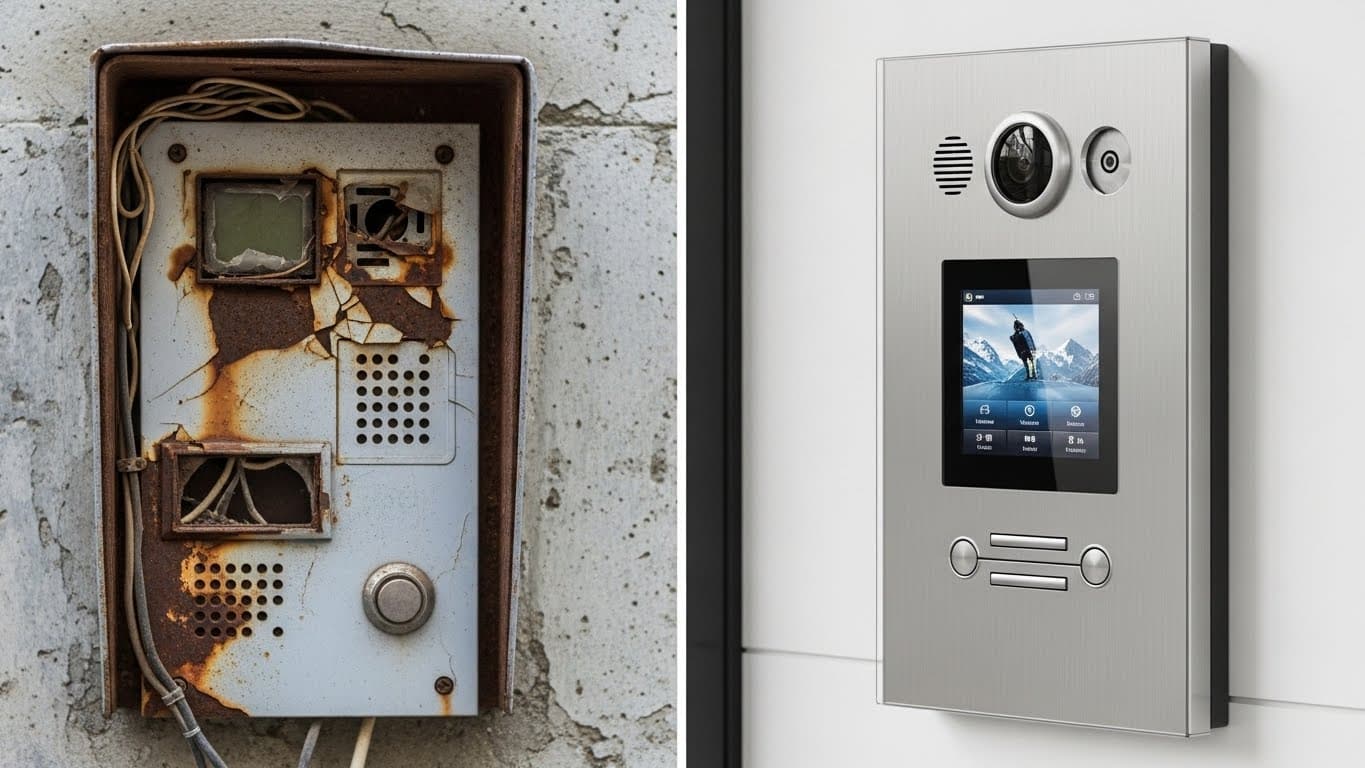
You’re standing in front of your building’s aging intercom system, watching it flicker for the third time this month. The repair technician just quoted you $850 for parts that may not even be available anymore. Your insurance broker mentioned something about discounts for modern security systems. A tenant complained again about missing a package delivery.
The question everyone asks: “Should we upgrade, or just keep patching this thing together?”
Here’s the uncomfortable truth most suppliers won’t tell you: sometimes upgrading doesn’t make financial sense. But when it does, the numbers can be compelling—we’re talking about payback periods as short as 18-24 months, with ongoing savings that continue for a decade or more.
Let’s cut through the sales pitches and look at the actual mathematics of intercom system ROI. By the end of this article, you’ll have a framework to calculate whether upgrading your Brisbane property’s intercom system makes financial sense—backed by real numbers, not marketing fluff.

The Real Cost of Your Current System (That You’re Not Tracking)
Before discussing upgrade costs, let’s establish your baseline. Most property managers dramatically underestimate what their existing intercom actually costs.
Hidden Operational Expenses
Traditional intercom systems typically require annual maintenance contracts costing between one hundred and three hundred dollars per unit, but that’s just routine service. Emergency repairs tell a different story.
For a 20-unit building with a traditional wired system:
- Annual maintenance contract: $2,000-$4,000
- Emergency callouts: $850-$1,500 per incident (2-4× annually)
- Replacement parts: $400-$1,200 annually
- Total visible costs: $4,850-$10,700 per year
Staff Time Drain: Here’s what nobody tracks but everyone feels—managing physical keys, coordinating contractor access, handling delivery issues, and troubleshooting system failures. At an average property management rate of $45/hour, that’s $6,480-$12,600 annually in staff time.
The Telephone Line Trap: If your building uses a landline-based call box system, you’re paying $40-$80 monthly per line plus long-distance charges. Annual telecommunications cost: $840-$1,680
What System Obsolescence Actually Costs
Your 12-year-old system might technically “work,” but it’s costing you in ways that don’t show up on repair invoices. In Brisbane’s competitive rental market, modern intercom systems have enabled some properties to collect twenty-seven percent higher rent than the market average.
For a 20-unit building at $450/week average, a conservative 12% premium equals $56,160 additional annually—that’s a five-year opportunity cost of $280,800.
Breaking Down Upgrade Costs: What You’ll Actually Pay
The intercom industry loves quoting ranges so broad they’re meaningless. Let’s get specific.
Hardware Investment by Property Type
Single-Family Homes (1-2 Entry Points)
- Total project cost: $900-$3,800
Small Multi-Unit Buildings (4-12 Units)
- Total project cost: $7,500-$15,000
Medium Multi-Dwelling Buildings (12-50 Units)
- Total project cost: $14,500-$31,000
Large Apartment Complexes (50+ Units)
- Typical range: $25,000-$75,000+ depending on complexity
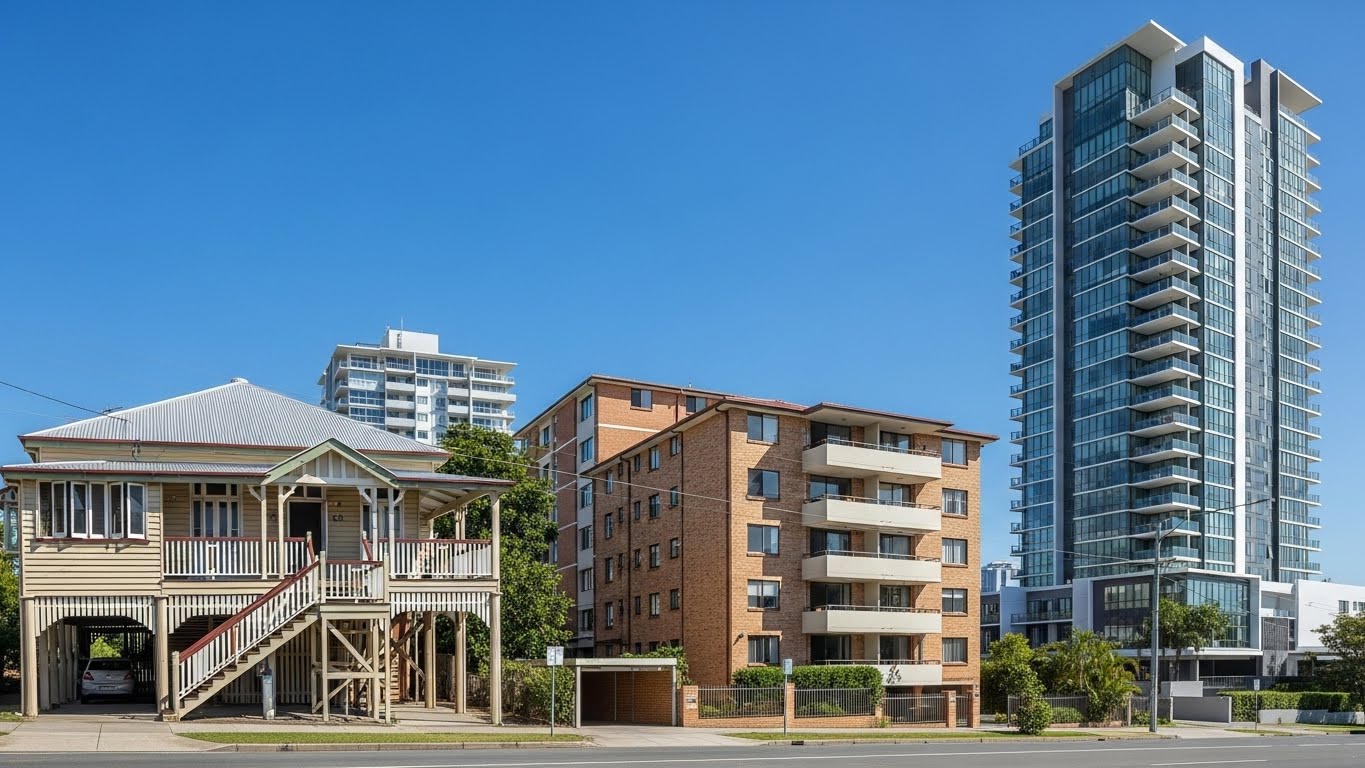
Brisbane-Specific Considerations: Weather protection (IP65+ rating), UV-resistant housings for Queensland sun, and surge protection for storm season add $200-$500 per entry point. Installing systems in existing buildings takes more labor—budget 30-50% more for retrofits than new construction quotes.
Modern systems include ongoing costs: cloud storage ($15-$50/month), mobile app features, and remote monitoring. Annual software/service costs: $180-$1,200
However, annual maintenance for modern IP systems ($400-$1,000) is dramatically less than traditional systems requiring $2,000-$4,000 annually.
Where Savings Actually Come From
Now we get to the interesting part—where modern intercom systems actually make you money.
Insurance Premium Reductions: The Guaranteed Return
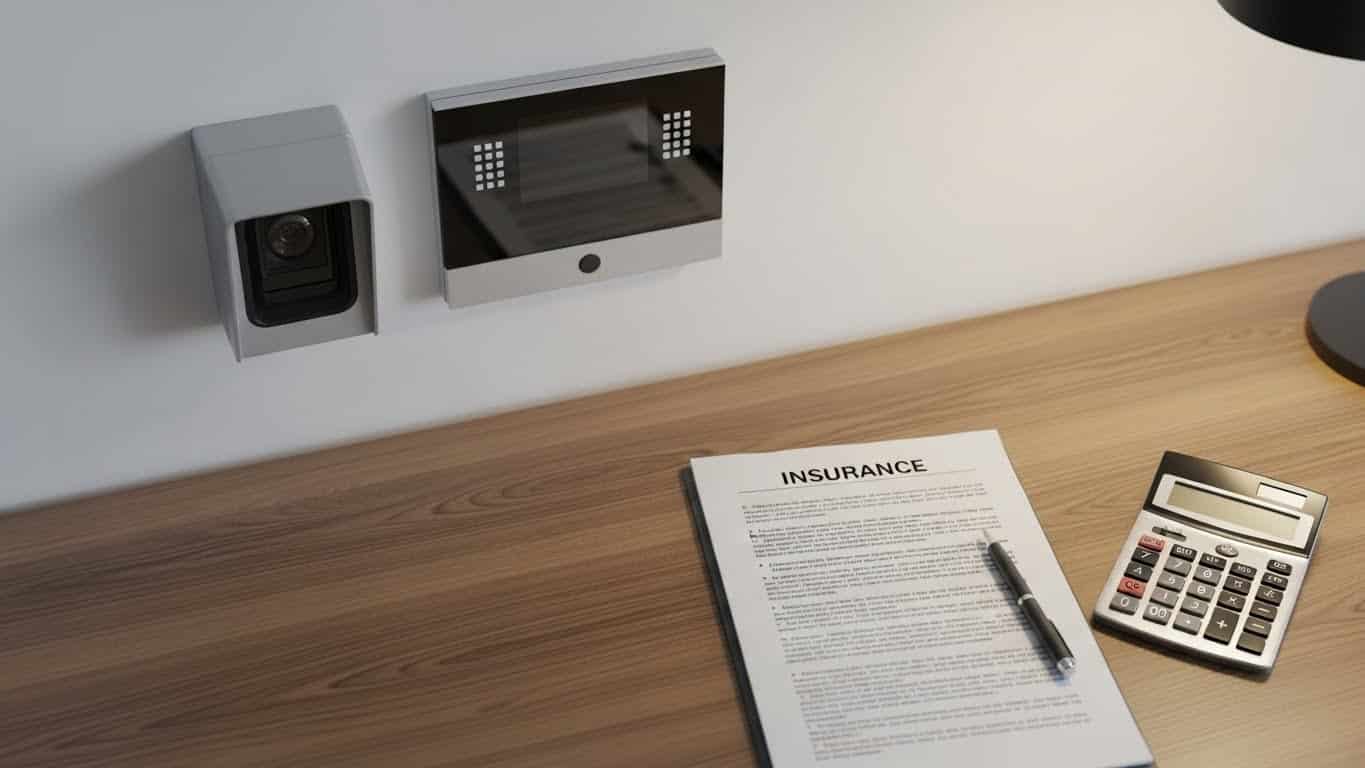
Home insurance providers typically offer discounts ranging from five to fifteen percent for security systems with professional monitoring.
Real Brisbane Numbers:
- 24-unit apartment building ($18,000 annual premium): $900-$1,800/year savings
- Office building ($45,000 annual premium): $3,150/year savings
- 10-year cumulative savings: $9,000-$31,500
To maximize your discount: get written certification of system installation, document professional monitoring, and ensure your system includes both video recording and access control.
Operational Efficiency Gains
Upgrading to modern intercom systems has allowed property owners to save up to five thousand dollars annually by eliminating package theft, telephone lines, and door rekeying.
Staff Time Liberation: Modern systems with mobile access save 150 hours annually in key management, contractor coordination, delivery handling, and troubleshooting. At $45/hour management rate: $6,750 annual value
Key/Fob Management Elimination: Average 20-unit buildings experience 8-12 lost key/fob incidents and 1-2 security-concern rekeys annually, costing $1,400-$2,800. Modern systems with mobile access and temporary PINs eliminate this entirely.
Package Theft Prevention: Australian data shows urban areas experience 3-8 package theft incidents per building annually, averaging $180-$350 per incident. For a 20-unit building, that’s approximately $1,400 annual theft cost. Modern intercoms with delivery PIN codes and video verification effectively eliminate this.
Property Value and Rental Premium
Upgrading to modern intercom systems has allowed properties to collect higher rent than market average and lower vacancy rates significantly.
20-Unit Building Example (conservative 6% premium):
- Current annual rental income: $468,000
- Additional annually: $28,080
- Over 10 years: $280,800 additional revenue
Even attributing only half this premium to the intercom system justifies significant investment.
Case Study: Real Brisbane Property Results
“Fortitude Valley Apartments” – 32 Units
Before Upgrade (2022):
- 1998 analog system
- Total annual operating cost: $15,660 (maintenance, repairs, phone lines, staff time)
Upgrade Investment (2023):
- Cloud-based video system with installation and network upgrades
- Total investment: $19,500
After Upgrade:
- New annual operating cost: $1,080
- Insurance discount (8%): $1,760 savings
- Annual operational savings: $14,580
Financial Results:
- Payback period: 16 months
- 5-year cumulative benefit: $53,400
- 10-year cumulative benefit: $126,300
When Upgrading Doesn’t Make Sense
Let’s be honest—sometimes the math doesn’t work:
- Short-term ownership: Selling within 2-3 years with functional current system
- Very small properties: Single homes with low visitor traffic
- Recent upgrades: Quality systems installed within last 5 years
- Budget constraints: Capital unavailable and financing unattractive
Financing Options
Capital availability shouldn’t be the barrier to positive-ROI investments.
Supplier Financing Example:
- $15,000 system financed at 6% over 48 months
- Monthly payment: $352
- Monthly operational savings: $1,215
- Monthly cash-flow benefit: $863
Other options include capital expenditure (no interest costs), body corporate special levies (spread across owners), and equipment leasing (tax-deductible operational expense).
Tax Benefits
Under Australian tax law, security systems in rental properties may qualify for immediate write-offs (small businesses) or capital works deductions. A $15,000 system depreciated over 10 years provides $1,500 annual deduction—at 32.5% tax rate, that’s $487.50 annual tax benefit.
Consult your accountant to maximize deductions specific to your situation.

The Intangible Benefits
Some returns aren’t easily quantified but significantly impact your investment decision:
Tenant Satisfaction: Industry data suggests 15-20% improvement in satisfaction scores and 8-12% reduction in turnover. For a $450/week unit, avoiding one vacancy every 3 years saves $1,800-$3,600.
Liability Risk Reduction: Video documentation of all entry events provides evidence in case of incidents and protection against false claims.
Future-Proofing: Cloud-based systems receive regular feature updates, extending functional lifespan without hardware replacement. Traditional systems become obsolete; modern systems improve over time.
Making the Decision: A Practical Framework
The 3-Year Test
3-Year Current System Cost = Current Annual Cost × 3 3-Year New System Cost = Investment + (New Annual Cost × 3)
If 3-Year Current > 3-Year New → Upgrade makes sense
The Payback Period Threshold
- Under 24 months: Excellent investment
- 24-36 months: Good investment
- 36-60 months: Acceptable for long-term holds
- Over 60 months: Reconsider alternatives
Questions to Ask Yourself
- Do we plan to hold this property for 5+ years?
- Are we experiencing regular maintenance issues?
- Could operational efficiency gains justify investment alone?
- Will modern amenities support rent increases?
- Is insurance discount available and documented?
If you answered “yes” to 4+ questions, upgrading likely makes financial sense.
[IMAGE 9: Decision flowchart for intercom upgrade evaluation] Alt: Decision flowchart evaluating intercom system upgrade timing and viability
Conclusion: The Bottom Line on Intercom System ROI
For most Brisbane commercial and multi-unit residential properties, upgrading from traditional to modern IP-based intercom systems pays for itself within 18-36 months through:
- Reduced maintenance and repair costs (50-70% reduction)
- Insurance premium savings (5-10% annually)
- Operational efficiency gains (100-200 hours annually)
- Elimination of legacy telecommunication costs ($800-$2,000 annually)
- Package theft prevention ($1,000-$3,000 annually)
The uncomfortable question isn’t whether to upgrade—it’s whether you can afford NOT to.
Every year you delay represents ongoing maintenance costs you could eliminate, insurance discounts you’re not capturing, operational inefficiencies draining resources, and compounding opportunity costs.
At Intercom Solutions, we understand that security system investments aren’t about fancy features—they’re about financial performance. Our team specializes in creating Brisbane-specific ROI analyses for your property, accounting for your current system’s actual costs, Queensland insurance considerations, Brisbane market rental premiums, financing options, and tax optimization strategies.
Ready to run the numbers on your property? Contact us for a complimentary ROI analysis specific to your Brisbane building. We’ll assess your current costs, project upgrade investment, and calculate your realistic payback period—no sales pressure, just honest numbers.
[IMAGE 10: Call-to-action Intercom Solutions Brisbane contact] Alt: Intercom Solutions Brisbane free ROI analysis consultation contact
Frequently Asked Questions
What’s the typical payback period for apartment buildings? Most multi-unit residential buildings (12-50 units) see payback periods between 18-36 months. Properties with higher maintenance costs on existing systems typically fall on the shorter end of this range.
Will upgrading my intercom actually reduce insurance premiums? Most Australian insurers offer security system discounts ranging from 5-10% for residential properties and up to 15% for commercial buildings with comprehensive monitored systems. Always confirm discount availability with your specific insurer before purchasing.
Can I finance an intercom system upgrade? Yes, multiple financing options exist including supplier financing (24-60 months), equipment leasing, and special levies for body corporate properties. Many arrangements create positive monthly cash flow when payments are lower than operational savings.
How long do modern intercom systems last? Quality IP-based intercom systems typically last 10-15 years with proper maintenance. Cloud-based systems receive regular software updates that extend their functional relevance beyond traditional hardware lifecycles.
Are DIY installation systems worth considering? For small properties (1-4 units), quality DIY systems can offer excellent value. For larger properties, professional installation ensures optimal performance, proper integration, compliance with building codes, and maximizes insurance discount eligibility.
![The $12 Billion Problem: How Brisbane Families Are Finally Stopping Package Thieves – [Cloned #540]](https://intercomsolutions.com.au/wp-content/uploads/2026/03/CAPA-JPEG-150x150.jpg)