Introduction: The Penthouse That Almost Wasn’t Sold
In September 2025, a Brisbane developer stalled settlement on a 22-unit Newstead apartment building for eleven weeks. The issue had nothing to do with construction quality, defects, or finance. It was the intercom system.
The developer had specified a budget audio-only entry system during the design phase — a decision made to save $8,400 on a $4.7 million project. By settlement, buyers were refusing to proceed without video intercom capability. The body corporate couldn’t agree on a retrofitted solution. Solicitors exchanged letters. The penthouse buyer threatened to rescind.
Final resolution cost: $34,200 in system rectification, $18,600 in legal fees, and eleven weeks of holding costs on unsettled stock. Total: $52,800. The original saving: $8,400.
This scenario is not a cautionary tale from 2015. It happened in September 2025, in Brisbane’s most competitive apartment market in a decade. And it happens regularly — because intercom specification decisions get made early in the design process, by people focused on construction costs rather than resident expectations and future technology integration.
Brisbane’s new development pipeline is significant. The Queensland Government’s ShapingSEQ Southeast Queensland Regional Plan projects 900,000 additional dwellings across the region by 2046. Inner Brisbane alone has 47 residential developments currently under construction or in development approval. Every single one of those buildings will live with its intercom specification for 12-15 years.
This guide is written for developers, builders, project managers, and specification consultants who want to get that decision right the first time — and understand exactly what “right” means in Brisbane’s specific climate, regulatory, and market context in 2026.
Why Intercom Specification Decisions Are Made Wrong — Systematically
Understanding why Brisbane developers consistently under-specify intercom systems is the first step to avoiding the pattern. The problem is structural, not individual.
The Procurement Timing Problem
Intercom systems are typically specified during early design development — Stage 2 or Stage 3 of the RAIA design process — when the project is focused on structural systems, hydraulics, and mechanical engineering. Security and communications systems are line items in a broader electrical specification, reviewed by a cost consultant focused on reducing the tender price.
At this stage, the project team has no direct relationship with future residents. They cannot know what those residents will expect at completion, 18-36 months later. They are making decisions for people who don’t yet exist, in a technology environment that moves faster than any construction timeline.
The result: specifications that reflect what was acceptable when the project was designed, not what residents expect when they move in.
The Value Engineering Trap
When construction tenders come in over budget — which they almost always do — the value engineering process targets line items that don’t directly affect structural integrity or planning approval. Security and intercom systems are consistently in the first wave of cuts.
A $12,000 reduction in intercom specification saves less than 0.3% on a $4 million construction budget. However, it creates a resident experience gap that persists for the entire building lifecycle. Body corporate minutes from Brisbane strata buildings consistently show intercom system inadequacy in the top three resident complaints for buildings completed between 2015 and 2022.
The “Minimum Code Compliance” Misunderstanding
The National Construction Code (NCC) sets minimum standards for building performance. Meeting minimum NCC requirements for communications and security is not the same as meeting resident expectations or current market standards. This distinction matters enormously in 2026.
A building that complies with NCC minimum requirements may still be functionally inadequate from a resident satisfaction perspective. Developers who conflate “code compliant” with “market appropriate” create the conditions for the rectification scenarios described above.
What Brisbane’s 2026 Regulatory Environment Actually Requires
Regulatory requirements for intercom systems in new Brisbane developments sit across multiple frameworks. Understanding each — and where they intersect — prevents compliance gaps that create certification delays.
National Construction Code 2022 (NCC 2022) Requirements
The NCC 2022, adopted in Queensland from 1 May 2023, contains specific provisions affecting intercom and access control in new residential buildings.
Class 2 buildings (apartment buildings): The NCC requires communication systems enabling visitors to communicate with residents from building entry points. This establishes the baseline — audio communication minimum — but does not specify technology, quality, or capability beyond functional communication.
Accessibility provisions (NCC Section F): The NCC’s updated accessibility standards require that communication systems be operable by people with disabilities. This affects intercom panel height, audio amplification, and visual notification requirements. Panels must be installed at heights accessible from a wheelchair — 900mm to 1200mm centreline from finished floor level. Hearing loop compatibility or visual notification alternatives are required.
Fire and evacuation integration: Communication systems in Class 2 buildings must not interfere with emergency warning and intercom systems (EWIS). In buildings over 25 metres, the intercom specification must be reviewed against EWIS requirements by a fire engineer. This integration review is frequently missed in tender specifications, creating certification delays during occupancy certificate processes.
Queensland Development Code (QDC) Provisions
The QDC contains provisions specific to Queensland that supplement NCC requirements. Mandatory Part 8.1 addresses security for residential buildings, requiring that new Class 2 buildings include controlled entry to common areas.
This provision is what makes intercom systems mandatory rather than optional in Brisbane apartment buildings. However, “controlled entry” can be satisfied by various technologies — the QDC doesn’t prescribe video intercom specifically. Developers who read QDC 8.1 as satisfied by a basic audio system are technically correct but commercially exposed.
Brisbane City Council Local Laws and Planning Scheme
Brisbane City Council’s City Plan 2014 (currently under review for City Plan 2026) contains provisions affecting security and access control in new developments through development approval conditions.
High-density residential approvals in inner Brisbane — Fortitude Valley, South Brisbane, Newstead, Bowen Hills — increasingly contain specific conditions requiring contemporary access control systems. Conditions referencing “video intercom capability” or “digital access management” have appeared in development approvals since 2022 and are becoming more common as the council responds to community safety submissions.
Review your development approval conditions explicitly before finalising intercom specifications. A condition requiring video intercom capability that is missed during specification creates a certification problem at completion — not a rectification cost, but a genuine legal compliance issue.
The Technology Landscape: What to Specify in 2026
Specifying intercom systems for new Brisbane developments in 2026 requires understanding a technology landscape that has changed fundamentally since 2020. Systems specified pre-COVID are now commercially obsolete regardless of their technical functionality.
IP-Based Systems: The Only Viable Specification
Analog intercom systems — using dedicated 2-wire or 4-wire cabling infrastructure — were the development standard until approximately 2019. They remain technically functional, but they are commercially obsolete for new Brisbane developments in 2026.
IP-based systems operate over standard ethernet infrastructure. This has several critical implications for new development specification:
Infrastructure convergence: IP intercom systems share ethernet infrastructure with the building’s data network, CCTV, access control, and building management systems. A single structured cabling backbone serves all systems rather than separate dedicated cable runs for each. This reduces cabling costs by $4,200-$8,400 in a 20-unit building while simplifying future upgrades.
Remote management: IP systems are cloud-managed, meaning building managers and residents can access system functions via smartphone from anywhere. For off-the-plan buyers — a significant portion of Brisbane’s new development market — the ability to manage access remotely is a purchase decision factor, not a luxury feature.
Scalability: IP systems scale without infrastructure changes. Adding units, modifying access zones, or integrating new technologies requires software configuration rather than physical cable installation. For developers building in stages or planning future expansions, this scalability is financially significant.
Future-proofing: IP systems receive software updates that extend functionality over their hardware lifecycle. A system specified in 2026 can gain features — facial recognition integration, delivery management, visitor pre-registration — through software updates in 2028 or 2030 without hardware replacement.
Specifying analog systems in new Brisbane developments in 2026 is the equivalent of specifying VGA displays in a new commercial fitout. Technically functional, commercially indefensible.
Video as Baseline, Not Upgrade
Audio-only intercom systems were standard in Brisbane apartment buildings until 2018. Video capability was an upgrade that added cost. This distinction no longer exists in the market.
Video intercom is the 2026 baseline expectation for any new Brisbane residential development above 6 units. Specifying audio-only in buildings above this threshold creates immediate commercial exposure — buyers comparing properties will eliminate audio-only buildings from consideration without explicitly articulating why.
The cost differential between audio and video systems has narrowed dramatically. In 2018, video capability added approximately 35-45% to system cost. In 2026, the differential is 12-18%. The commercial risk of audio-only specification vastly exceeds this cost differential.
Mobile App Integration: Standard, Not Premium
Cloud-connected systems with mobile app integration — enabling residents to receive visitor notifications, view video, and release doors from smartphones — are now expected features in Brisbane’s new development market, not differentiating premium features.
For developers targeting the 25-45 demographic that drives inner-Brisbane apartment purchases, mobile app integration is as expected as USB charging points or NBN pre-connection. Its absence is noticed and commented upon in building reviews, Realestate.com.au listings, and word-of-mouth among buyer groups.
Specify mobile app integration as standard. The cost addition over non-connected systems is $280-$680 per building, not per unit — a rounding error in development economics.
Infrastructure Planning: Getting the Cabling Right Before the Concrete
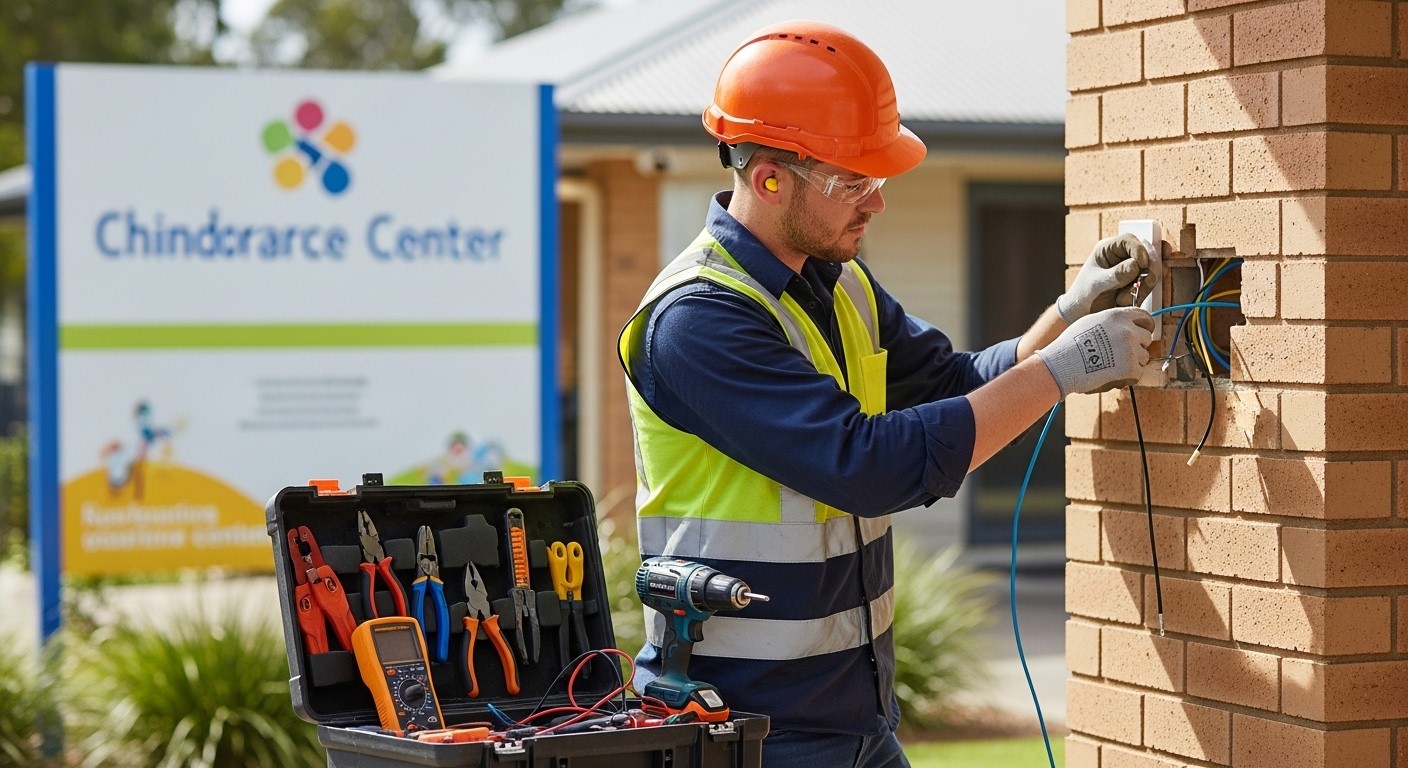
The most expensive intercom mistakes in Brisbane new developments aren’t made by choosing the wrong system. They’re made by failing to plan infrastructure correctly before walls are closed. Rectifying cabling after completion costs 4-8 times the original installation cost.
The Structured Cabling Imperative
IP intercom systems require Cat6 or Cat6A ethernet cabling from each entry point to the building’s main distribution frame (MDF) or intermediate distribution frames (IDFs). In a 20-unit building, this typically means:
- 2-4 external entry panel locations (main entry, car park entry, secondary pedestrian entry)
- 1 MDF location (typically in the communications room or fire indicator panel room)
- Cat6 runs from each entry point to the MDF, with conduit for future cable replacement
- Power over Ethernet (PoE) switches in the MDF powering entry panels without separate power cabling
The critical planning requirement: conduit pathways and pull strings must be installed during rough-in, before slabs are poured or walls are closed. Adding conduit after completion means cutting concrete or timber framing — costs starting at $2,800 per additional run.
Work with your electrical subcontractor to confirm conduit pathways are included in the rough-in scope, with a specific line item for intercom and access control infrastructure. “Included in general electrical” is not a sufficient specification — it means nothing is specifically allocated and conduit will be omitted when the electrical subcontractor looks for cost savings.
Future-Proofing Conduit Sizing
A common and expensive mistake: specifying conduit sized only for current requirements. Technology evolves. A conduit sized for current cable runs may be completely full by the time the building is three years old.
Specify conduit at minimum one size larger than current cable fill requirements — 25mm conduit where 20mm would currently suffice, 32mm where 25mm is the minimum. The cost difference is negligible. The value when a technology upgrade is needed in year 5 is substantial.
Additionally, specify spare conduit runs from entry points to the MDF during construction. A single 20mm spare conduit costs approximately $180 to install during construction. It costs $3,200-$4,800 to add after completion.
Power Redundancy Planning
Intercom systems in new Brisbane developments must maintain operation during power outages. Queensland’s storm season — particularly the November-March period — generates power interruptions that affect inner-Brisbane regularly.
Specify Uninterruptible Power Supply (UPS) backup for the intercom system’s PoE switch and MDF equipment as standard. UPS units providing 4-8 hours of operation are appropriate for residential developments. Cost: $480-$840 installed.
Buildings without UPS backup for intercom systems lose controlled entry access during power outages — leaving either doors locked (locking residents out of common areas) or doors open (creating security vulnerabilities). Neither outcome is acceptable for a new development.

Brisbane Climate Specification for New Developments
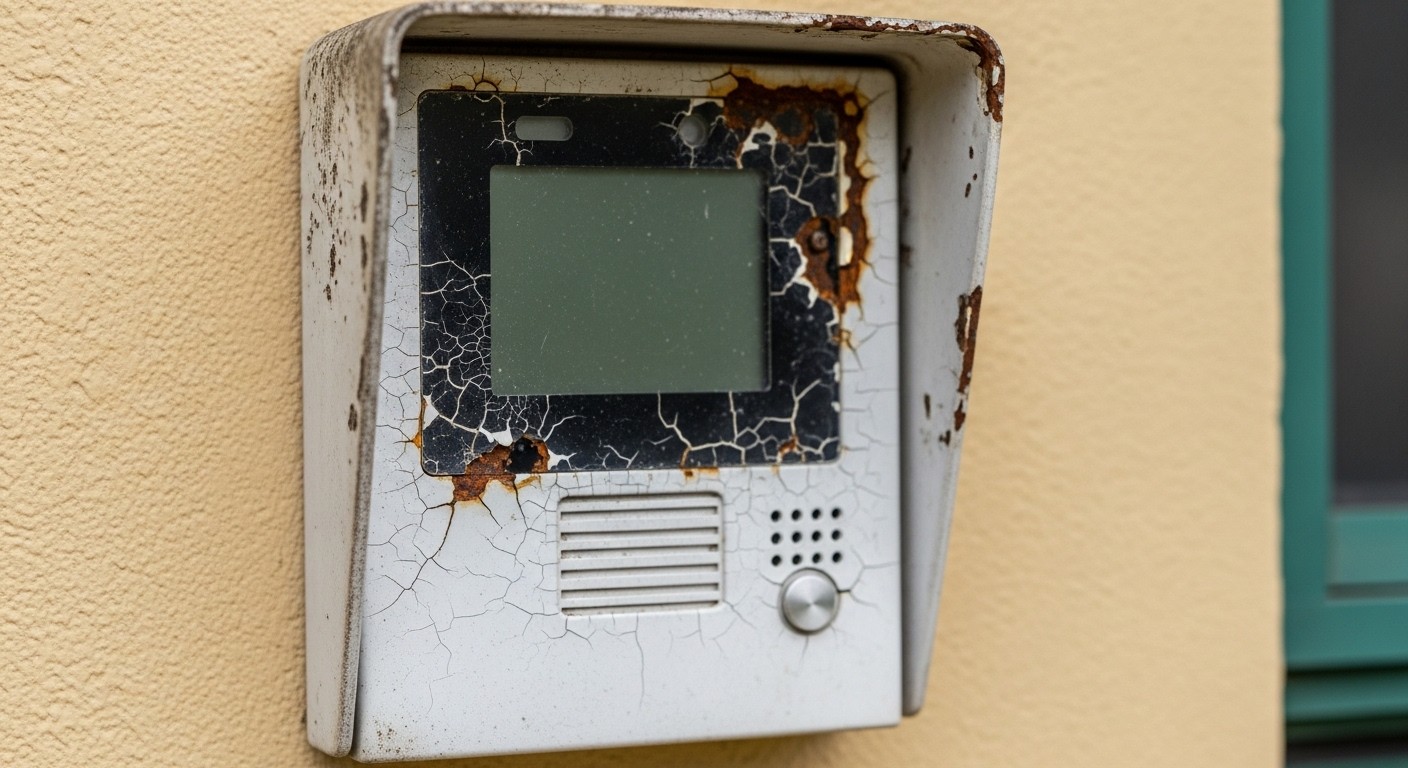
As established in our detailed climate analysis for existing systems, Brisbane’s subtropical conditions accelerate intercom deterioration significantly versus temperate climate specifications. New development specifications must account for these conditions from the design stage.
Why “National” Specifications Are Insufficient
Many Brisbane builders use national specification templates — either from system manufacturers or from their own previous interstate projects. These templates are typically developed for temperate climate conditions (Sydney, Melbourne, Canberra) and do not account for Queensland’s specific environmental profile.
Applying a Melbourne specification to a Brisbane development means specifying equipment rated for 40-60% humidity in a city that regularly exceeds 75% humidity. It means specifying UV resistance adequate for 1,800 annual sunshine hours in a city receiving 2,900 hours. The result is equipment that fails 3-5 years ahead of its rated lifecycle — creating rectification costs for developers still within their statutory warranty obligations.
Mandatory Specifications for Brisbane New Developments
External entry panels: IP66 minimum rating. IP65 is the most commonly specified rating for external panels. In Brisbane, IP66 is the correct baseline — it provides the additional protection against powerful water jets that Brisbane’s summer storm events generate. The cost difference between IP65 and IP66 panels is $80-$160 per panel. The rectification cost when a sub-specified panel fails during the statutory warranty period is $1,400-$2,800.
UV-resistant housing materials. Standard ABS plastic housings begin degrading under Brisbane’s UV intensity within 4-6 years. Specify panels with UV-stabilized polycarbonate or powder-coated aluminium housings. This is particularly critical for north and west-facing entries where afternoon sun exposure is highest.
Surge protection on all entry points. Queensland’s storm season generates electrical surges that damage unprotected electronics. Surge protection devices on each entry panel’s power and data connections cost $80-$140 per point. Replacing a surge-damaged panel during the statutory warranty period — and arguing with your electrical subcontractor about who’s liable — costs considerably more.
Coastal and riverside developments: marine-grade specification. Developments within 10km of Moreton Bay, the Brisbane River, or major creek systems require marine-grade component specification as standard. As documented in our suburb-specific guide, salt air corrosion in these locations reduces standard equipment life by 40-60%. Developments in Hamilton, Bulimba, Newstead, New Farm, South Brisbane, and West End all fall within this zone.
Access Control Design for Multi-Unit Developments
Intercom systems in new Brisbane developments don’t operate in isolation — they are the front end of a broader access control architecture. Getting this architecture right at design stage prevents the body corporate disputes that plague buildings where access zones were poorly conceived.
Defining Access Zones at Design Stage
Every new Brisbane residential development requires a deliberate access zone design. Common zone structures for Brisbane apartment buildings:
Public zone: External street and carpark approaches. No access control — open.
Semi-public zone: Building lobby, mail area, parcel lockers, building management office. Controlled by building entry intercom and resident credentials (key fob or mobile app). All residents and management have access.
Residential zone: Lift lobbies, corridors, individual floors. Controlled by floor-level access readers. Residents access their own floor only — not all floors. This prevents strangers following residents through lobby security into upper floor corridors.
Private zone: Individual apartments. Separate access control managed by individual residents.
Restricted zone: Plant rooms, comms rooms, management spaces. Key or credential access, management only.
Buildings that don’t design these zones explicitly during construction create body corporate governance problems at completion. Who has access to what? How is the visitor fob managed? Who pays for new credentials? These questions are dramatically easier to answer when the access architecture was designed intentionally.
Lift Integration
In buildings above 6 stores, lift destination control integration with the intercom and access control system is a current market expectation for premium Brisbane developments. Visitors granted access via intercom can be directed to a specific floor by the system — the lift arrives at lobby level, the visitor enters, and the lift travels directly to the correct floor without accessing other floors.
This feature, commonplace in commercial buildings, is increasingly specified in premium Brisbane residential developments. It eliminates the stranger-in-the-corridor problem entirely by preventing unauthorized access to residential floor levels at the lift rather than the corridor.
Specify lift destination control integration during design if your development targets the premium segment. The integration requires coordination between your intercom/access control subcontractor and your lift contractor — it cannot be added as an afterthought after lift installation.
Visitor Management for Short-Term Rental Buildings
Brisbane’s Airbnb and short-term rental market — extensively covered in our Airbnb intercom guide — means that many new Brisbane apartment buildings will have a significant proportion of units operating as short-term rentals from day one.
Buildings that don’t account for this in their intercom specification create body corporate problems immediately after settlement. Traditional resident credential systems (key fobs, fixed PIN codes) are incompatible with the dynamic, guest-specific access codes that short-term rental operations require.
Specify systems with time-limited code generation capability as standard in all new Brisbane residential developments above 10 units. This costs no more than traditional fob systems in 2026. It prevents the body corporate special levy for system rectification that otherwise emerges within 24 months of completion.
The Developer’s Cost Model: What Correct Specification Actually Costs
Transparency on costs prevents the false economy that drives under-specification. The following reflects actual Brisbane pricing for new development intercom systems in 2026.
Per-Unit Cost Benchmarks
The most useful metric for development economics is cost per unit, allowing direct comparison against sales revenue and specification benchmarks.
Basic compliant system (audio intercom, controlled entry): $180-$280 per unit installed. Meets NCC minimum requirements. Does not meet 2026 market expectations. Appropriate only for developments targeting the lowest price segment where buyers have no choice of comparable product.
Standard contemporary system (IP video intercom, mobile app, single building entry): $380-$580 per unit installed. Meets market expectations for Brisbane apartment developments in the $450,000-$750,000 price point. Suitable for mid-tier developments in growth corridors (Chermside, Carindale, Springfield).
Premium system (IP video, mobile app, floor-level access control, visitor management): $680-$980 per unit installed. Appropriate for inner-Brisbane premium developments targeting buyers in the $750,000-$1,500,000 range. Includes lift integration, facial recognition capability, and cloud management platform.
Ultra-premium system (full building automation integration, biometric access, concierge functions): $1,100-$1,800 per unit installed. Appropriate for prestige developments — Newstead penthouse buildings, river-frontage premium product, $1,500,000+ market.
The Rectification Cost Comparison
Against these per-unit costs, the rectification scenario is illuminating.
A 22-unit building that specifies audio-only at $220 per unit saves $3,520 versus the $400 per unit standard video system. Total saving: $3,960.
When that building faces the rectification scenario described in the introduction — buyers demanding video capability at settlement — the remediation cost runs $34,200-$52,800 including system, installation, legal costs, and holding period expenses.
The ratio is approximately 9:1. For every $1 saved by under-specifying at design stage, the developer risks $9 in rectification costs. This is not a conservative estimate — it is the documented outcome from Brisbane developments that made this calculation incorrectly in 2024 and 2025.
Amortisztion Perspective
Viewed from an amortization perspective, correct intercom specification becomes even clearer.
A $580 per unit system in a 20-unit building costs $11,600 total. Amortized over the 15-year expected system life, this is $773 per year for the entire building — $38.65 per unit per year. Divided by 12 months: $3.22 per unit per month.
The body corporate levy required to fund a rectification replacement (typically $34,000-$48,000 for a 20-unit building) represents a $1,700-$2,400 special levy per unit. This is what residents face when developers save $160 per unit at specification stage.
Working With Intercom Specialists During the Design Process
The most effective intercom outcomes in new Brisbane developments result from engaging a specialist during the design phase — not at the tender stage or after construction commences. The difference in outcome is substantial.
Design Stage Engagement (Preferred)
Engaging an intercom specialist during Stage 2-3 design enables:
Infrastructure coordination with the electrical subcontractor before conduit pathways are finalized. This ensures correct conduit sizing, routing, and spare capacity without the compromise and cost of post-tender variations.
Integration design with other building systems — CCTV, access control, building management systems, lift controls — before each system is independently specified and tendered. Integrated systems share infrastructure and management platforms, reducing total cost and operational complexity.
Development approval condition review to confirm intercom specifications satisfy any specific conditions imposed by Brisbane City Council. Conditions missed at this stage create certification problems at completion.
Specification documentation suitable for inclusion in the electrical subcontractor’s scope of works, with sufficient detail to prevent substitution of specified equipment with cheaper alternatives during tendering.
What to Provide Your Intercom Specialist at Design Stage
To enable an accurate specification, provide your intercom specialist with:
- Architectural drawings showing all entry points, common areas, and residential floors
- Confirmation of building height and class (relevant to NCC and EWIS requirements)
- Development approval conditions affecting security and communications
- Target market and price point (determines appropriate system tier)
- Confirmation of any short-term rental intention by developer or expected by buyers
- Proposed body corporate structure and management approach
- Any specific features requested by a marketing team or project sales strategy
This information enables a specification that serves the building’s commercial purpose, meets regulatory requirements, and prevents the infrastructure problems that create rectification costs.
Practical Checklist: Intercom Specification for Brisbane Developers
This checklist covers the key decisions that determine whether a Brisbane new development’s intercom system succeeds or creates costly problems.
Design Phase:
- Engage intercom specialist during Stage 2-3 design (not at tender)
- Review development approval conditions for specific intercom requirements
- Confirm building class and EWIS interaction requirements with fire engineer
- Define access zone architecture (public / semi-public / residential / restricted)
- Determine short-term rental proportion and specify visitor code capability accordingly
- Confirm lift destination control integration requirement for premium developments
Specification Phase:
- Specify IP-based system (not analog — no exceptions for new developments)
- Specify video capability as standard (not audio-only — no exceptions above 6 units)
- Specify mobile app integration as standard
- Specify IP66 minimum rating for all external panels in Brisbane climate
- Specify UV-resistant housing materials for north and west-facing entries
- Specify surge protection on all entry point connections
- Specify marine-grade components for coastal/riverside locations
- Specify UPS backup for MDF/IDF equipment (4-8 hours minimum)
Infrastructure Phase:
- Confirm conduit pathways and pull strings in rough-in scope as specific line items
- Specify conduit one size larger than current cable fill requirements
- Include spare conduit runs from each entry point to MDF
- Confirm NCC accessibility compliance for panel height and hearing loop requirements
- Confirm PoE switch capacity in MDF for all entry points
Pre-Completion Phase:
- Commission system fully before practical completion inspection
- Confirm all development approval conditions relating to intercom are satisfied
- Document system specifications for body corporate records
- Provide resident operating guides and credential issue process to body corporate
- Confirm warranty terms and service response commitments with installer
Frequently Asked Questions
What is the minimum intercom specification required by the NCC for new Brisbane apartment buildings?
The NCC 2022 requires communication systems enabling visitors to communicate with residents from building entry points in Class 2 buildings. This sets an audio communication minimum. Queensland’s QDC Mandatory Part 8.1 adds the requirement for controlled entry to common areas. Together, these create the compliance floor — but this floor sits well below current market expectations for new Brisbane developments. Developers who specify to minimum compliance standards in buildings above 6 units create commercial exposure that typically manifests as buyer objections, body corporate disputes, or rectification demands within 24 months of completion. The NCC minimum is a legal threshold, not a market standard.
Should we specify the same intercom system as our last project?
Only if your last project was completed within the last 2-3 years and used an IP-based video system with mobile app integration. Technology in this category evolves rapidly. Systems specified in 2021 or earlier are now commercially dated even if technically functional. Systems specified in 2023 or 2024 may be acceptable with confirmation that they still have manufacturer support and cloud platform continuity. Always confirm current manufacturer support status before re-specifying a previously used system. A system whose cloud platform is discontinued mid-building lifecycle creates a body corporate problem that is technically the developer’s legacy — even if it was compliant when installed.
Can we use wireless systems to avoid the structured cabling cost?
Wireless intercom systems are appropriate for some retrofit applications and short-term lease scenarios — covered in our retrofit guide. For new developments, wired IP infrastructure is strongly preferred. The reasons are practical: wireless systems are more vulnerable to interference in high-density buildings where multiple wireless systems operate simultaneously. They require battery management across multiple entry points. They have shorter operational lifespans in Brisbane’s climate. And they cannot be cost-efficiently integrated with CCTV, access control, and lift systems in the way that IP-wired infrastructure enables. The structured cabling cost in new construction — installed during rough-in before walls are closed — is marginal. The operational compromise of wireless systems in a new multi-unit building is not.
How do we handle intercom system warranty disputes between the developer and electrical subcontractor?
This is one of the most common post-completion disputes in Brisbane new developments. The developer holds statutory warranty obligations to the body corporate. The electrical subcontractor holds contractual warranty to the developer. When a system fails within the warranty period, the question of whose responsibility it is creates disputes that delay resolution and frustrate residents.
Prevention is straightforward: specify the intercom system with sufficient detail that substitution is impossible during tendering. Require the electrical subcontractor to name the specific system and installer in their tender. Include system commissioning sign-off as a practical completion requirement. Obtain the manufacturer’s warranty documentation directly, not through the subcontractor. These steps create a clear chain of responsibility that resolves disputes quickly rather than prolonging them.
What happens when body corporate wants to upgrade the system after completion?
Body corporate upgrade decisions for intercom systems follow the standard strata committee process — a motion at the AGM or EGM, ordinary resolution for maintenance and like-for-like replacement, special resolution for significant upgrades or capital expenditure above the body corporate’s prescribed amount. Our body corporate upgrade guide covers this process in detail. The relevant point for developers: buildings designed with IP infrastructure and open-architecture systems are dramatically easier and less expensive to upgrade than buildings with analog or proprietary closed systems. Infrastructure decisions made at design stage either enable or constrain future body corporate decisions for the building’s entire lifecycle.
We’re developing in stages. How do we future-proof the intercom specification for later stages?
Stage development requires explicit planning for system scalability from day one. Specify IP systems with open architecture and documented API access — these can integrate with systems installed in future stages without replacement. Install conduit infrastructure beyond current requirements, including pathways from Stage 1 buildings to anticipated Stage 2 entry points and interconnections. Document the system architecture in the body corporate records with clear notes on expansion pathways. Engage your intercom specialist to provide written confirmation of the system’s scalability for the full development scope. Doing this at Stage 1 specification costs nothing. Discovering that Stage 1’s system cannot integrate with Stage 2 after Stage 2 is under construction costs $28,000-$54,000 in building-wide system replacement.
Contact Intercom Solutions Brisbane
Brisbane developers and builders making intercom specification decisions for new developments deserve a specialist who understands both the technical requirements and the commercial stakes. The $3.22 per unit per month correct specification protects against the $1,700-$2,400 per unit rectification levy. Getting this decision right at design stage is straightforward with the right advice.
Our team has provided intercom specifications for Brisbane new developments from single-title townhouse projects to 80-unit inner-city apartment buildings. We understand the NCC requirements, the Brisbane climate conditions, the body corporate governance implications, and the market expectations that determine whether a specification serves the development’s commercial purpose.
Our New Development Specification Service Includes:
✓ Design-stage consultation with architectural and electrical teams ✓ NCC 2022 and QDC compliance review for your specific building class ✓ Development approval condition audit for intercom-specific requirements ✓ Access zone architecture design aligned with your body corporate structure ✓ Climate-appropriate specification for your specific Brisbane location ✓ Infrastructure planning coordination with your electrical subcontractor ✓ Integration design with CCTV, access control, and lift systems ✓ Detailed specification documentation for tender inclusion ✓ Short-term rental accommodation in system design where applicable ✓ Commissioning and handover support through to body corporate establishment
Contact Details: 📧 Email: sales@intercomsolutions.com.au 📍 Address: 95 N Quay, Brisbane City QLD 4000, Australia 🌐 Website: intercomsolutions.com.au
The Newstead developer who saved $8,400 and spent $52,800 made a specification decision that took fifteen minutes during a cost-cutting meeting. Schedule your free design-stage consultation and make a different fifteen minutes count.

![The $12 Billion Problem: How Brisbane Families Are Finally Stopping Package Thieves – [Cloned #540]](https://intercomsolutions.com.au/wp-content/uploads/2026/03/CAPA-JPEG-150x150.jpg)