Introduction
Gated estates across South East Queensland are growing faster than almost any other residential segment. Consequently, the question of how to secure shared entry points — without creating daily frustration for hundreds of residents — has become one of the most pressing challenges facing community developers, body corporate committees, and property managers alike. An intercom Brisbane system designed specifically for gated estate environments solves this challenge directly. However, choosing the wrong system for this setting creates problems that are far more complex — and costly — than those faced by a single residential property.
Additionally, with Brisbane’s 2032 Olympic infrastructure driving sustained population growth into master-planned communities from North Lakes to Springfield, the stakes have never been higher. Thousands of new residents are moving into estates that require access systems capable of handling high daily traffic, multiple entry points, and diverse resident demographics — all simultaneously.
This guide covers everything a developer, committee, or property manager needs to know before committing to an intercom Brisbane solution for a gated estate environment.
Why Standard Intercom Brisbane Systems Fall Short in Gated Estates
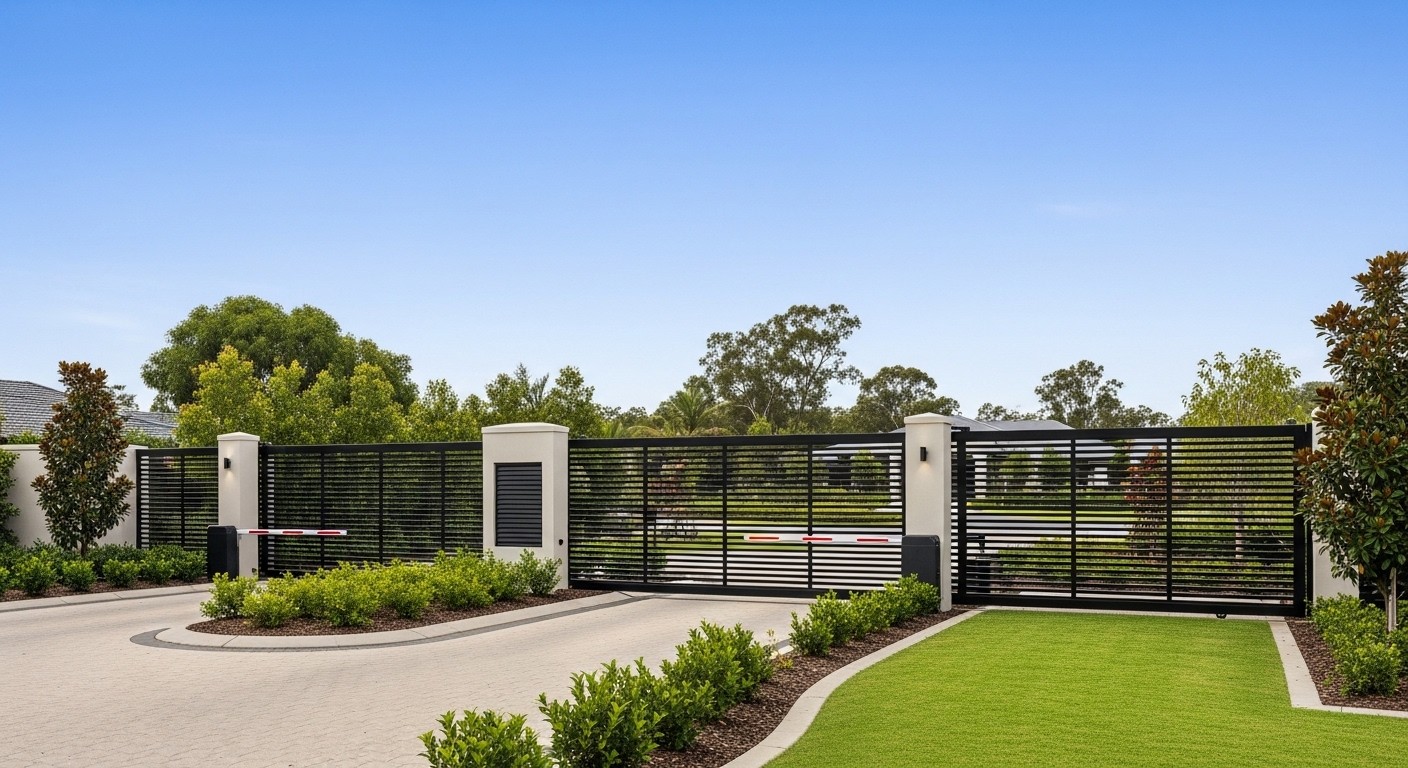
Single-dwelling intercoms are designed for one household. Gated estates, however, are fundamentally different environments. Specifically, a master-planned community of 400 homes might process 1,200 to 2,000 entry events per day — deliveries, residents, visitors, tradespeople, and emergency services all requiring access simultaneously across multiple gates.
Standard residential intercom Brisbane units are simply not built for this volume. Furthermore, they lack the multi-tenant management capabilities that a large community requires. Without the right system in place, committees face a cycle of complaints, workarounds, and costly mid-term upgrades that could have been avoided with proper planning upfront.
Moreover, the consequences of inadequate access control in a gated setting extend beyond inconvenience. Tailgating — where unauthorised vehicles follow authorised ones through an open gate — is one of the most common security failures in Queensland estates. Similarly, lost or stolen access credentials in systems without remote management capability require physical rekeying of the entire estate, a cost that can run into thousands of dollars per incident.
Understanding these specific challenges is the starting point for every intercom Brisbane decision in a gated estate context. Everything that follows flows from this foundation.
The Four Access Challenges Unique to Queensland Gated Estates
Gated estate access management is more nuanced than most developers and committees initially expect. Generally speaking, four specific challenges distinguish this environment from standard residential or commercial intercom Brisbane applications.
Challenge One: High-volume peak traffic
School drop-off times, morning commutes, and weekend social visits create intense entry demand within short windows. Consequently, an intercom Brisbane system that requires manual committee approval for each visitor quickly becomes unworkable. Automated guest PIN systems, temporary access codes, and licence plate recognition are features that address this challenge directly — features that standard residential units simply do not offer.
Challenge Two: Multiple simultaneous entry points
Larger estates frequently operate two or more vehicle gates, a pedestrian entry, and separate service access for waste collection and tradesperson deliveries. Therefore, any intercom Brisbane solution for this environment must manage all entry points from a single administration platform. Fragmented systems — different brands or platforms at each gate — create management complexity that compounds over time.
Challenge Three: Resident turnover
Unlike commercial buildings where tenants are few and long-term, residential estates experience significant resident turnover through sales and lease changes. Notably, a 400-home estate might process 40 to 60 ownership or tenancy changes each year. Each change requires credential updates across the entire access system. Consequently, cloud-based intercom Brisbane platforms with remote credential management have become the industry standard for estate environments precisely because manual key fob distribution is unsustainable at this scale.
Challenge Four: Emergency services access
Queensland emergency services require guaranteed, immediate access to gated properties. Furthermore, insurance providers increasingly require documented emergency access protocols as a condition of coverage for estate properties. An intercom Brisbane system without a compliant emergency override capability creates both a safety and a liability risk that no committee should accept.
What a Purpose-Built Intercom Brisbane Gated Estate System Actually Looks Like
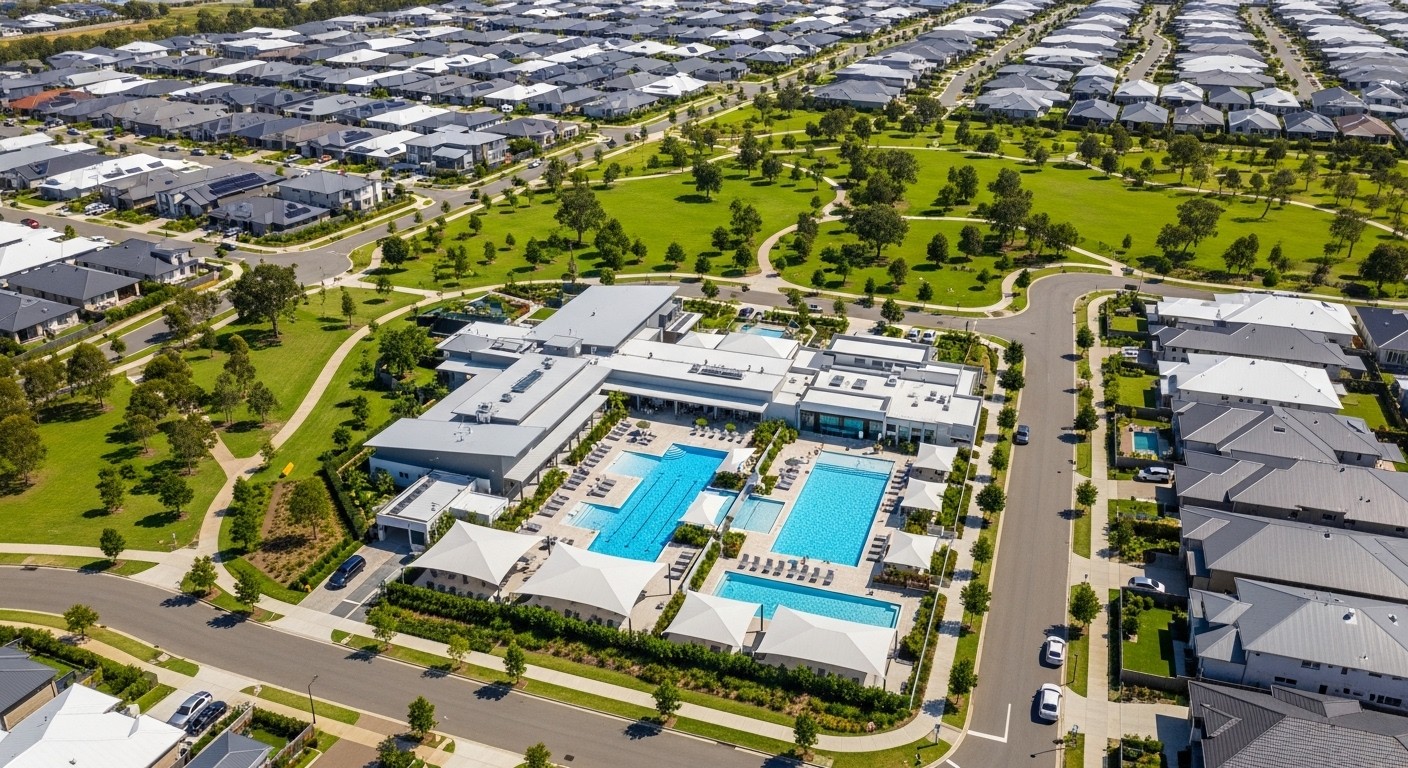
Purpose-built estate intercom Brisbane systems differ from standard residential units in several meaningful ways. Understanding these differences helps committees and developers evaluate options accurately rather than comparing products that were never designed for the same application.
Centralised management dashboard
Every resident, visitor credential, and access event is managed from a single cloud-based platform. Specifically, this means committee managers or property management companies can add or revoke access credentials remotely within minutes — without visiting the property or physically replacing hardware. Additionally, access logs provide a timestamped record of every entry event, which is invaluable for dispute resolution and insurance purposes.
Scalable resident app integration
Modern intercom Brisbane estate systems allow residents to manage their own visitor access directly through a smartphone application. Furthermore, residents can grant temporary access to delivery drivers, cleaners, or family members without any committee involvement. This self-service capability significantly reduces the administrative burden on committee managers, particularly in larger estates where manual visitor management is otherwise a full-time responsibility.
Licence plate recognition integration
For high-volume vehicle entry points, licence plate recognition (LPR) technology eliminates the need for residents to interact with an intercom panel on every entry. Instead, registered vehicles are automatically granted access as the gate camera identifies the plate. Consequently, morning and evening commute periods — the busiest times at any residential gate — are managed smoothly without queuing or delays. Visitors and unregistered vehicles still route through the standard intercom Brisbane process.
Integration with gate automation systems
An intercom Brisbane system in a gated estate must communicate seamlessly with the gate motor itself — the mechanical system that physically opens and closes the barrier. Unfortunately, mismatched brands and incompatible communication protocols are among the most common causes of system failure in Queensland estate installations. Ensuring your intercom Brisbane provider has documented compatibility with your specific gate motor brand before installation is a non-negotiable step.
According to Smart Cities Council Australia, integrated access management systems are now considered baseline infrastructure in new master-planned developments across Queensland, reflecting the significant shift in buyer expectations over the past five years.
Real Cost Analysis: Intercom Brisbane Systems for Gated Estates
Cost is frequently the point where estate committees make the most consequential errors. Specifically, the tendency to compare entry-level residential intercom Brisbane units with commercial-grade estate systems — and to choose the cheaper option — creates a cycle of under-performance, complaints, and ultimately a full system replacement within three to five years.
A realistic cost framework for a standard Queensland gated estate with a single vehicle entry, pedestrian gate, and 150 to 300 residences looks approximately like this:
Entry-level estate system:
- Hardware (entry panel, controller, resident directory): $4,500–$7,000
- Gate motor integration and installation: $1,200–$2,500
- Software platform and first-year licensing: $800–$1,500
- Total: $6,500–$11,000
Mid-range estate system with resident app and remote management:
- Hardware and installation: $8,000–$14,000
- LPR camera integration (optional): $2,500–$4,000
- Software and three-year licensing: $2,400–$4,500
- Total: $12,900–$22,500
Enterprise-grade system for estates of 400+ homes or multiple entry points:
- Hardware across all entry points: $18,000–$35,000
- Full LPR, CCTV integration, and emergency override: $5,000–$9,000
- Software, training, and five-year support: $6,000–$12,000
- Total: $29,000–$56,000
These figures are significantly higher than single-dwelling intercom Brisbane installations — and appropriately so. However, when distributed across the number of lots in an estate, the per-dwelling cost is typically between $50 and $180 per property. Furthermore, this cost is usually recoverable through body corporate levies over one to two years, meaning the net ongoing cost to individual owners is modest.
Our ROI Calculator article provides a detailed framework for calculating payback periods that can be adapted to estate-scale installations.
Queensland Legislation and Compliance Requirements
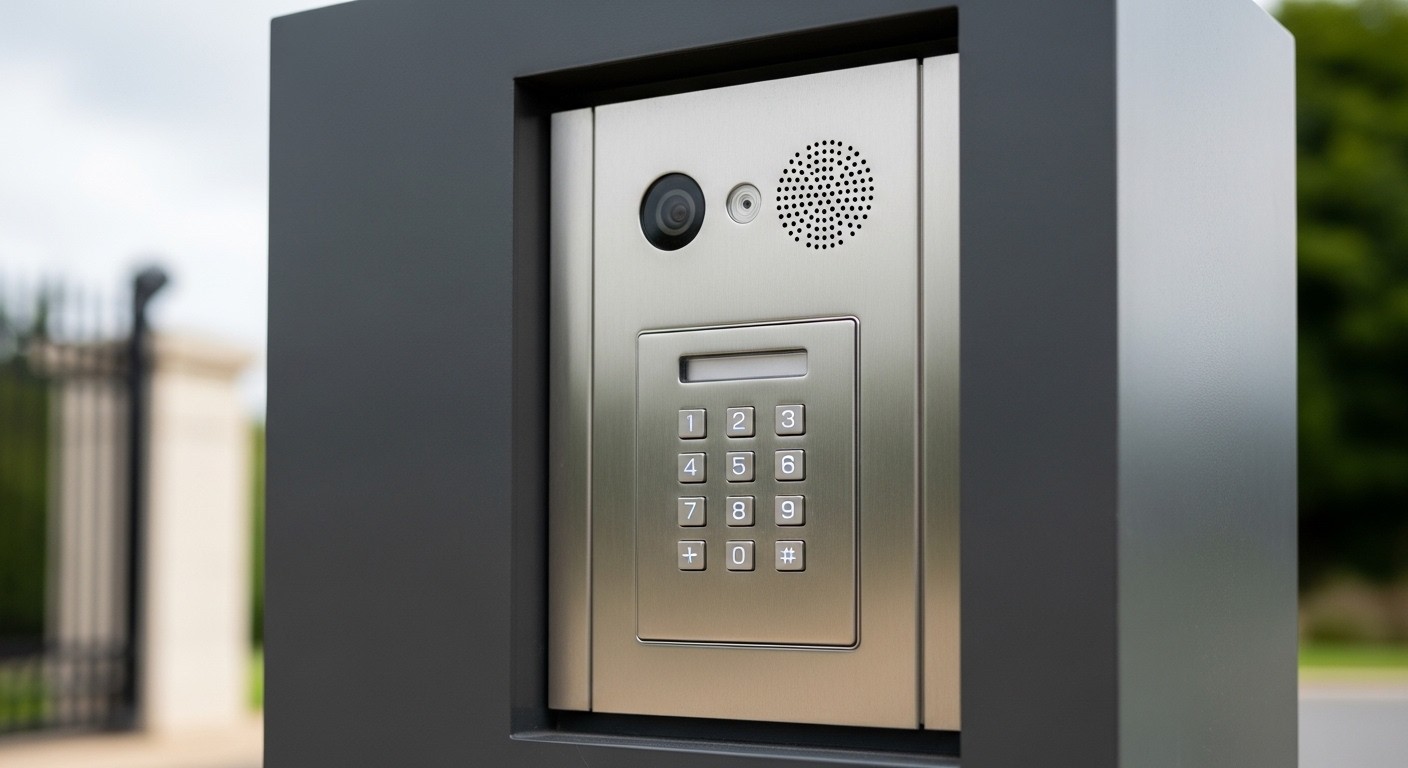
Gated estate intercom Brisbane installations in Queensland operate within a specific legislative framework that standard residential installations are not subject to. Consequently, understanding compliance requirements before selecting a system is essential — not optional.
Body Corporate and Community Management Act 1997
The BCCM Act governs decision-making processes for body corporate committees across Queensland, including decisions relating to major infrastructure changes such as intercom Brisbane system installations or upgrades. Specifically, expenditure above certain thresholds requires either a committee resolution or a general meeting resolution depending on the amount involved. Importantly, failing to follow correct process exposes committees to legal challenges from dissenting owners — a risk that can delay or invalidate an approved installation entirely.
Privacy Act compliance
Video recording at estate entry points is subject to the Privacy Act 1988 (Commonwealth) as well as Queensland’s own privacy principles. Therefore, any intercom Brisbane system that records and stores video footage must comply with data storage, retention period, and resident notification requirements. Additionally, residents must be informed that entry area surveillance is in operation — typically through signage at the entry point.
Australian Standard AS 2201.1
This standard governs intruder alarm systems and, by extension, access control systems in residential and commercial applications across Australia. Notably, insurance providers increasingly reference compliance with this standard when assessing coverage for residential estate properties. An intercom Brisbane installation that is not compliant with AS 2201.1 may affect the estate’s insurance position.
According to the Queensland Body Corporate and Community Management Commissioner, disputes relating to access control infrastructure are among the most frequently escalated issues in Queensland strata matters. Proper system selection and compliant installation processes are the most effective way to avoid becoming part of this statistic.
The Installation Process: What Gated Estate Committees Should Expect
Understanding what a professional intercom Brisbane estate installation actually involves helps committees set realistic expectations, prepare residents appropriately, and avoid the project delays that commonly arise from inadequate planning.
Stage One: Site assessment (1–2 weeks)
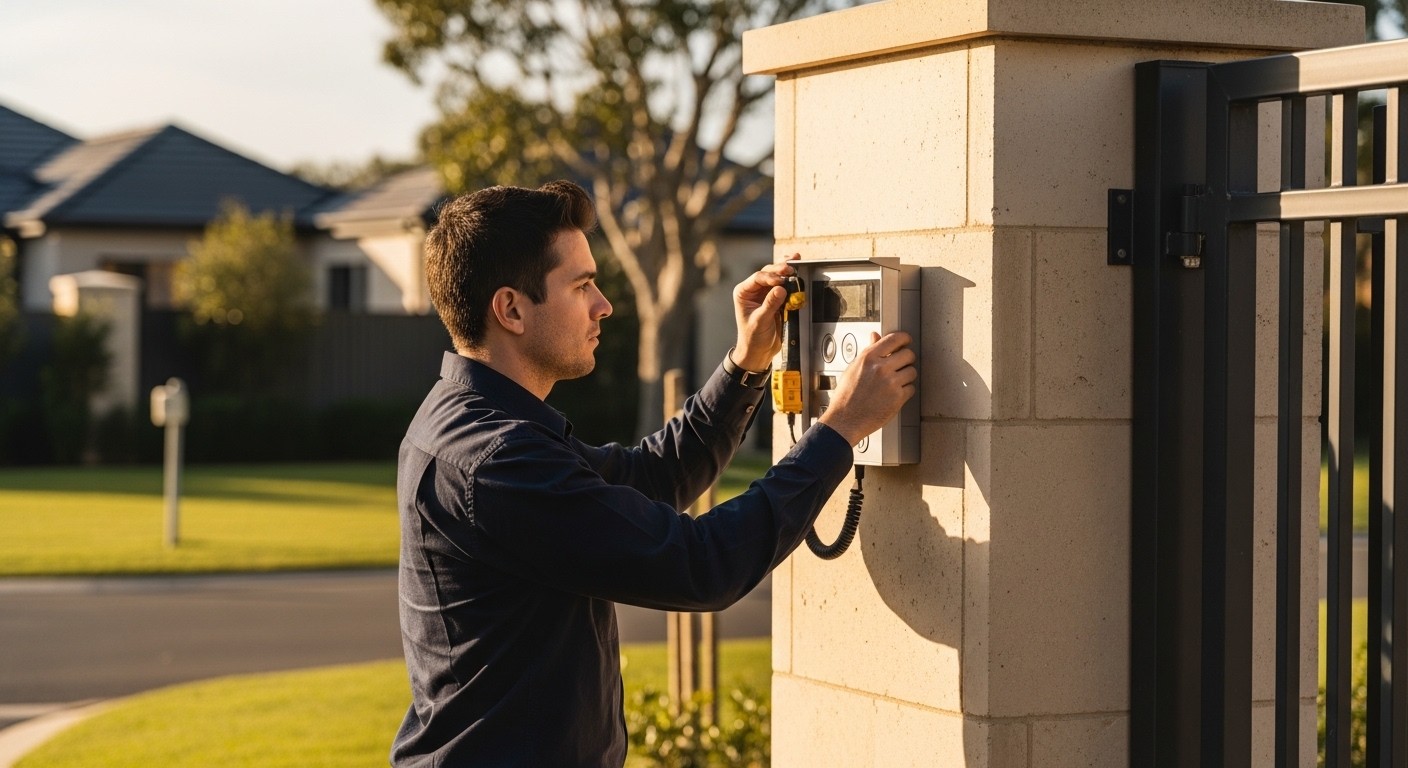
A thorough site assessment covers entry point locations, gate motor compatibility, existing cabling infrastructure, NBN or internet connectivity at the gate, power supply adequacy, and sightlines for camera placement. Furthermore, the assessment should identify any environmental factors specific to the Queensland setting — UV exposure, moisture ingress risk, or salt air proximity for coastal estates.
Stage Two: Resident communication (2–4 weeks)
Effective resident communication before installation significantly reduces complaints during and after the process. Specifically, residents need to know when gates will be temporarily out of service, how to register credentials in the new system, and who to contact if issues arise. Additionally, communicating the long-term benefits — improved security, remote visitor management, and reduced committee administration — builds goodwill that makes the transition smoother.
Stage Three: Installation (2–5 days for standard estates)
The physical installation of an intercom Brisbane system in a gated estate typically takes two to five days depending on the number of entry points and the complexity of gate motor integration. Moreover, installation in an occupied estate requires careful scheduling to minimise disruption to residents during peak entry and exit periods.
Stage Four: Testing and commissioning (1–2 days)
Every entry point, access credential, and emergency override function must be tested systematically before the system goes live. Interestingly, this stage is where many budget installations fall short — abbreviated testing processes leave edge cases unresolved that only emerge during normal operation, creating a wave of resident complaints in the first weeks after launch.
Stage Five: Resident onboarding (1 week)
Distributing access credentials, activating resident app accounts, and answering individual queries is often the most time-consuming phase of the entire process. However, investing adequately in this stage pays dividends immediately — a well-onboarded resident community generates significantly fewer support calls in the months that follow.
The Brands That Perform Best in Queensland Estate Environments
Not every intercom Brisbane brand that performs well in standard residential settings is suited to the demands of a gated estate. Specifically, the combination of high daily access volume, multi-tenant management requirements, and Queensland’s climatic conditions narrows the field considerably.
Our Brisbane Intercoms Brand Comparison article covers the full spectrum of available options. However, for estate-specific applications, the following characteristics distinguish the most suitable systems from the rest.
IP55 or higher weather rating is non-negotiable for outdoor entry panels in Queensland. Furthermore, UV-stabilised housings specifically rated for Australian conditions — not generic international ratings — are the appropriate benchmark given South East Queensland’s solar intensity.
Cloud-based management with offline fallback ensures the estate entry system continues to function during internet outages, which are a genuine consideration given Queensland’s storm season. Notably, some enterprise-grade systems maintain a local cache of authorised credentials that allows normal operation for up to 72 hours without internet connectivity.
Open API compatibility allows the intercom Brisbane system to integrate with other estate management platforms — booking systems for shared facilities, visitor management software, and smart home platforms used by individual residents. Consequently, open API systems future-proof the estate’s technology infrastructure rather than creating a proprietary lock-in that limits future options.
Local technical support in Queensland is a practical consideration that is often overlooked during product selection. Unfortunately, overseas-based support centres create response delays that are unacceptable when a gate failure affects hundreds of residents simultaneously. Choosing a brand with local Queensland service infrastructure is a meaningful risk mitigation decision.
Case Study: Springfield Estate, South West Brisbane
A 280-home master-planned estate in Springfield commissioned a full intercom Brisbane upgrade in mid-2025 after years of persistent issues with their legacy key fob system. Specifically, the committee was processing an average of 22 lost fob reports per month, each requiring a $45 replacement and manual database update.
Additionally, the estate’s single vehicle gate had no visitor management capability, meaning residents had to physically attend the gate or leave it permanently open for expected visitors — a security compromise that had generated multiple formal complaints.
The new intercom Brisbane system, installed across the vehicle gate and pedestrian entry over three days, delivered immediate measurable results. Consequently, lost credential reports dropped to near zero within the first month as residents migrated to smartphone-based app access. Furthermore, the visitor management feature eliminated the need for residents to leave home for expected guests, a convenience improvement that generated consistent positive feedback in the post-installation resident survey.
The total installation cost of $16,400 was funded through a combination of existing sinking fund reserves and a modest special levy. Distributed across 280 lots, this represented a one-time cost of approximately $58.50 per property — less than the cost of two replacement key fobs under the old system.
Intercom Brisbane Gated Estates and the 2032 Olympics Effect
Brisbane’s successful bid for the 2032 Olympic and Paralympic Games has had a direct and measurable impact on the master-planned estate market across South East Queensland. Specifically, infrastructure investment in transport corridors, urban amenity, and international connectivity is driving sustained population growth into growth corridor estates in ways that are already visible in property transaction data.
According to CoreLogic’s Queensland market research, master-planned community properties in Brisbane’s growth corridors have outperformed the broader market consistently since 2022. Furthermore, buyer profiles are shifting — a growing proportion of purchasers in these estates are interstate and international migrants who bring high expectations around security infrastructure from their previous living environments.
Consequently, estates that invest in modern intercom Brisbane systems now are positioning themselves competitively in a market where access technology is increasingly considered a baseline amenity rather than a luxury addition. Estates that defer this investment risk falling behind comparable developments that are already offering these features as standard.
Additionally, the rental sector within master-planned estates is growing as investor activity increases. Our Intercom Brisbane Rental article covers how access technology directly influences rental yield and tenant retention — findings that are highly relevant to the investor owners who make up a growing proportion of estate lot holders.

The Decision Framework for Estate Committees
Every intercom Brisbane decision for a gated estate involves balancing resident needs, budget constraints, compliance requirements, and long-term infrastructure planning. Specifically, the following questions provide a structured framework for committees approaching this decision for the first time — or reviewing an existing system that is no longer meeting the estate’s needs.
Does your current system scale with your estate’s growth? Master-planned communities are designed to grow over time as stages are released. Therefore, an intercom Brisbane system that cannot be expanded to cover additional entry points without a full replacement is already a liability.
Can credentials be managed entirely remotely? Physical key fob distribution is no longer an acceptable approach for estates above approximately 100 lots. Consequently, cloud-based credential management is a minimum requirement, not a premium feature.
Is your system compliant with current Queensland legislation? The BCCM Act, Privacy Act, and AS 2201.1 create a compliance framework that evolves over time. Notably, systems installed five or more years ago may require assessment against current requirements before the next formal body corporate review.
Does your system integrate with other estate management tools? Siloed access management creates administrative duplication and limits the estate’s ability to adopt new management technologies as they emerge. Interestingly, the marginal cost of choosing an open-API system over a closed proprietary one is typically small — but the long-term benefit is significant.
Frequently Asked Questions
How many entry points does a standard Queensland gated estate intercom Brisbane system cover? Most commercial-grade estate systems can manage between two and twelve entry points from a single platform. Furthermore, systems with open API architecture can scale beyond this if the estate expands over time without requiring a full platform replacement.
Can residents in a gated estate manage their own visitor access? Yes — modern intercom Brisbane estate platforms include resident-facing apps that allow individual households to issue temporary access codes, grant app-based access to visitors, and receive video calls from the gate entry panel directly on their smartphone.
What happens to gate access during a power outage? Purpose-built estate intercom Brisbane systems include battery backup capabilities that maintain gate operation for a defined period following a power interruption. Additionally, most systems default to a fail-safe open position during extended outages to prevent residents from being locked in or out.
How long does a gated estate intercom Brisbane installation take? A standard installation covering two entry points in an occupied estate typically takes two to four days. However, larger estates with multiple entry points, complex gate motor integration, or extensive cabling requirements may require up to two weeks.
Who is responsible for the intercom Brisbane system in a gated estate — the body corporate or individual owners? The access control infrastructure at shared entry points is typically common property, making the body corporate responsible for maintenance, upgrades, and associated costs. Individual lot owners are generally responsible only for any equipment installed within their own lot boundary.
Ready to upgrade your estate’s intercom Brisbane system — or plan the right infrastructure for a development currently under construction?
Intercom Solutions works with body corporate committees, property developers, and estate managers across South East Queensland. From North Lakes to Springfield, and from Calamvale to Redland Bay, our team understands the specific access challenges of Queensland master-planned communities.
Contact us for an obligation-free site assessment and system recommendation tailored to your estate’s size, resident profile, and budget.

![The $12 Billion Problem: How Brisbane Families Are Finally Stopping Package Thieves – [Cloned #540]](https://intercomsolutions.com.au/wp-content/uploads/2026/03/CAPA-JPEG-150x150.jpg)