Introduction
Choosing an intercom Brisbane system during your new home build is one of the most overlooked decisions in construction — and one of the most expensive to correct afterwards. Most Brisbane homeowners only discover this after walls are plastered, tiles are set, and the builder has long since packed up. Consequently, what should have cost $1,200 now costs $3,500 or more, with the difference going entirely towards labour to undo what was perfectly preventable.
Additionally, the 2032 Brisbane Olympics construction boom has triggered one of the largest waves of new residential builds Queensland has ever seen. Growth corridors from Springfield Lakes to Yarrabilba, and from Ripley to Rochedale, are adding thousands of dwellings each quarter. Many of these homeowners are currently making this exact mistake — planning every kitchen tap and bathroom tile while giving zero thought to their access system.
This guide changes that entirely. Whether your slab is freshly poured or your frame is going up next month, what follows will save you thousands of dollars and years of frustration.
Why the Rough-In Window Changes Everything
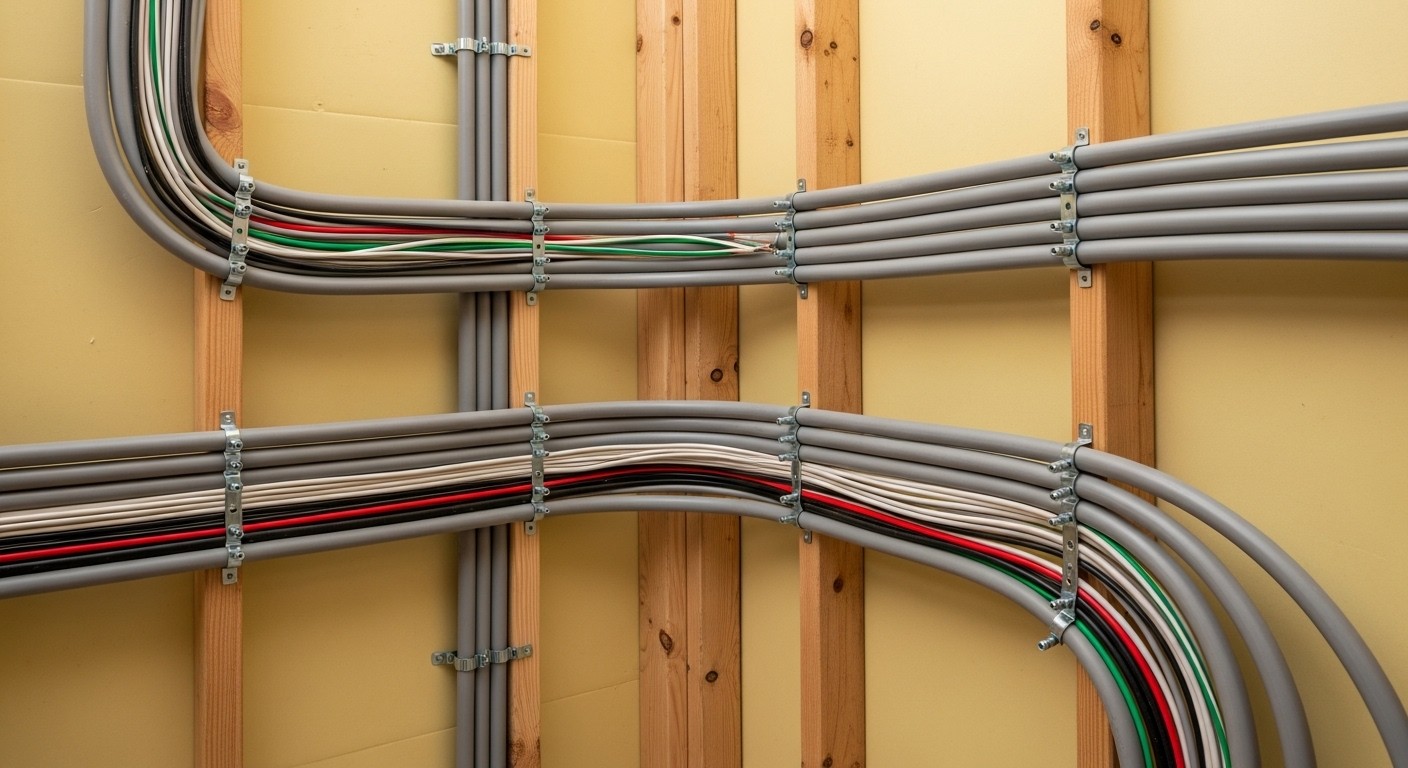
Think of rough-in wiring like the plumbing in your walls. Once the gyprock goes up, accessing those internal cavities becomes a surgical operation — costly, disruptive, and often impossible to do without visible traces. Similarly, intercom Brisbane cabling runs through the same hidden channels as electrical, data, and security wiring. It needs to go in at precisely the same stage, and that stage is brief.
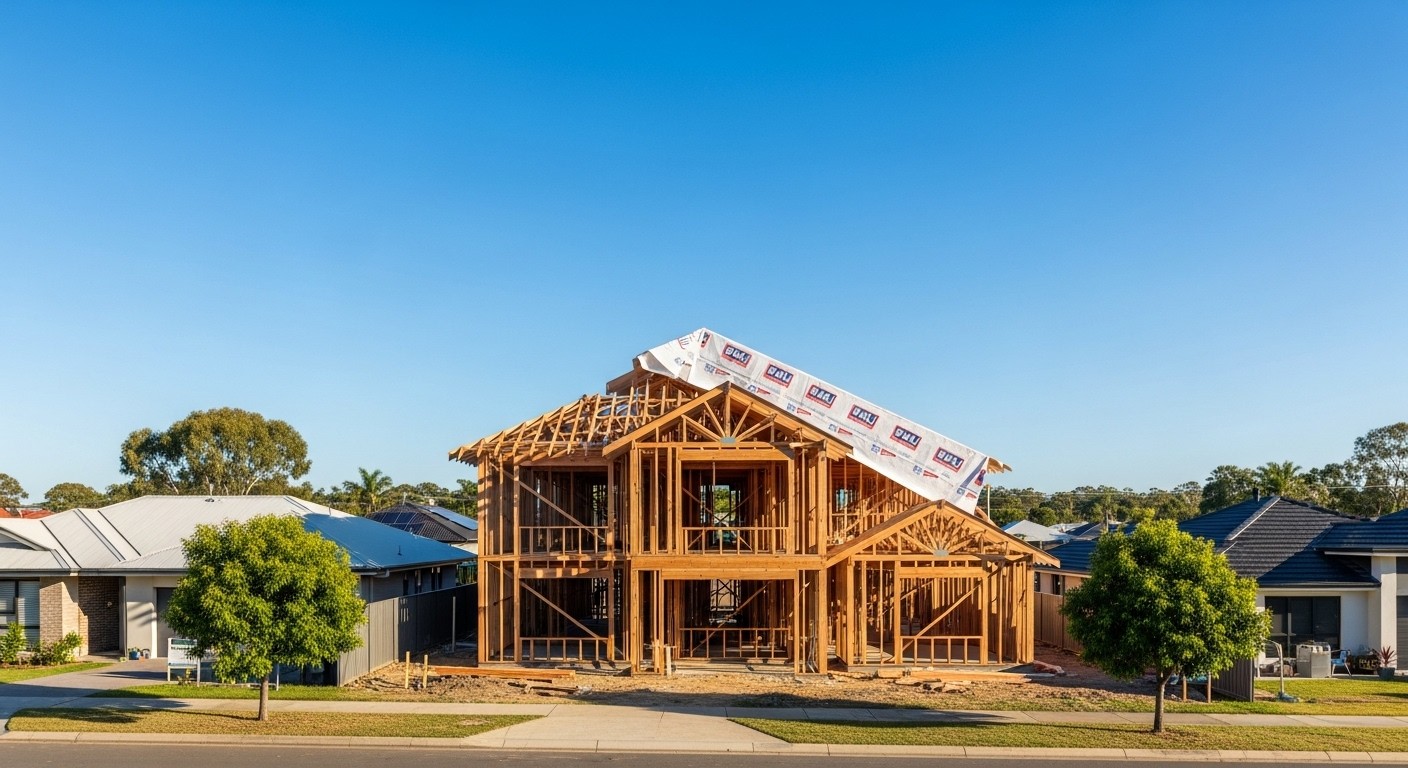
Builders typically schedule rough-in between frame completion and insulation, a window of roughly two to four weeks. Missing that window leaves you with two painful options: surface-mounted conduits running visibly along finished walls, or full-scale rectification involving cutting, patching, repainting, and retiling. Neither option is cheap. Neither option looks as good as a properly planned installation.
Furthermore, newer Brisbane builds increasingly feature double-brick, concrete slab, and steel-frame construction — materials that make post-construction cable runs particularly difficult. Homes in growth corridors like Springfield Lakes, Ripley, and Yarrabilba commonly use these materials, meaning the retrofit challenge is significantly greater than it was a decade ago when timber-frame construction was more universal across South East Queensland.
The Housing Industry Association Australia reports that Queensland is currently experiencing record levels of new dwelling approvals, with South East Queensland particularly active ahead of the 2032 Games. For homeowners in this building boom, the construction phase is a one-time opportunity. Once that window closes, it stays closed.
Understanding this timing is the single most important insight in this entire article. Everything else — brand selection, feature choices, smart home integration — can be decided later. The conduit provision cannot.
What Brisbane Builders Won’t Volunteer
Builders manage dozens of subcontractors simultaneously across multiple sites. Understandably, they focus on what is in the contract — not on what a homeowner might want to add years later. Consequently, unless you specifically request intercom Brisbane provisions during the pre-construction meeting, your builder will proceed without them. There is no malicious intent; it simply is not on their standard checklist.
However, once you raise it, most builders are remarkably cooperative. The typical charge for pre-wiring intercom conduits during construction ranges from $180 to $450, depending on the complexity of the property and the number of entry points being provisioned. Compare that to the $1,800 to $2,600 in labour alone that a post-construction retrofit typically requires — before even touching the cost of the intercom equipment itself.
Moreover, pre-wiring delivers something equally valuable: complete flexibility. You are not locked into any specific brand or system at the time of rough-in. Conduits simply provide the pathway; the actual intercom equipment can be selected and installed at handover, or even years later as technology evolves and budgets allow.
This is similar to how a builder installs NBN conduit during construction even before the homeowner has selected an internet provider. The infrastructure comes first; the device comes when you are ready. Intercom provisions work on exactly the same principle — and the cost of putting them in during construction is similarly modest.
The key is knowing what to ask for before that pre-construction meeting. The next section gives you the exact conversation to have.

The Exact Conversation to Have Before Construction Starts
Preparation is everything here. Specifically, bring the following requests to your pre-construction appointment and ask for each one to be included in writing as a variation or specification:
Entry point provisions: Conduit from main entry to your chosen internal display panel location — typically near the kitchen or master bedroom for maximum visibility. Additionally, a 240V power point adjacent to the entry panel location is essential; many homeowners overlook this and face an additional electrical variation later.
Gate and driveway provisions: If your property includes a front gate, intercom gate access, or a rear lane entry, request a separate conduit run to each of these points during frame stage. Extending provisions to a gate costs a fraction of what it costs after the driveway is paved and landscaping is complete.
Internal display location: Select a wall within three to five metres of the front door for the indoor monitor, or specify a central hallway location visible from living areas. The precise location matters less than the provision existing — you can always adjust the final mounting point slightly, but you cannot reroute conduit through a tiled bathroom wall.
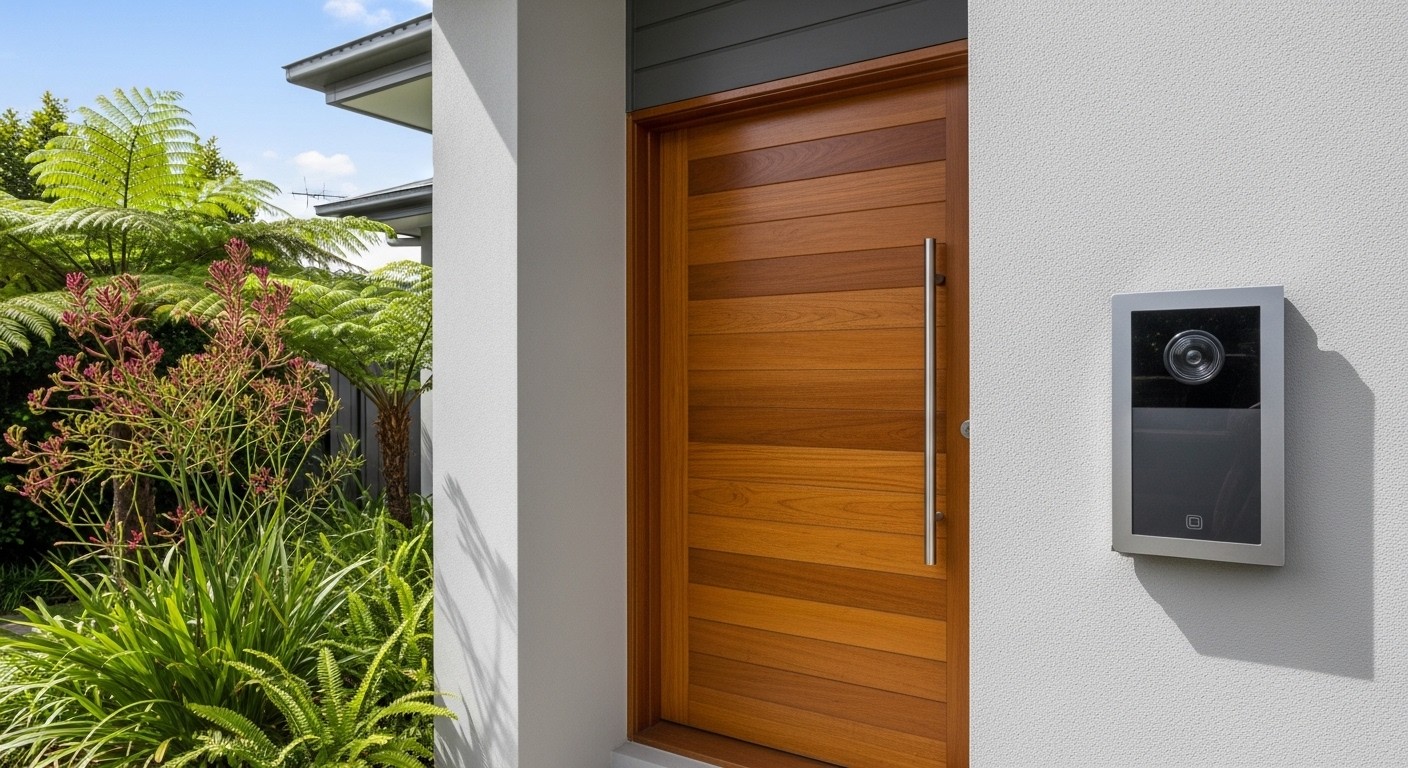
Camera positioning: Request a mounting block at the entry door at 1.2 to 1.5 metres height. This height captures both adult faces and delivery personnel at ground level. Furthermore, consider a secondary provision at the garage entry for properties with internal access, and at any side gate used for tradespeople or regular visitors.
Future-proofing provisions: Running a Cat6 data cable alongside the intercom conduit adds minimal cost during construction and enables IP-based systems — the modern standard for smart home integration. Additionally, a second conduit run to a secondary entry future-proofs the property for gate automation or access control additions without any wall penetration work.
These requests take a builder approximately 30 minutes to action during frame stage. Conversely, requesting the same provisions after handover takes a licensed electrician one to two full days, with additional time for wall repairs and painting. The arithmetic is straightforward.
The Real Cost Comparison: New Build vs Retrofit
Numbers tell this story more clearly than any analogy. Below is a realistic cost breakdown for a standard Brisbane residential property with a single entry point:
Installing during construction:
- Pre-wiring conduits and power point: $180–$450
- Video intercom unit and installation at handover: $900–$1,800
- Total: $1,080–$2,250
Retrofitting after completion:
- Wall penetrations, conduit runs, and plaster repair: $800–$1,400
- Video intercom unit and installation: $900–$1,800
- Repainting affected areas: $300–$600
- Tiling or flooring repair where applicable: $200–$500
- Total: $2,200–$4,300
The difference — up to $2,050 in additional costs — comes entirely from labour to undo what could have been avoided entirely. Additionally, retrofit installations almost always involve compromise: slightly exposed conduit sections, sub-optimal camera angles, or entry panel placements dictated by cable access rather than design preference.
Real estate data from Brisbane consistently shows that access-controlled properties command a measurable premium at sale. This is covered in detail in our How Brisbane Intercom Systems Add $50,000–$170,000 to Property Values article. Planning during construction is the most cost-efficient path to capturing that premium.
Choosing the Right System for Your New Build
Not all intercom Brisbane systems suit every new build situation. Fortunately, the construction phase is the ideal moment to make this decision — before any physical constraints limit your options or force a compromise.
Wired video systems remain the most reliable choice for permanent installations. Unlike wireless alternatives, wired systems are unaffected by Wi-Fi interference, require no battery maintenance, and deliver consistently high-quality video and audio regardless of network congestion. For new builds, wired is almost always the recommended approach precisely because the infrastructure cost is negligible during construction. The equipment cost is identical; only the installation labour changes, and that labour is dramatically cheaper when conduit is already in place.
IP-based intercom systems — the modern evolution of traditional wired intercoms — connect through your home network and offer smartphone integration, remote access, and full smart home compatibility. These are increasingly popular in Brisbane new builds, particularly in developments where NBN connectivity is standard from day one. Our Smart Home Integration article covers this compatibility in detail, including integration with Alexa, Google Home, and home automation platforms.
Wireless systems are better suited to properties where wired provision was not planned during construction. However, for new builds, wireless represents a compromise rather than a preference. Use it only when conduit access genuinely is not feasible — and accept that battery replacements and occasional connectivity issues are part of the deal.
Access control integration is worth discussing at the pre-construction stage too. Many Brisbane homeowners later wish they had included provisions for keypad entry, RFID card access, or Bluetooth smartphone access at the entry — particularly relevant for properties with frequent tradespeople, Airbnb guests, or elderly residents who benefit from simplified access options. Our Access Technologies Comparison guide covers these options in detail. Adding provisions during construction costs a fraction of retrofitting them once landscaping and tiling are complete.
For new builds that form part of a townhouse development or multi-dwelling project, body corporate considerations apply from the outset. Our Body Corporate Intercom Upgrade Guide outlines how strata developments can plan shared access systems effectively, ensuring all residents benefit from consistent infrastructure without costly individual retrofits later.
Brisbane-Specific Considerations You Won’t Find in Generic Guides
Queensland’s climate introduces factors that southern Australian states simply do not face in the same way. Entry panels on Brisbane new builds must handle subtropical humidity, intense UV exposure, seasonal storms, and in coastal areas, ongoing salt air corrosion. Equipment that performs reliably in Melbourne or Sydney may deteriorate far more quickly in Brisbane conditions without appropriate specification.
IP ratings matter more here than anywhere else. Specifically, look for entry panels with a minimum IP55 rating for Brisbane installations. This rating confirms the unit is dust-protected and can handle water jets from any direction — essential given South East Queensland’s storm seasons and the occasional torrential subtropical downpour that a light shower-rated unit simply cannot handle.
UV exposure is severe and often underestimated. UV intensity in South East Queensland is significantly higher than in southern capitals, and entry panels positioned in direct northern or western sun face accelerated degradation without adequate protection. During construction, request that your builder install a recessed mounting point or a small hood above the entry panel location. This five-minute addition during frame stage extends equipment life considerably and is invisible once the panel is installed.
Coastal properties require marine-grade specifications. For Brisbane properties within approximately five kilometres of the bay or river — areas including Wynnum, Manly, Bulimba, Hamilton, Hawthorne, and Morningside — salt air corrosion is a persistent factor. Marine-grade or stainless steel-fronted panels are worth the modest price premium in these locations. The CSIRO’s research on coastal building materials consistently highlights salt air as a primary accelerant of hardware degradation in coastal Queensland, and intercom entry panels are no exception.
Storm and cyclone provisions are worth considering for properties in Brisbane’s western suburbs and outer growth corridors, which experience more severe storm activity than the inner city. Additionally, surge protection on the intercom circuit is a low-cost addition during electrical rough-in that prevents equipment damage during Queensland’s lightning-heavy storm season.
Brisbane New Build Case Study: The Thornton Family, Rochedale South
Sarah and David Thornton built a four-bedroom home in Rochedale South in early 2025. During their pre-construction meeting, they requested intercom provisions on the advice of their electrician — a conversation that added $320 to their build cost as a variation.
At handover six months later, they had a video intercom system with smartphone access installed in three hours for $1,350. Total investment: $1,670.
Their neighbours, building at the same time on an adjacent lot, skipped the provisions entirely. Eighteen months later, they requested a retrofit installation. The job required a full day of work, conduit runs along two wall surfaces, plaster patching, and repainting. Their total cost: $3,100 — and the installation involved a small section of surface-mounted conduit that remains visible in the hallway.
The difference was one conversation during pre-construction. Nothing more, nothing less.
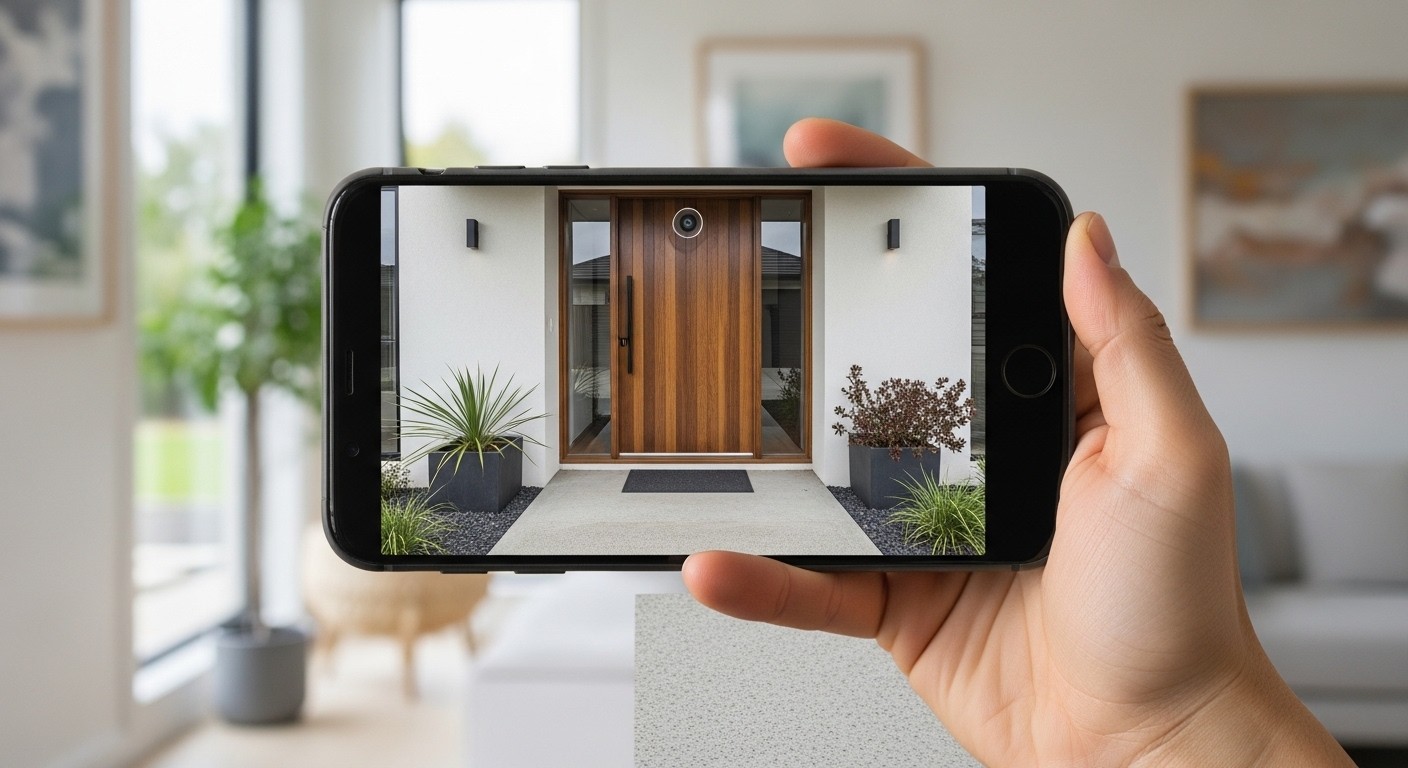
The 2032 Factor: Why Brisbane New Builds Need to Think Long-Term
The Brisbane 2032 Olympic and Paralympic Games are already reshaping the city’s property landscape in ways that extend well beyond the Olympic venues themselves. Infrastructure investment, transport upgrades, and the international spotlight on Brisbane are driving sustained property value growth across South East Queensland — and buyers are becoming progressively more sophisticated in what they expect from new homes.
Consequently, properties built today without modern access systems are likely to face upgrade pressure within five to eight years, as buyer expectations shift and competitor properties offer features that older builds cannot easily match. Installing an intercom Brisbane system during construction is not simply about convenience today — it is about ensuring the property remains competitive in a market that is moving rapidly towards integrated access, smart home capability, and remote management as baseline expectations rather than premium features.
According to CoreLogic’s Australian housing data, Brisbane has led Australian capital city price growth in multiple recent periods. Properties with modern security and access features consistently outperform comparable properties without them at auction. Planning these features during construction is the most cost-efficient way to capture that performance at sale.
Frequently Asked Questions
Can I still add intercom provisions if my build is already at frame stage? Yes — frame stage is actually the ideal time. Electricians can still run conduit through the frame before insulation and plasterboard are installed. Contact an intercom Brisbane specialist immediately if your build is currently at this stage, as this window closes quickly once insulation begins.
What if my builder says intercom pre-wiring is not included as standard? It is not standard on most Queensland build contracts. However, most builders will add it as a paid variation for a modest fee. Request the variation in writing, specifying conduit locations, cable types, and power point requirements. A written specification protects you if there is any dispute at inspection.
Is wireless intercom a reasonable alternative for new builds? Wireless systems work effectively but represent a compromise for permanent new build installations. Since conduit provision during construction is so affordable relative to the total build cost, wired remains the recommended approach. Reserve wireless for situations where the build is already complete and conduit installation is genuinely impractical.
How long does intercom installation take at handover with conduit in place? With conduit already installed, a standard video intercom installation takes approximately two to three hours. Without conduit, the same installation typically requires a full day and involves wall work, patching, and painting. The time difference reflects the cost difference almost exactly.
Does an intercom Brisbane system add measurable value at resale? Consistently yes. Brisbane real estate agents increasingly report that access-controlled properties attract stronger buyer interest, more competitive auction results, and faster sale timelines than comparable properties without these features — particularly as buyer demographics shift towards tech-comfortable millennials making their first or second property purchase.
Ready to plan your intercom Brisbane installation before the concrete sets?
Contact Intercom Solutions for a pre-construction consultation. Our team works with builders, developers, and individual homeowners across South East Queensland — from Springfield to Wynnum, and from Aspley to the Gold Coast corridor. We will advise exactly what to request from your builder, recommend the right system for your property, and ensure installation is seamless at handover.
Get in touch today — before that rough-in window closes.

![The $12 Billion Problem: How Brisbane Families Are Finally Stopping Package Thieves – [Cloned #540]](https://intercomsolutions.com.au/wp-content/uploads/2026/03/CAPA-JPEG-150x150.jpg)