Introduction
Choosing an intercom Brisbane system based on features alone is only half the job. The other half — the half most buyers overlook entirely — is choosing a system built to survive where it will actually live: outdoors, in one of Australia’s most demanding climates.
Brisbane’s subtropical environment is not gentle on electronics. High UV exposure, summer storms, coastal humidity, and temperature swings from 6°C to 40°C put enormous stress on any outdoor device. Therefore, understanding weather resistance before you buy can mean the difference between a system that lasts a decade and one that fails in its second summer.
Most buyers compare cameras, touchscreens, and app features. Very few ask about ingress protection ratings, UV-stabilised housings, or operating temperature ceilings. Consequently, Queensland installers regularly remove systems that are less than three years old — not because they stopped working electronically, but because the enclosure has cracked, corroded, or delaminated beyond repair.
This guide covers everything you need to know before making that decision.
What IP Ratings Actually Mean for Brisbane Homeowners
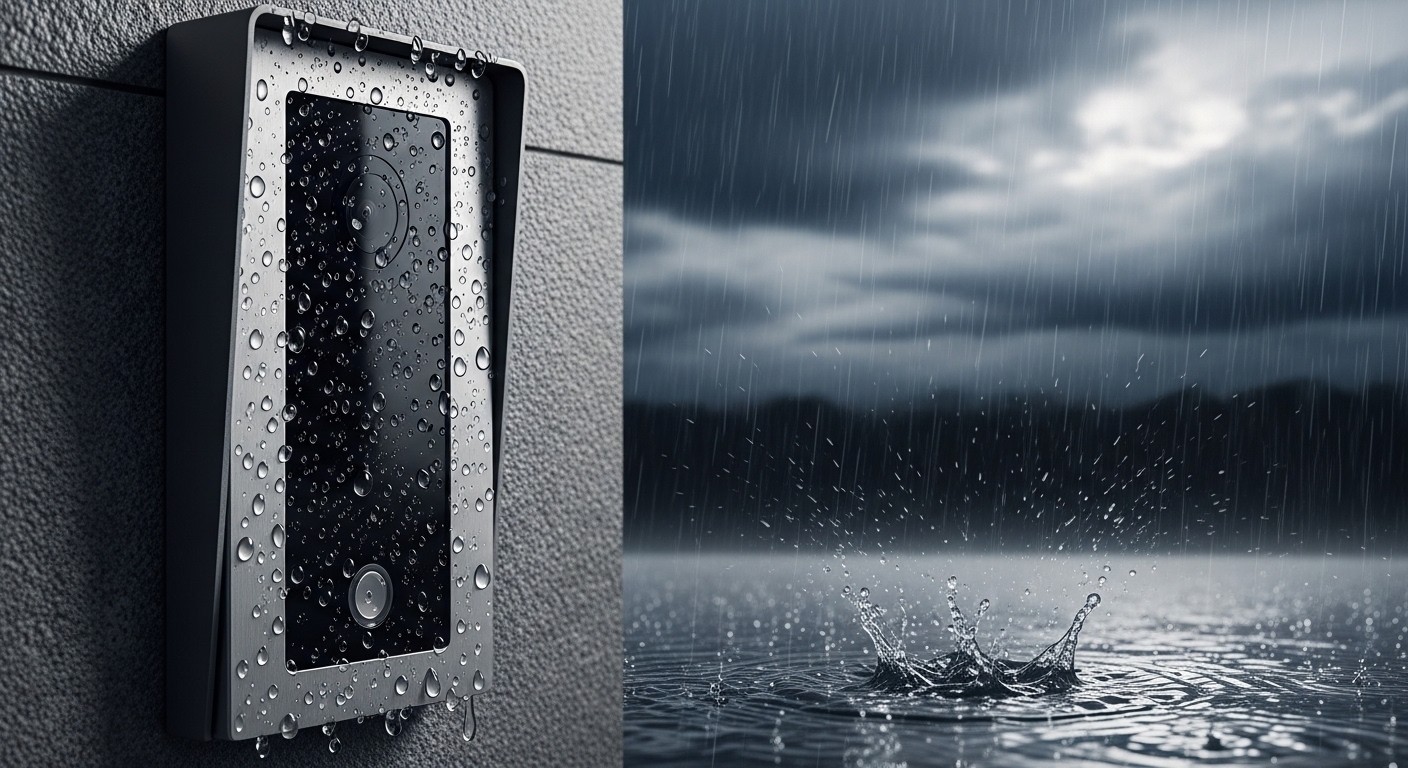
The IP rating (Ingress Protection) printed on every intercom spec sheet is not marketing language — it is a standardised international measure of how well a device resists solid particles and water. According to Standards Australia, IP ratings follow the IEC 60529 framework, which defines two digits: the first for solid particle protection, the second for liquid protection.
For outdoor Brisbane installations, the minimum you should accept is IP54. However, that rating is barely adequate even for a sheltered porch in Queensland. For any exposed installation — facing west into afternoon storms, positioned near a pool, or located on a coastal property — IP65 is the practical minimum, and IP67 or IP68 is strongly preferable.
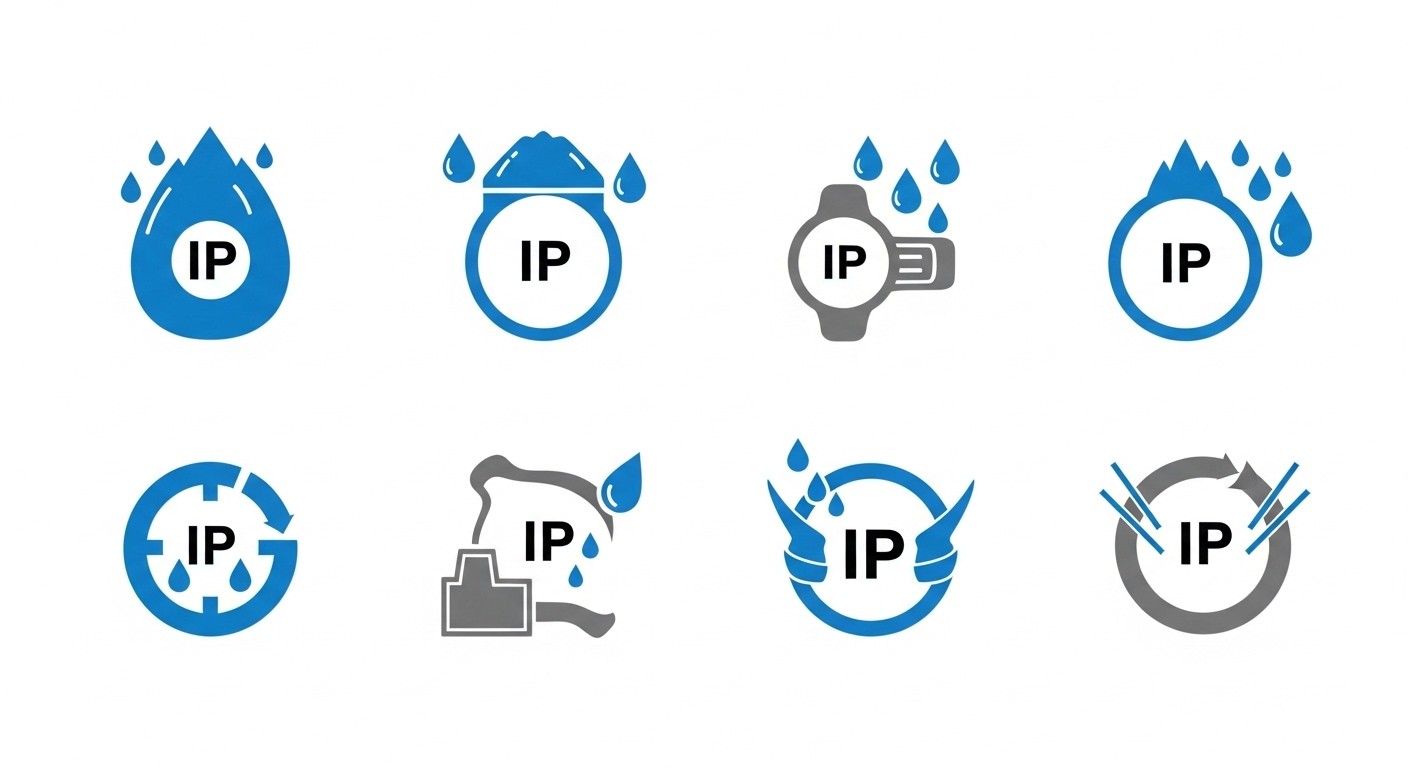
Here is what the most common ratings mean in plain language:
- IP54 — Dust protected, splash resistant from any direction. Acceptable only for fully sheltered, low-exposure installations.
- IP65 — Dust tight, protected against sustained low-pressure water jets from any direction. Good for most standard Brisbane outdoor positions.
- IP66 — Dust tight, protected against powerful water jets. Recommended for open facades, exposed driveways, and properties in storm corridors.
- IP67 — Dust tight, protected against temporary immersion up to 1 metre. Strongly recommended for flood-prone areas including Ipswich, Rocklea, Oxley, and Fairfield.
- IP68 — Dust tight, protected against continuous immersion. Best-in-class for coastal properties in Redcliffe, Manly, Wellington Point, and across the Bayside suburbs.
Additionally, look for an IK rating alongside the IP number. The IK standard, defined under IEC 62262, measures mechanical impact resistance — critical for high-traffic commercial entries, multi-tenant buildings, and any installation in a publicly accessible location. An IK08 rating withstands 5 joules of impact; IK10, the maximum, withstands 20 joules and is the appropriate choice for exposed or vandal-prone positions.
Understanding both ratings together gives you a complete picture of how a device will perform in Brisbane’s real-world outdoor environment — something a camera resolution comparison never will.
The UV Problem Nobody Talks About
Water resistance gets all the attention. However, in Brisbane, ultraviolet radiation is arguably a bigger long-term threat to your intercom than rain — and it is almost never mentioned in product comparisons.
Queensland receives some of the highest UV index readings anywhere in the world. According to the Australian Radiation Protection and Nuclear Safety Agency (ARPANSA), Brisbane regularly records UV index levels above 11 — classified as “extreme” — throughout the summer months. At those sustained exposure levels, unprotected polycarbonate and standard ABS plastics yellow, become brittle, and crack within 18 to 24 months of continuous outdoor installation.
Moreover, UV degradation is cumulative and invisible until it becomes structural. A housing that looks perfectly intact in year two may split entirely in year three — often during a storm event when it is simultaneously under thermal stress and water pressure.
Consequently, the material of your intercom housing matters as much as any electronic specification. When comparing options, prioritise these materials in order:
- 316-grade marine stainless steel — the gold standard for Brisbane and coastal Queensland. Resistant to UV, salt air corrosion, and thermal expansion. The Akuvox E20S uses this material specifically because it is engineered for harsh outdoor environments.
- UV-stabilised ABS plastic with IK08 or above — a reliable mid-range option found on most quality IP door stations. Critically, check that the specification explicitly states UV-stabilised ABS. Standard ABS without UV stabilisation behaves very differently outdoors in Queensland.
- Anodised aluminium — performs well in non-coastal positions. Lightweight and attractive, though less corrosion-resistant than marine stainless in salt-air environments.
- Standard ABS plastic — acceptable for indoor or fully sheltered installations only. Not suitable for any west or north-facing outdoor position in Brisbane.
Furthermore, consider the colour of the housing. Darker surfaces absorb significantly more solar radiation than lighter ones, which can raise internal component temperatures well beyond the rated operating ceiling on summer afternoons. Where aesthetics allow, lighter housing colours meaningfully extend component lifespan in Brisbane’s conditions.
How Brisbane’s Storm Season Affects Your Installation
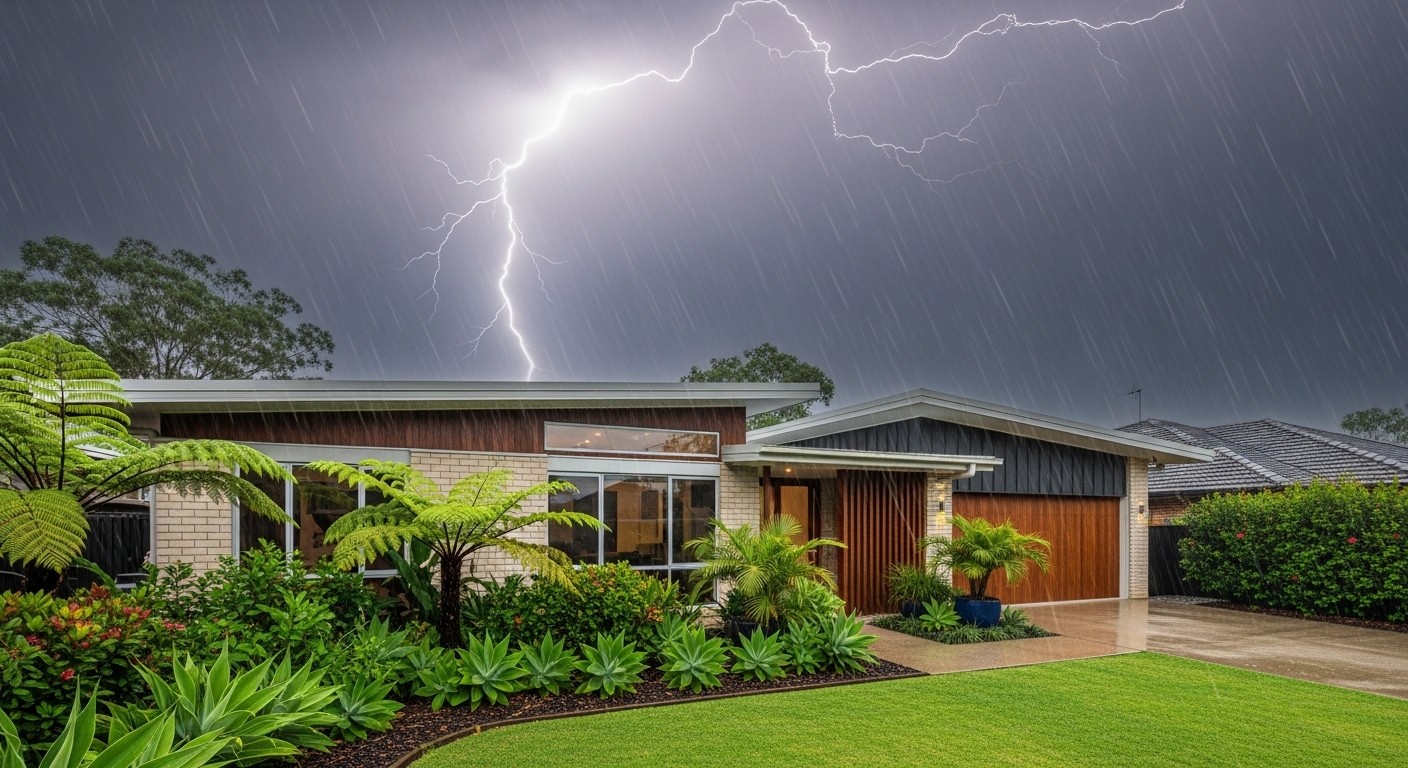
Storm season in South East Queensland runs from October through to March. During this period, the region regularly experiences intense localised downpours, lightning strikes, and strong westerly winds that drive rain horizontally into surfaces not typically exposed to direct rainfall. These are not the gentle European-style drizzles that standard IP ratings are primarily designed around.
Standard IP ratings are tested with water falling vertically or at predefined angles under laboratory conditions. Therefore, an IP65-rated intercom can still be compromised by horizontal storm-driven rain if it is installed without a rain cover or an adequate architectural overhang. The distinction matters considerably in a city where summer storms can deliver 50mm of rain in under 30 minutes.
For this reason, professional intercom Brisbane installers consistently recommend pairing any outdoor door station with a purpose-built rain cover — particularly for flush-mounted and in-wall installations that lack a natural weather break above them. Most quality systems, including the Akuvox R20A, E12S, R20K, and X915S range, offer both in-wall and on-wall rain cover accessories specifically engineered for Australian installation conditions.
Beyond rain, Brisbane’s storm season brings significant lightning risk. Surge protection on the data and power lines feeding your intercom is not optional — particularly for properties in elevated positions or open suburbs like Pullenvale, Samford, Ferny Hills, and Brookfield. A single nearby lightning strike without surge protection can destroy not just the intercom panel, but also any connected indoor monitors, network switches, and smart home hubs on the same circuit. As highlighted in our 7 Intercom Installation Mistakes article, skipping surge protection is one of the most common and consistently costly oversights that Brisbane installers encounter.
Coastal Brisbane: The Salt Air Factor
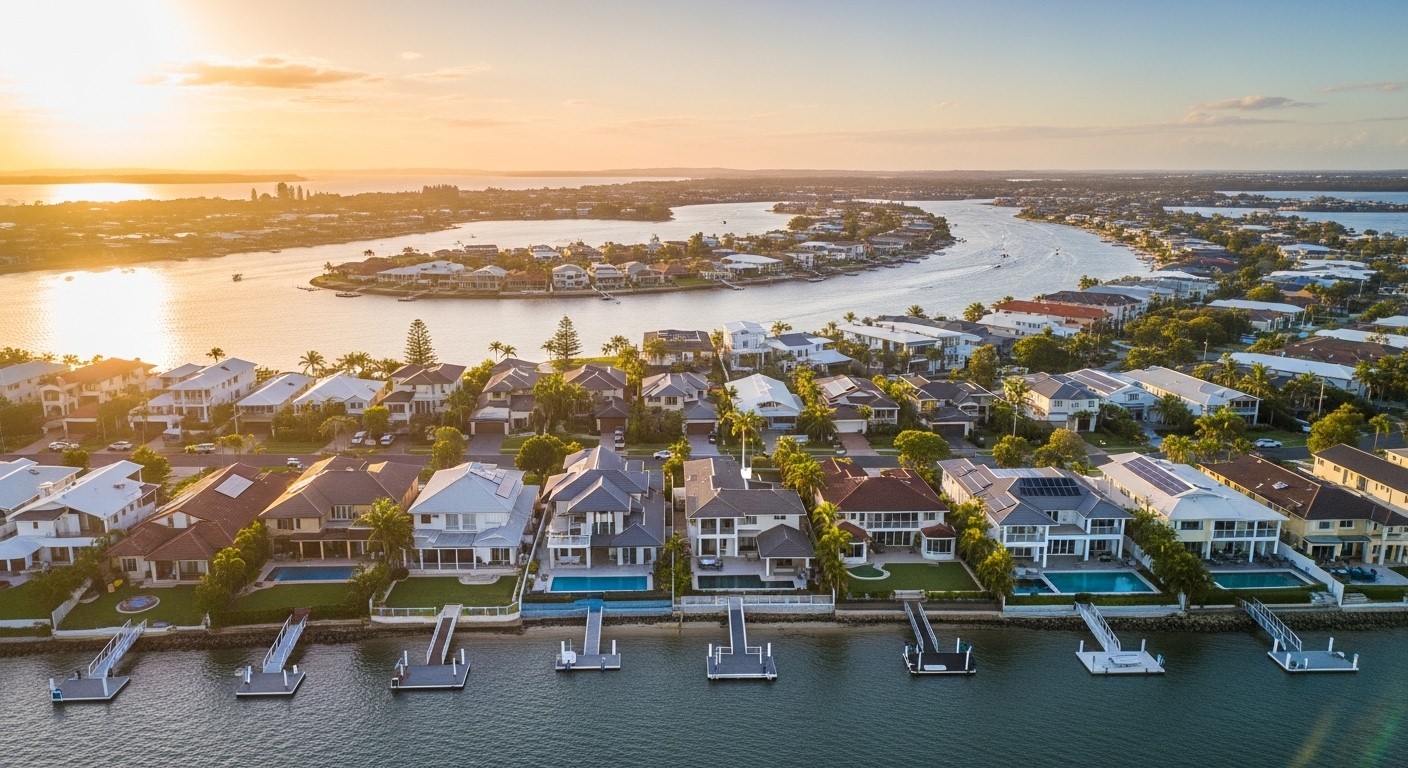
Properties within approximately three kilometres of tidal water face an additional challenge that inland buyers rarely consider: salt-laden air corrosion. Bayside suburbs including Manly, Wellington Point, Cleveland, Wynnum, Lota, and Redcliffe Peninsula properties experience consistent salt air exposure that attacks exposed metal components far more aggressively than inland conditions.
Standard zinc die-cast housings, which are common on budget intercom systems, develop visible corrosion within 12 to 18 months in coastal environments. White powdery deposits appear first around screws and panel edges, followed by pitting, then structural degradation of the housing itself. Anodised aluminium performs better but still degrades meaningfully over a five-to-eight year period. Only 316-grade stainless steel and powder-coated marine-grade aluminium reliably resist long-term salt air exposure in Queensland’s coastal conditions.
Interestingly, this is one of the clearest cases in the intercom market where specifying a quality system upfront is demonstrably cheaper over a five-year period than replacing budget units. When you factor in labour costs for removal, reinstallation, and reconfiguration, replacing a corroded budget system every two to three years consistently exceeds the original price difference of choosing a marine-grade unit from the outset.
Additionally, coastal homeowners should consider the finish on all mounting hardware — not just the panel itself. Stainless steel screws and corrosion-resistant back boxes are equally important, as a stainless steel panel mounted with zinc-plated hardware will still show corrosion failure within 18 months. For specific coastal model recommendations by suburb and budget, the Brisbane Intercoms Brand Comparison article covers this in detail.
Temperature Extremes: What Happens Inside the Device
Most quality IP intercoms are rated to operate between -10°C and +55°C ambient temperature. Brisbane rarely approaches either extreme at air temperature level — but the interior of a west-facing metal panel in direct afternoon sun is an entirely different matter.
Surface temperatures on sun-exposed panels in Brisbane regularly exceed 60°C between December and February. When ambient air temperature is 38°C and a dark metal panel has been absorbing direct western sunlight since midday, internal temperatures can reach 65°C or above — well outside the operating range of budget-grade processors, capacitive touchscreens, and lithium backup cells.
Therefore, when reviewing specifications, check the operating temperature range stated for the panel itself, not the ambient environment. These are different values, and in Queensland the gap between them is significant.
Equally important is display quality under direct sunlight. Standard LCD panels wash out completely in bright Brisbane conditions, rendering the screen unreadable and frustrating for daily use. Look for displays rated at 1,000 nits or above, or specify units with an anti-glare coating designed explicitly for outdoor installation. This consideration is particularly relevant for touchscreen models like the Akuvox X915S and X916S, where the display is the primary access interface and must remain legible throughout the day.
Furthermore, thermal cycling — the repeated expansion and contraction of materials as temperatures rise and fall daily — gradually stresses adhesives, seals, and gaskets over time. This is why IP-rated gasket integrity should be re-checked on any intercom older than five years, even if it showed no issues earlier in its life. As covered in our Access Technologies Compared article, regular system reviews are a sound investment in Brisbane’s demanding climate.
Humidity, Condensation and Indoor Monitor Placement
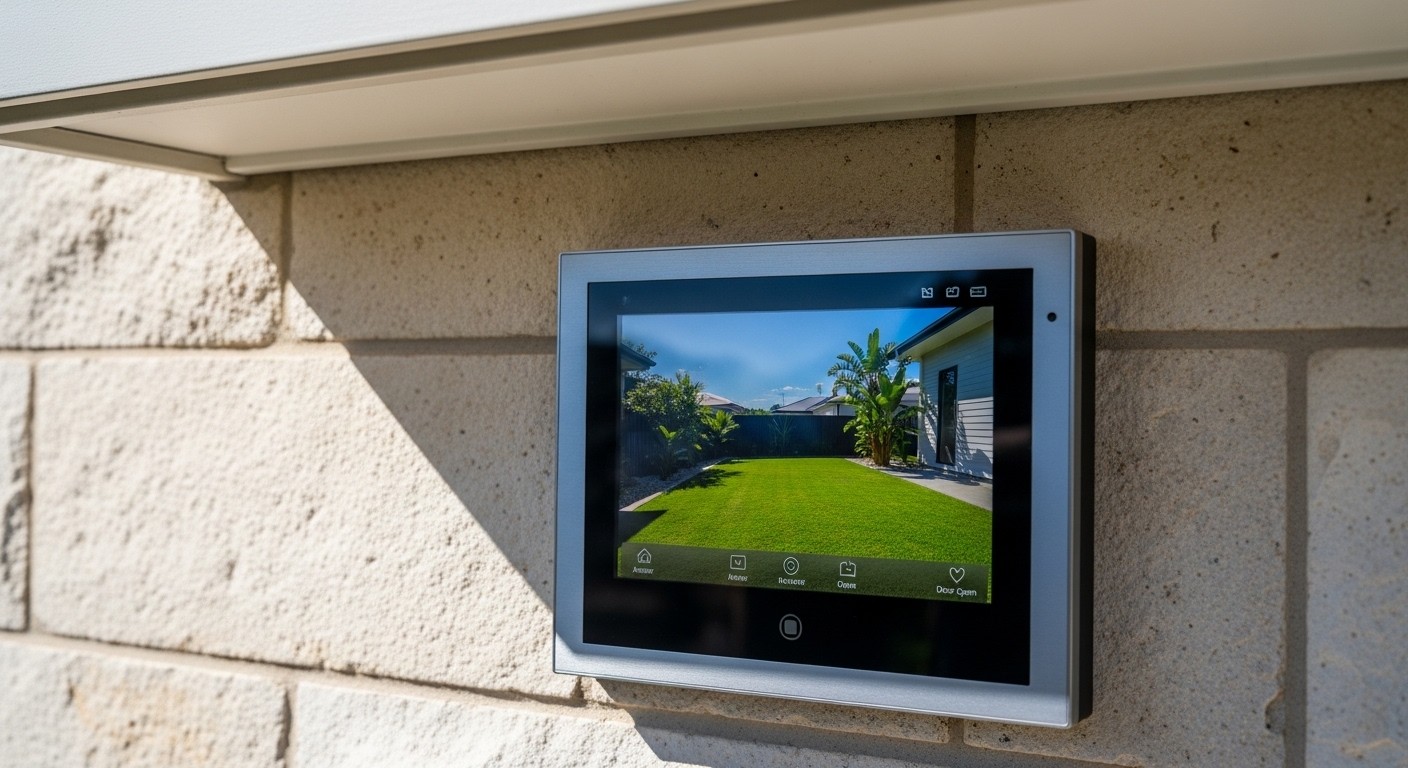
Outdoor hardware gets most of the attention in weather discussions — but Brisbane’s humidity affects indoor components too. Average relative humidity in Brisbane sits between 55% and 75% year-round, rising to 85–90% during storm season. In poorly ventilated spaces, this creates condensation risk for indoor monitors installed near air conditioning vents, laundry areas, and covered outdoor entertaining spaces.
Specifically, the temperature differential between an air-conditioned interior and a warm, humid wall cavity can cause moisture to accumulate inside wall-mounted indoor monitors over time. Consequently, monitor placement during installation matters more than most homeowners realise. Avoid mounting indoor units directly adjacent to AC outlet vents, in rooms with high steam exposure such as bathrooms and kitchens, or in covered outdoor areas without adequate ventilation.
Most quality indoor monitors carry at least an IP30 or IP40 rating for basic dust and moisture resistance. However, for installations in high-humidity positions — such as covered outdoor entertaining areas, which are extremely common in Brisbane homes — specifying a monitor with at least IP54 protection is worth the marginal cost difference.
A Climate Checklist Before You Buy
Before finalising any intercom Brisbane purchase, work through this checklist systematically. It takes ten minutes and can save you thousands over the life of the system:
- Is the outdoor IP rating IP65 or above for your specific installation position?
- Is the housing material marine stainless steel or UV-stabilised ABS?
- Does the system include or support a purpose-built rain cover for your mounting style?
- Is the operating temperature ceiling above 55°C for west or north-facing installations?
- Does the display achieve 1,000 nits or above for sunlight readability?
- Have you budgeted for surge protection on data and power supply lines?
- If within 3km of tidal water, is all mounting hardware rated for salt air exposure?
- Is your indoor monitor positioned away from AC vents and high-humidity areas?
Ticking every item on this list does not require the most expensive system available. However, it does require knowing the right questions — and choosing a supplier who understands Brisbane’s specific conditions rather than recommending a generic international product catalogue.
Get the Right System for Queensland’s Climate
At Intercom Solutions, every recommendation we make accounts for Brisbane’s actual outdoor environment. Whether you are in a coastal Bayside property, a storm-exposed acreage in the Somerset Region, a high-rise apartment in the CBD, or a new build in one of the growth corridors west of the city, we specify systems built to perform in Queensland for the long term.
Contact us for an obligation-free consultation and a climate-specific system recommendation tailored to your property and location.