Introduction
Every Brisbane medical facility faces a version of the same daily challenge. Patients arrive unannounced. Contractors need after-hours access. Restricted areas — dispensaries, records rooms, procedure suites — must stay locked to unauthorised personnel while remaining instantly accessible to clinical staff. Meanwhile, a single front office team is expected to manage all of it, often simultaneously, while also answering phones and assisting patients at the counter.
An intercom Brisbane system designed for healthcare environments does not simply replace a doorbell. It becomes the operational backbone of how a facility manages movement, verifies visitors, protects restricted zones, and responds to emergency situations. When specified correctly, it reduces the burden on administrative staff, strengthens compliance documentation, and meaningfully improves the experience for patients who are often already stressed before they reach the front door.
This guide covers everything Brisbane healthcare facilities need to know — from GP clinics and dental practices to allied health centres, private hospitals, and aged care residences — before specifying or upgrading their entry and communication systems in 2026.
Why Healthcare Environments Demand a Different Approach
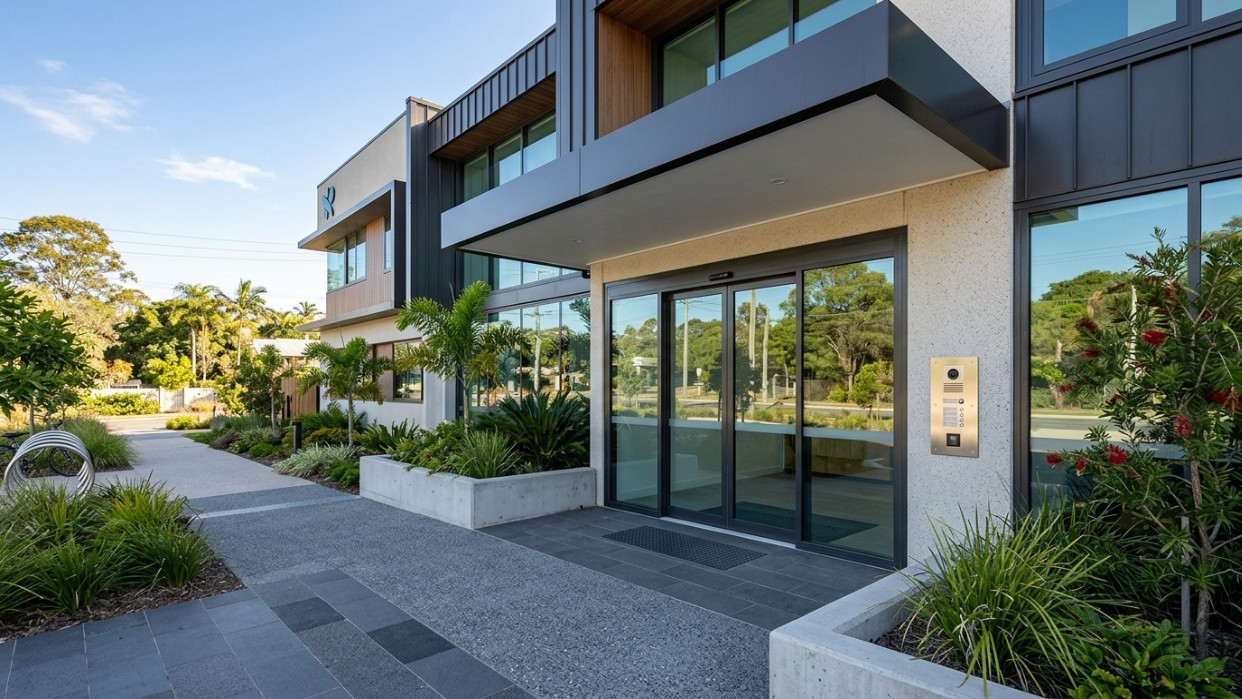
Standard residential and commercial intercom systems are designed around predictable access patterns — a known pool of regular users and occasional visitors. Healthcare facilities are fundamentally different. Their access patterns are complex, high-volume, and clinically consequential.
Consider a busy Brisbane GP practice on a typical weekday. By 9am, the facility has admitted patients with confirmed appointments, turned away a walk-in who arrived before opening, verified the credentials of a pharmaceutical rep, granted access to a pathology courier, and managed an unexpected visit from a patient in acute distress — all through the same front entry. Each of those interactions carries a different level of verification requirement, a different urgency, and a different documentation expectation.
Furthermore, healthcare facilities in Queensland operate under specific regulatory obligations around visitor management, restricted area access, and incident documentation. Facilities accredited under the Australian Commission on Safety and Quality in Health Care standards are expected to maintain auditable access records and demonstrate systematic management of who enters clinical areas and when. An IP-based intercom Brisbane system supports this requirement automatically — something an analogue buzzer panel cannot do.
Additionally, the infection control dimension of healthcare access management gained significant prominence during the pandemic years and has not receded. Touchless entry solutions — where patients, staff, and authorised visitors can access the facility without touching shared surfaces — have moved from a preference to an expectation in most Brisbane clinical settings.
The Specific Challenges of Each Healthcare Facility Type
Not all healthcare environments present identical intercom challenges. Therefore, understanding the specific demands of each facility type leads to significantly better system specification outcomes.
GP Clinics and General Practice
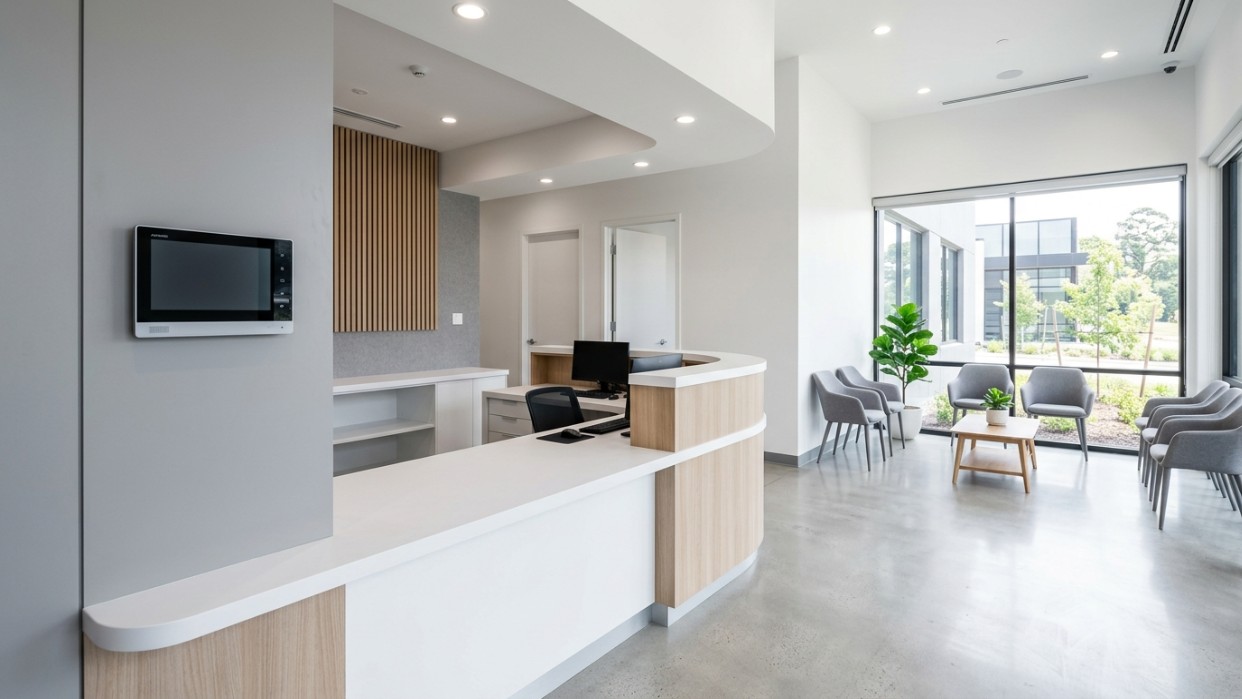
Brisbane’s suburban GP clinics typically operate from single-entry premises with a small administrative team. The primary challenge is managing the front door without pulling a receptionist away from the counter every time someone arrives. A video intercom with two-way audio and a door release relay allows reception staff to verify, speak to, and admit visitors without leaving their desk — and to do so simultaneously with other administrative tasks.
Additionally, many Brisbane GP practices now operate extended or after-hours appointment sessions, where a single clinician may be on-site with minimal support staff. In these circumstances, a video intercom with remote access capability — allowing the clinician to see and communicate with anyone at the door via a smartphone or wall-mounted monitor — provides a safety layer that benefits both staff and patients.
Dental Practices
Dental environments present a specific access challenge: the treating clinician is frequently in a procedure and physically unable to respond to the front door. Consequently, the intercom system must integrate seamlessly with the reception workflow, routing entry calls to multiple stations so that any available team member can respond regardless of their position in the practice.
Moreover, dental practices in Brisbane are often located in commercial tenancies with shared foyer access, meaning the intercom must manage both the building entry and the individual practice entry as distinct verification points. Systems with multi-door management capability handle this naturally.
Allied Health and Multi-Practitioner Centres
Allied health centres — physiotherapy, psychology, occupational therapy, and similar practices — frequently operate with a mix of employed and contracted practitioners sharing a common reception. Access management becomes complex when different practitioners have different session schedules, different patient populations, and different after-hours access requirements.
An IP-based intercom Brisbane system with role-based access credentials resolves this cleanly. Each practitioner, reception staff member, and regular contractor can hold an individual RFID or facial recognition credential with access permissions tied to their specific schedule. When their session ends, their access window closes automatically — without requiring administrative intervention or the collection of physical keys.
Private Hospitals and Day Surgeries
At the larger end of the healthcare spectrum, Brisbane’s private hospitals and day surgery facilities face the most complex access management requirements. Multiple entry points, restricted clinical areas, high staff turnover, visiting medical officers with variable schedules, and 24-hour operation all demand a system with enterprise-grade scalability and management capability.
For these facilities, an intercom Brisbane solution typically forms part of a broader integrated access control deployment, where door stations, indoor monitors, credential readers, and a centralised management platform work together across the full building footprint. Remote management from a security desk or administration office — with the ability to view any entry point, release any door, and review any access event in real time — is a baseline requirement rather than a premium feature.
Touchless Access: The Infection Control Imperative
One of the most significant shifts in healthcare facility design over the past several years has been the move toward touchless access systems at clinical entry points. Consequently, the specification of intercom Brisbane systems for medical environments now routinely includes touchless authentication options as a primary requirement rather than an optional upgrade.
Facial recognition access — where a registered staff member or frequent patient can gain entry simply by being recognised by the door station camera — eliminates the need to touch any shared surface at the point of entry. This is particularly valuable for clinical staff who may be moving between patient contact and entry access multiple times during a shift.
QR code-based entry provides a complementary touchless option for visitors and patients with pre-confirmed appointments. A time-limited QR code sent to a patient’s mobile phone before their appointment allows them to access the entry vestibule without touching a keypad, pressing a call button, or waiting for reception to manually release the door. For practices managing high appointment volumes, this capability meaningfully reduces the administrative burden at peak arrival times.
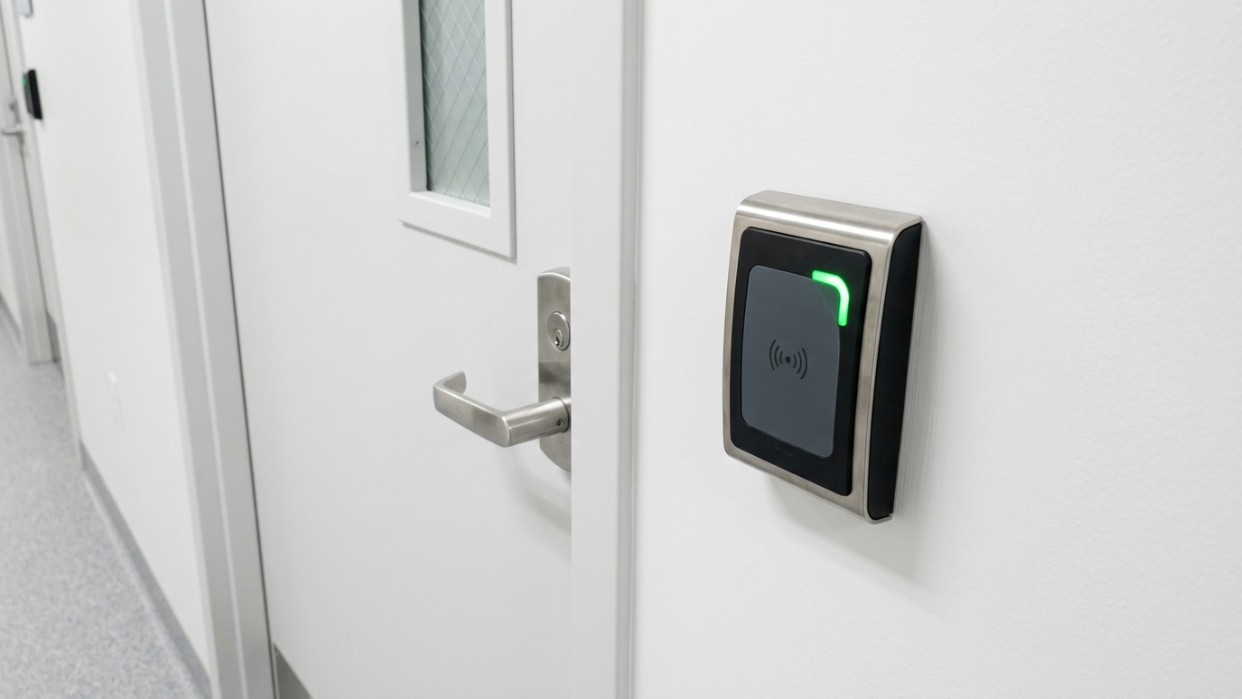
Furthermore, proximity-based RFID access — where staff hold their credential card or fob within reading range without direct contact — provides a fast, reliable touchless option for areas with high staff movement frequency. Card readers embedded in door stations, rather than mounted as separate hardware, streamline the installation and reduce the number of surface-mounted components requiring regular cleaning in clinical areas.
According to Infection Control Queensland, contact with shared surfaces at entry points remains a documented vector for cross-contamination in clinical settings. Specifying touchless entry at all primary access points is therefore not only a patient comfort consideration but a clinical governance one.
Restricted Area Management: Beyond the Front Door
In most discussions of healthcare intercom systems, the focus falls almost entirely on the main entry. However, restricted area management within the facility is equally important — and often more clinically consequential.
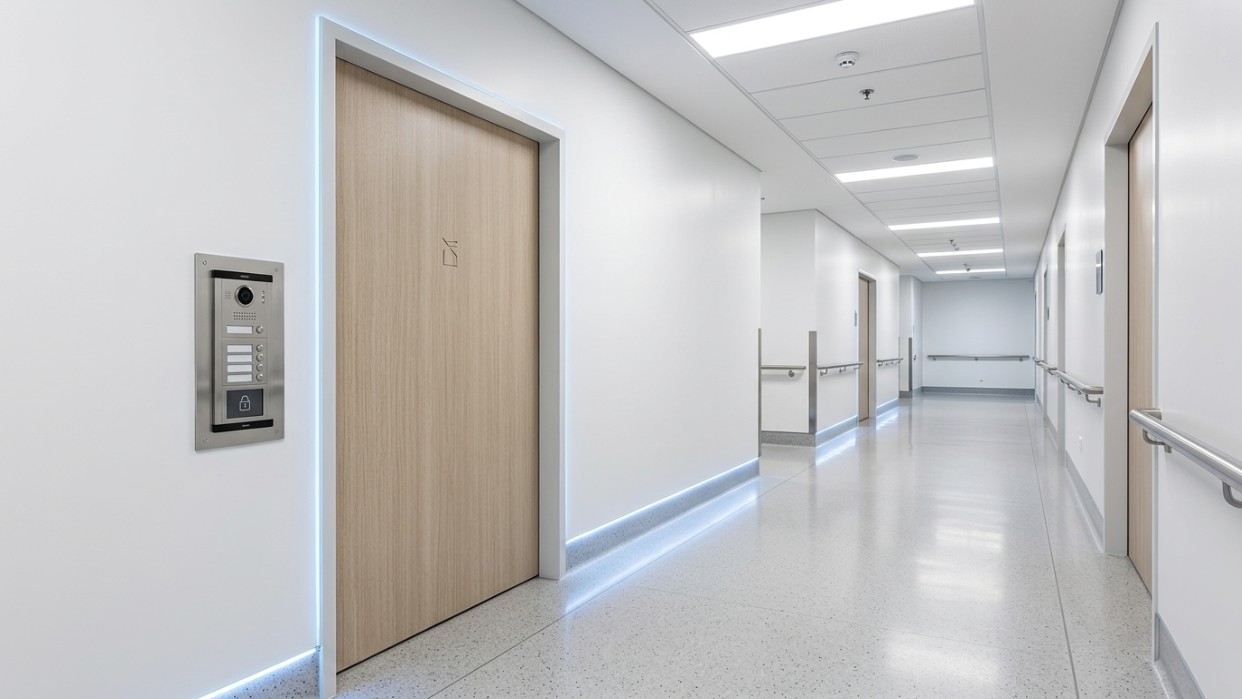
Brisbane medical facilities typically have several categories of restricted internal areas that require controlled access: medication storage rooms, pathology collection areas, sterile supply zones, patient record storage, server and communications rooms, and — in day surgery or hospital settings — operating suites and recovery areas. Each of these requires a different level of access control, a different credential pool, and a different audit trail requirement.
IP-based intercom and access control systems handle this through zone-based permissions. A pharmacy team member, for instance, holds credentials that grant access to the dispensary but not to the server room. A visiting medical officer holds credentials for the operating suite and recovery area but not for administrative storage. These permissions are configured in software, not hardware — meaning they can be updated instantly when staff roles change, without any physical rekeying or hardware replacement.
Moreover, the audit trail generated by a well-specified IP system provides facility managers with a complete, timestamped record of every access event at every door. When a medication discrepancy is discovered, or a restricted area has been accessed outside expected hours, that record is available immediately — without relying on human memory or manual sign-in logs. As highlighted in our Access Technologies Compared article, this shift from paper-based to system-generated access records is one of the most operationally significant improvements IP systems deliver over legacy analogue setups.
Aged Care: The Unique Demands of Residential Healthcare
Brisbane’s aged care sector presents a distinct set of intercom and access challenges that differ meaningfully from acute or outpatient healthcare settings. Residential aged care facilities must simultaneously manage two competing priorities: maintaining security against unauthorised entry and exit, while preserving the dignity, independence, and freedom of movement of residents who live in the facility as their home.
This balance is not easily achieved with standard commercial intercom systems. Consequently, aged care facilities require thoughtful system specification that accounts for the cognitive and physical diversity of residents, the frequency of family visits, the complexity of staff and contractor access, and the regulatory requirements of the Aged Care Quality and Safety Commission.
For resident entry and exit management, intercom Brisbane systems in aged care contexts often incorporate wander management integration — where residents identified as at risk of unsupervised exit trigger an alert when they approach an external door. This is not a function of the intercom system itself, but of its integration with a broader care management platform. The intercom provides the physical access control layer; the care management platform provides the clinical response trigger.
For family and visitor access, video intercoms with a large, high-contrast display and clear audio are essential. Many family members visiting aged care residents are themselves elderly — and a touchscreen with a confusing interface, or an intercom with unclear audio, creates frustration at an already emotionally significant moment. Specifying systems with simple, intuitive call interfaces and adjustable audio amplification makes a measurable difference to the visitor experience.
Furthermore, contractor access management is particularly complex in aged care. Maintenance teams, laundry services, food delivery contractors, hairdressers, entertainers, and a wide range of allied health professionals may access the facility on different days and at different times throughout the week. A system with time-restricted credential management — where each contractor type holds credentials valid only during their approved access window — removes the administrative burden of manual contractor sign-in and the security risk of unmonitored contractor movement.
Emergency Communication in Healthcare Settings
Beyond access management, the emergency communication capability of an intercom Brisbane system carries particular weight in healthcare environments. Medical emergencies, aggressive patient behaviour, after-hours security incidents, and fire evacuation procedures all require reliable, rapid communication across multiple points in the facility simultaneously.
IP-based SIP intercom systems support emergency communication in several ways that analogue systems cannot replicate. Firstly, they enable two-way audio from any entry point to any station on the network — meaning a patient in distress at the after-hours entry can communicate directly with on-call clinical staff, not just a recorded message or a door release button. According to research cited by Axis Communications, healthcare facilities with interactive entry intercom have meaningfully better outcomes in after-hours patient access situations than those relying on passive door release systems.
Secondly, IP systems can be configured to trigger site-wide or zone-specific announcements from any authorised point on the network. During a code response or evacuation, this eliminates the need for staff to reach a specific PA system location before initiating communication — any indoor monitor or desk phone on the SIP network can serve as an announcement point.
Thirdly, in multi-storey or multi-building facilities, zone-based communication allows targeted announcements to specific clinical areas rather than broadcasting across the entire facility — reducing the disruption to patients and staff in unaffected areas while ensuring those who need to act receive a clear and specific instruction.
Weatherproofing for Brisbane Healthcare Outdoor Installations
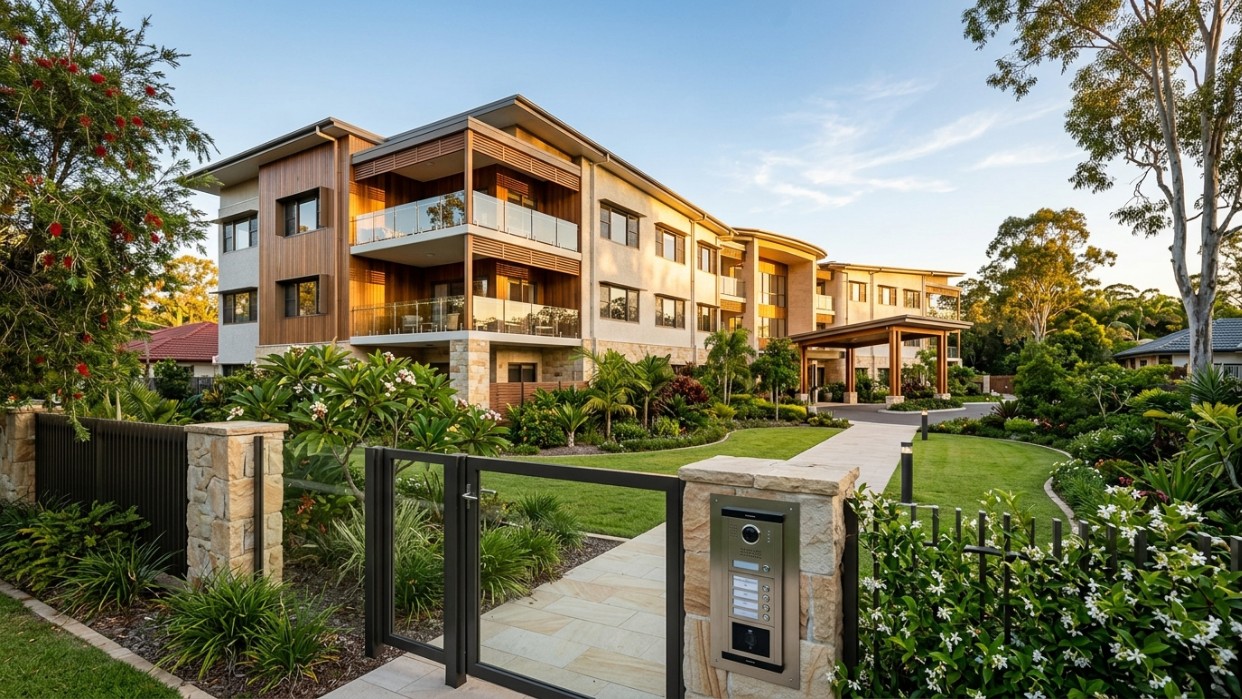
Healthcare facility entry points in Brisbane face the same environmental pressures as any other outdoor installation in Queensland — with one additional consideration: they cannot fail. A residential intercom that stops working during a storm is an inconvenience. A healthcare entry system that fails after-hours, during an emergency, or during a patient admission sequence has clinical consequences.
Therefore, weatherproofing specifications for healthcare entry systems should be set at a higher standard than for equivalent commercial deployments. At minimum, outdoor panels at healthcare entry points in Brisbane should carry an IP66 rating — one level above the IP65 recommended for standard commercial installations — to ensure reliable performance during the intense storm events that characterise Queensland’s wet season.
Additionally, all outdoor panels at healthcare sites should be paired with surge protection on both the data and power supply lines. Lightning strikes and power fluctuations during storm season are a consistent source of system failures that can be entirely prevented with correctly specified surge protection at the time of installation. As noted in our Intercom Brisbane Weather Guide, skipping surge protection is one of the most common and expensive omissions in Queensland commercial installations.
Finally, healthcare facility entry systems should be specified with an Uninterruptible Power Supply (UPS) for both the door panel and the network infrastructure supporting it. An entry system that fails during a grid outage — precisely when the facility may be under the greatest operational stress — provides no protection at all. UPS backup ensures the system remains operational regardless of grid status, with sufficient capacity to maintain function through the duration of typical Queensland storm-related outages.
Planning Your Healthcare Intercom Deployment in Brisbane
Deploying an intercom Brisbane system in a healthcare environment requires more careful pre-installation planning than most other commercial contexts. The following considerations consistently determine whether a healthcare intercom deployment succeeds or creates operational frustration.
Map every access point before specifying hardware. Healthcare facilities have more access points than most facility managers initially estimate — main entry, staff entry, loading dock, car park entry, after-hours entry, and multiple internal restricted doors are each a separate specification decision. A site walkthrough with a qualified installer before any hardware is selected invariably produces a more functional and cost-effective outcome than specifying from a floor plan alone.
Involve clinical leadership in the specification process. The people who will use the system daily — reception staff, nursing staff, practice managers — have knowledge about access patterns, problem scenarios, and workflow requirements that no external specifier can replicate. Their input during the planning phase consistently produces better outcomes than consulting them after the system is already installed.
Plan for staff turnover from day one. Healthcare facilities experience higher staff turnover than most other sectors. Consequently, the credential management interface of any IP system you select must be simple enough for a non-technical practice manager to add, modify, and revoke access permissions without specialist support. Systems that require a technician visit for every credential change create ongoing cost and operational friction that compounds over time.
Budget for integration, not just hardware. The greatest operational value of an intercom Brisbane system in a healthcare context comes from its integration with existing practice management software, nurse call systems, and security platforms — not from the hardware itself. Allocating budget for integration configuration, not just panel and cable installation, consistently produces better long-term outcomes.
Working With the Right Brisbane Specialist
Healthcare intercom and access control is a specialised field. The difference between a system that genuinely improves clinical operations and one that creates daily frustration almost always comes down to the quality of the initial specification — not the quality of the hardware.
At Intercom Solutions, we work with healthcare facilities across Brisbane and South East Queensland to design, supply, and install IP intercom and access control systems that reflect the real operational demands of clinical environments. Whether you manage a single GP clinic, a multi-site allied health practice, a private hospital, or an aged care residence, we provide recommendations grounded in how Queensland healthcare facilities actually function — not generic commercial deployments repurposed for a clinical context.
Contact us for an obligation-free consultation tailored to your facility type, entry configuration, compliance requirements, and budget.
Frequently Asked Questions: Intercom Brisbane Healthcare
What is the best intercom Brisbane system for a small GP clinic? For most Brisbane GP practices, a single video door station with a wall-mounted indoor monitor at reception is the ideal starting point. Look for a SIP-compatible IP system with a door release relay, HD camera, and two-way audio. This setup allows reception staff to verify and admit patients without leaving the desk, and can be expanded with additional entry points or smartphone access as the practice grows.
Do healthcare facilities in Queensland need a specific compliance standard for intercom systems? There is no single Queensland-specific intercom standard for healthcare. However, facilities accredited under the Australian Commission on Safety and Quality in Health Care are expected to maintain auditable visitor and contractor access records. An IP-based intercom system with built-in access logging satisfies this requirement automatically, whereas analogue systems require supplementary manual processes.
How does touchless entry work in a medical clinic environment? Touchless entry in clinical settings typically uses one of three methods: facial recognition, QR code scanning, or proximity RFID. Facial recognition admits pre-registered staff automatically as they approach the camera. QR codes can be sent to patients before their appointment, allowing them to access the entry without pressing buttons. RFID allows staff to present a card or fob within reading range without contact. All three eliminate touch at the entry point entirely.
Can an intercom Brisbane system integrate with our existing practice management software? Many modern IP intercom systems support integration with third-party platforms via API or SIP protocol. The extent of integration depends on your specific practice management software and the intercom system selected. At minimum, most IP systems can be configured to sync access schedules with staff rosters, trigger notifications via email or SMS, and export access logs in formats compatible with common reporting tools. A pre-installation consultation will confirm what is achievable with your existing setup.
What IP rating should a Brisbane healthcare entry intercom have? For Brisbane’s climate, outdoor healthcare entry panels should carry a minimum IP66 rating — one level above the IP65 recommended for standard commercial installations. Healthcare entry systems cannot afford to fail during storm events or after-hours, so the additional protection is a worthwhile specification uplift. IK08 or IK10 impact resistance is also recommended for any entry accessible to the general public.
How do aged care facilities manage visitor access without compromising resident dignity? The most effective approach combines video intercoms with simple, high-contrast call interfaces at the main entry — so visitors can announce themselves clearly — with role-based RFID credentials for regular family members who visit frequently. This allows known, trusted visitors to enter without waiting for staff verification every time, while still maintaining a complete access log. The system can also be configured to notify a specific staff member rather than the general reception when particular residents receive visitors.
What happens to the intercom system during a power outage at a healthcare facility? Without a UPS (Uninterruptible Power Supply), most intercom systems will fail during a grid outage. For healthcare facilities, this is an unacceptable risk. A correctly specified deployment includes UPS backup for both the door panel and the network switch supporting it, ensuring the system remains fully operational during power interruptions. PoE-powered systems are particularly straightforward to protect with UPS, as a single battery backup unit can protect the entire entry system infrastructure.