The New Intelligent Layer of Australian Buildings
The modern Australian building has evolved far beyond bricks, glass and concrete.
Today, smart intercom systems Australia function as a kind of digital nervous system — coordinating access, authenticating identities, managing visitors and protecting properties with a responsiveness that traditional intercoms could never achieve.
People expect convenience.
Businesses expect reliability.
Buildings demand intelligence.
A smart intercom system responds to all three.
These systems behave almost like experienced building managers embedded into the walls: discreet, precise and always alert. They don’t wait for instructions; they anticipate what’s needed based on movement patterns, scheduled access rights, cloud-synced configurations and real-time data.
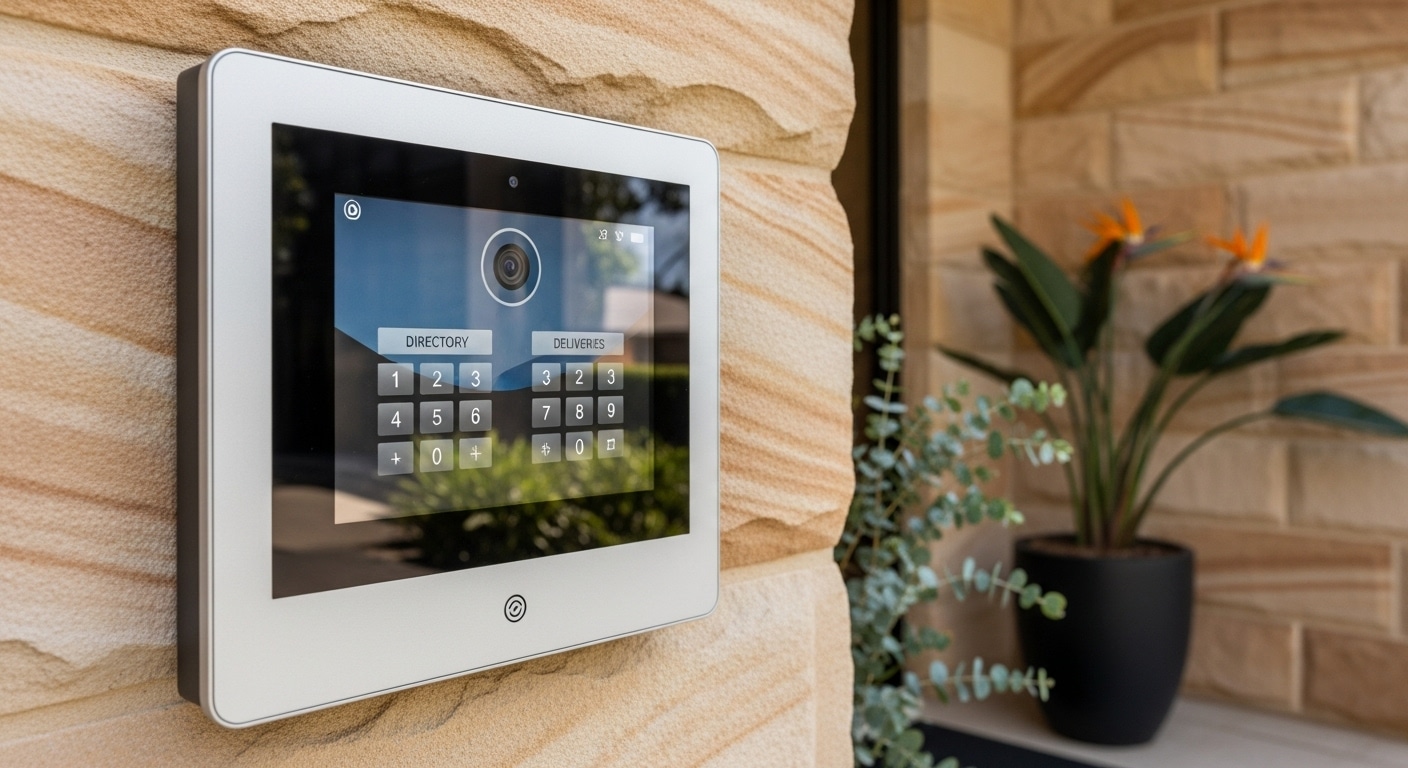
Touchscreen smart intercom installed at a contemporary building entrance in Australia
The Evolution of Smart Intercom Systems in Australia
For decades, Australian buildings relied on intercoms that were functional yet limited. A buzzer, a speaker, a lock-release button — and that was it.
But urban density grew.
Buildings became more complex.
Security needs intensified.
Remote management became essential rather than optional.
This combination pushed innovation forward.
Today’s AI intercom systems Australia operate through a blend of:
-
facial recognition
-
mobile credentials
-
cloud access control
-
behavioral analysis
-
automatic visitor routing
-
encrypted video calls
-
building management system integrations
In short, the intercom is no longer a communication box.
It’s the central access control hub of the building.
Real-Word Implementations Across Australia
Residential Buildings
An apartment complex in Melbourne saw a 72% decrease in delivery issues after switching to smart intercom systems Australia. With secure courier windows, temporary access codes and automatic video logs, residents finally felt protected from package theft.
Mobile keys also eliminated the constant cycle of replacing fobs. Residents began entering the property the same way they unlock their phones — effortlessly.
Commercial Offices
A financial services firm in Perth upgraded to an AI-powered smart intercom system with face authentication. Morning congestion at the entrance disappeared, and the HR team could grant access to new staff instantly through the cloud—even before they set foot in the office.
Industrial & Warehousing
Late-night freight operations in Adelaide now depend on smart intercoms that recognize approved drivers and grant gate access without requiring on-site personnel. Even remote supervisors can monitor entry logs from home.
Educational Facilities
Childcare centres in Brisbane use intercom-based identity verification to ensure children are released only to authorized guardians. Each authorized visitor has a distinct profile that the system recognizes instantly.
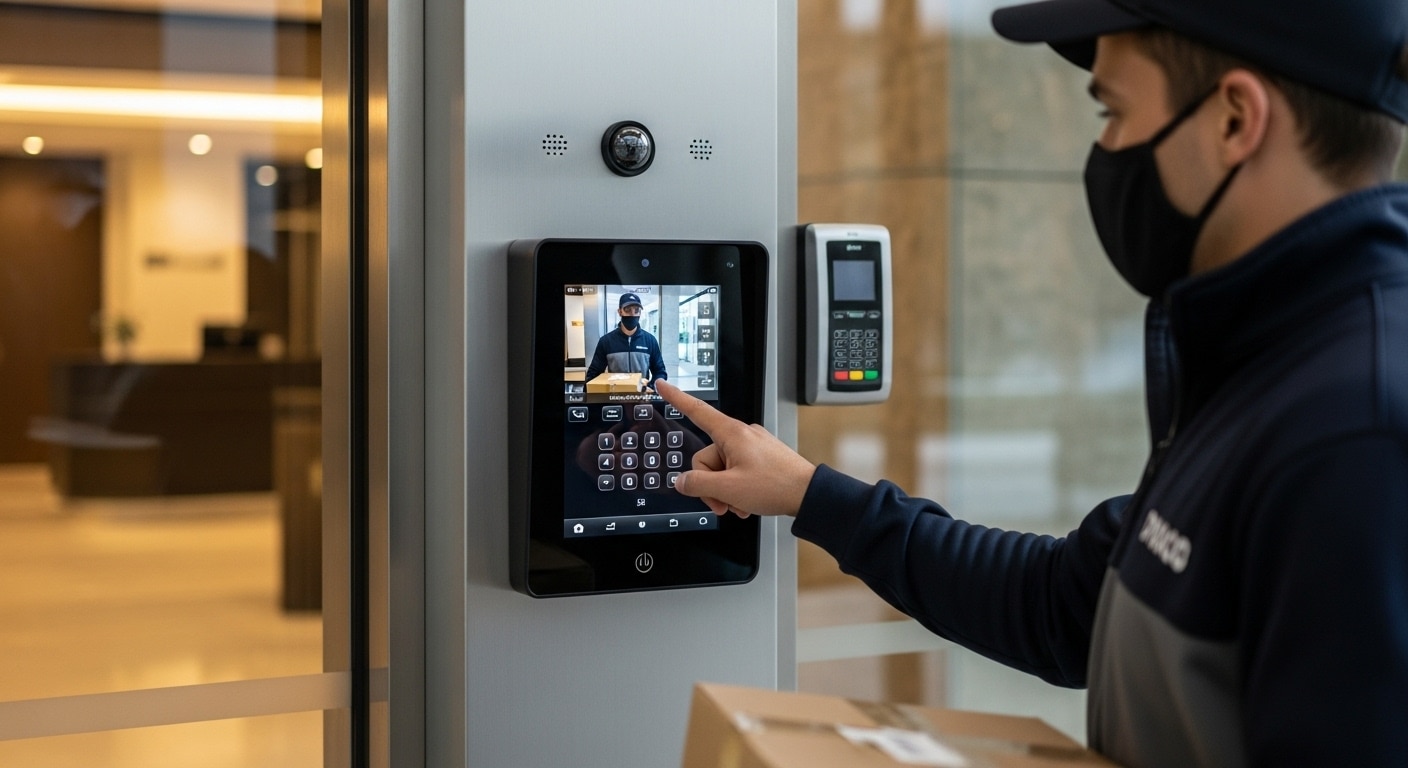 Australian courier interacting with a smart intercom panel at a building entrance
How Smart Intercom Systems Improve Efficiency
Buildings once operated like a patchwork of disconnected tools. Now, everything is synchronized.
Mobile Access Control
Smartphones replace keys entirely.
Employees, residents or service providers simply tap or scan to enter.
If a phone is lost, access can be revoked instantly—no locks changed, no new keys cut.
Visitor & Contractor Management
The system identifies, logs and routes visitors through automated flows.
Contractors can access restricted areas only within pre-set schedules.
Visitors no longer wait in lobbies; they are guided directly to their destination.
Cloud Monitoring & Remote Supervision
Managers view real-time logs, unlock doors remotely and receive alerts for unusual activity.
Buildings begin to operate with a smoothness that feels intuitive.
Behavioral Intelligence
The system learns movement patterns and detects anomalies—like repeated access attempts or unusual entry times.
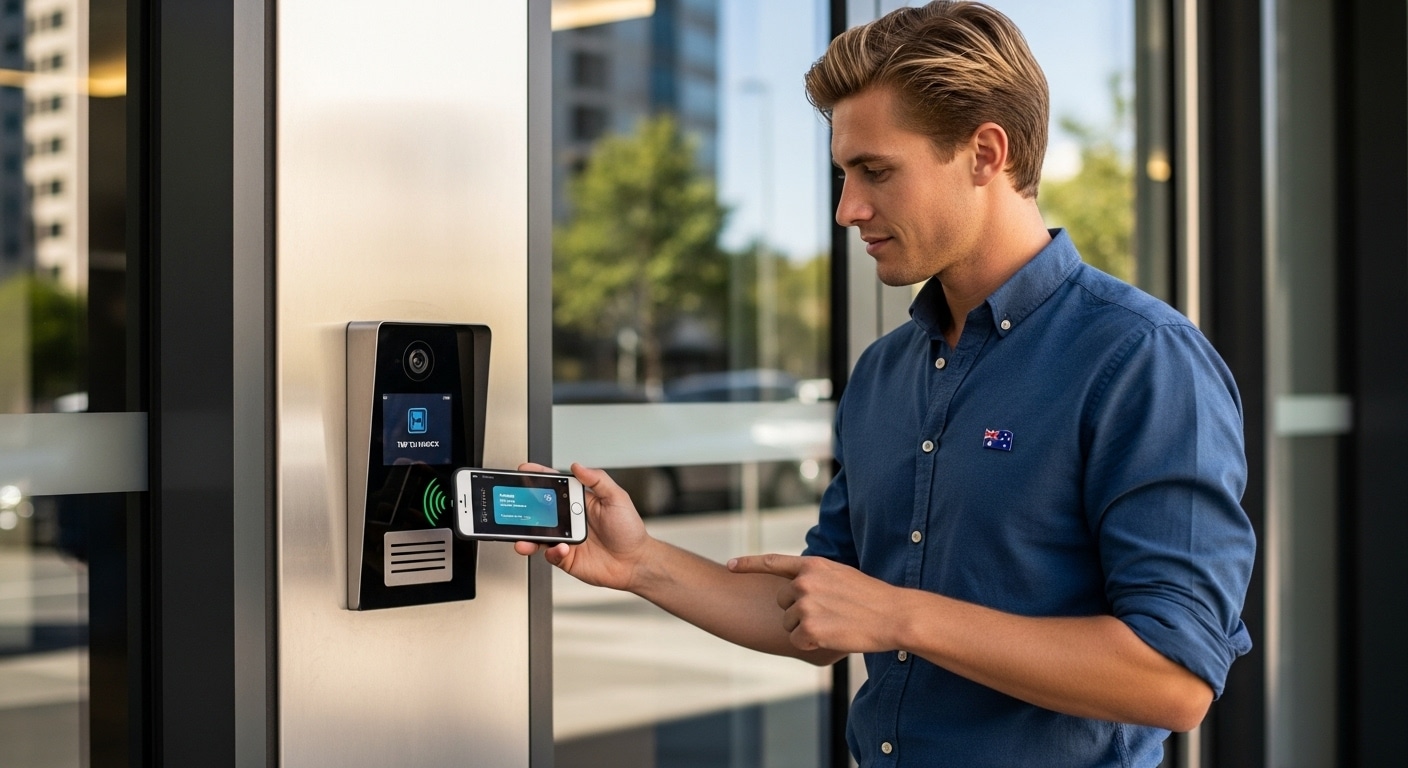 Mobile access control enhances convenience and eliminates physical credentials
AI: The Hidden Power Behind Modern Intercom Systems
AI intercoms in Australia go far beyond sound and video. They can distinguish visitors, employees and unknown individuals through patterns rather than just appearance.
- They recognize when someone lingers too long at an entrance.
- They detect multiple failed attempts.
- They detect multiple failed attempts.
- They notify building managers when behavior deviates from what’s expected.
What feels like intuition is actually real-time machine analysis. Smart intercom systems become the eyes, ears and memory of the building, reinforcing security without increasing manpower.
Long-Term Benefits for Australian Buildings
Reduced Costs
Less manual labour, fewer key replacements. Lower security overhead.
Better Scalability
As a building expands—new tenants, new staff, new rooms—the system grows with it.
Improved Safety
Video records, biometric verification, mobile credentials and behaviour analytics strengthen defence layers.
A Future-Proof Backbone
With AI and cloud integrations, smart intercoms become a long-lasting investment that evolves instead of becoming obsolete.
FAQ
1. Are smart intercom systems suitable for older Australian buildings?
Yes. Most are retrofit-friendly.
2. Do smart intercoms need the internet?
They require it for cloud features but maintain basic functions offline.
3. Can these systems integrate with CCTV?
Absolutely — they often pair seamlessly with existing surveillance.
4. Are AI intercoms expensive?
Initial costs vary, but long-term savings are significant.